

Playing out year over year, the chaotic cycle of drought crises has become a familiar experience for British Columbians.
Articles on Water management
Displaying 1 - 20 of 88 articles
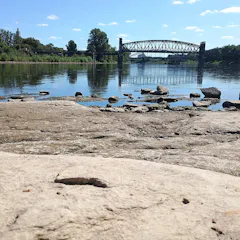
To protect our planet’s waters, we need to better understand these new economic and technological factors that underlie disputes over water.
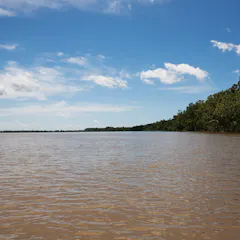
Brazil holds 12% of the world’s freshwater reserves and yet growing water insecurity reveals some of the country’s deepest sanitation inequalities, which are particularly relevant to Marajó, its largest coastal island.
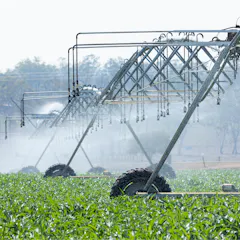
Despite their flaws, well-designed and regulated water markets remain one of our best tools for managing drought.
New technology allows networks of rainwater tanks to work together to benefit households and the environment.
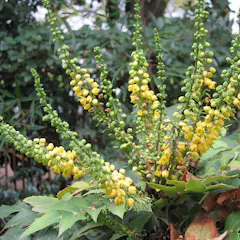
The people who manage America’s aquifers, wetlands, shorelines and recreation areas rely on federal science as they face new and rising risks in a changing climate.

With federal departments facing budget cuts, protecting the Prairies’ waters will require a nimbler, collaborative model.

Canadians over-consume water at alarming rates with an antiquated water licensing system that promotes competition and misuse over sustainability.

Policy reform is urgently needed to make water use in Australia sustainable, but it won’t be effective unless it’s based on facts.
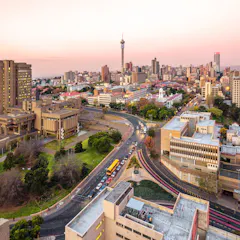
Good roads, a reliable supply of electricity and proper water management are necessary for economic growth and job creation.

The Canada-U.S. Columbia River is relied upon by millions and governed by a treaty in desperate need of updating. Here is how a modern Columbia River Treaty could work.
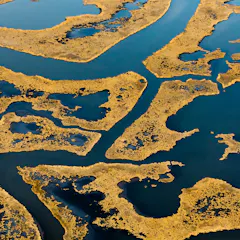
A coastal scientist explains why marshes, mangroves and other wetlands can’t keep up with the effects of climate change, and how human infrastructure is making it harder for them to survive.
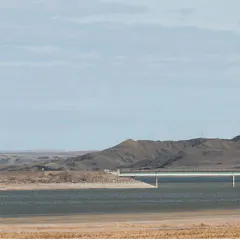
Declining precipitation, climate change and governance failures will drive water flow scarcity in 2024 with serious implications across Western Canada.
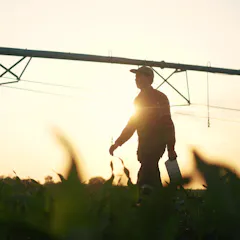
A comprehensive review of research into the economic consequences of controversial water buybacks in the Murray-Darling Basin reveals many studies are of poor quality. Better standards are needed.

The results of a new study are clear: resilient water governance systems are effective and enjoy strong public support. The time is now to build resilience into our global water systems.
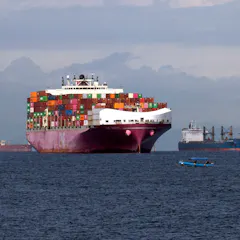
Smart water management isn’t just good for the earth. It’s good for business.

Despite its importance, water management has been largely absent from the election campaign. But using trading markets to improve freshwater quality in smaller catchments deserves wider debate.
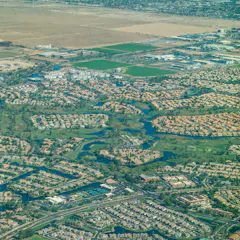
Arizona is considering a multibillion-dollar desalination project to address its urgent water needs. Three water experts call for a go-slow approach and point to Israel as a role model.
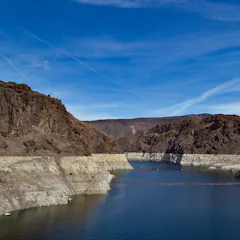
Unprecedented droughts leave the subsurface drier than usual, affecting water supply in subsequent years.
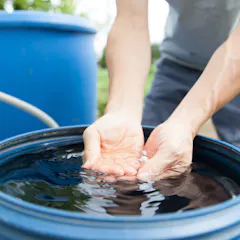
Extreme weather is set to dominate our future – can collecting rainwater reduce the threat posed by both drought and flooding?
Top contributors
-

Honorary Fellow, Infrastructure Engineering, The University of Melbourne
-
Visiting Adjunct Professor, School of Governance, University of the Witwatersrand
-
Distinguished visiting professor, University of Glasgow
-
Matthew Flinders Professor in Water Economics, Flinders University
-
Researcher, Institute for Water, Environment and Health, United Nations University; University of Calgary
-
Reader / Associate Professor in Environmental Geoscience, Sheffield Hallam University
-
Adjunct Associate Professor, Centre for Regional and Rural Futures, Deakin University
-
Australian Laureate Professor of Economics, Crawford School of Public Policy, Australian National University
-
Visiting professor, University of Saskatchewan
-
Distinguished Professor in Biophysics, Australian National University
-
Research Engineer at Utah Water Research Laboratory, Utah State University
-
Postdoctoral fellow, University of British Columbia
-
Associate Professor, Department of Ecology, Environment and Evolution, La Trobe University
-
Environmental Scientist, La Trobe University
-
Senior Lecturer in Accounting, Adelaide University