
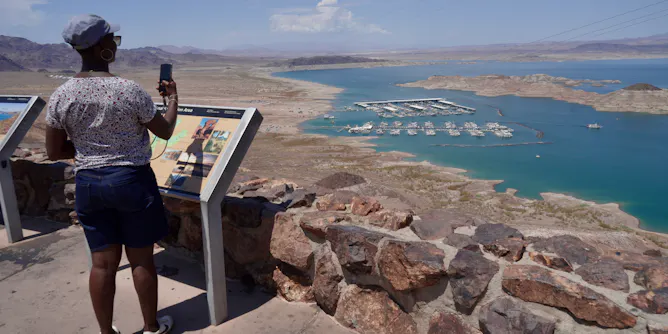
The existing plans and commitments to reduce water use don’t add up to even half of the savings that are needed to keep the river flowing.
Articles on Water conservation
Displaying 1 - 20 of 45 articles

AI is often described as if it lives in the cloud. The persistent controversies regarding the Wonder Valley project in Alberta illustrate how false that is.
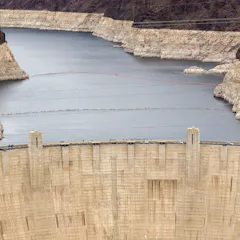
Long-standing water-use agreements allocate more water than the river and its basin actually contain, forcing users to cut back and face future shortages as well.
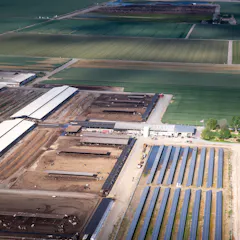
Solar is helping farmers in California save water and secure reliable income in the face of drought and economic pressure.

Immigration isn’t the only hot-button issue along the US-Mexico border. There’s also a growing water shortage that’s affecting farmers, businesses and cities on both sides.

Local water conservation measures could buffer the potential negative impacts of climate change in eastern Africa and boost food production.

New research reveals the environmental impact of keeping tropical fish as household pets – but there are ways to reduce it.
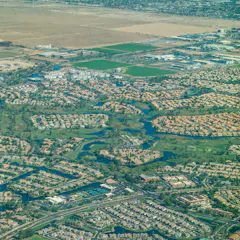
Arizona is considering a multibillion-dollar desalination project to address its urgent water needs. Three water experts call for a go-slow approach and point to Israel as a role model.

In a preprint study, researchers estimate training the model behind ChatGPT would have required somewhere between 210,000 and 700,000 litres of water.
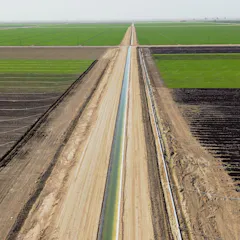
Southwest states have bought time with an agreement between California, Arizona and Nevada to cut Colorado River water use by about 14%. Now comes the hard part.
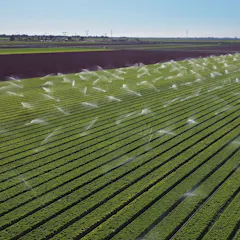
Two decades of drought have reduced the river’s flow by one-third compared to historical averages. The Biden administration is considering mandatory cuts to some states’ water allocations.
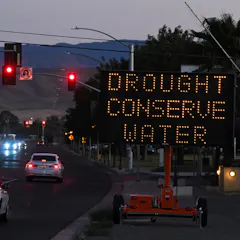
Even after January’s storms, California faces a water-scarce future. An economist and an engineer propose a way to test higher water prices as a conservation strategy without hurting low-income users.

As we set conservation goals for the next decade, we need to evaluate what worked and what didn’t in our efforts to meet the 2020 biodiversity conservation targets.
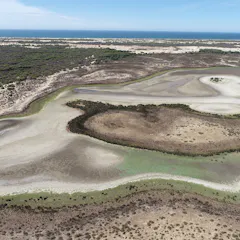
While we know how global changes in freshwater pose risks to humans and ecosystems, we know less about how people and ecosystems will respond to these global freshwater challenges.
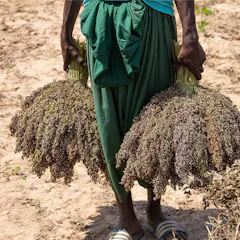
As droughts intensify, how can we increase crop production in a sustainable way? This is a multidimensional scientific and societal challenge to ensure future food security.

Nearly 97% of the world’s water is in the oceans, but desalination is no magic bullet for water-stressed coastal cities.

Rationing water at home will benefit moisture-starved ecosystems.
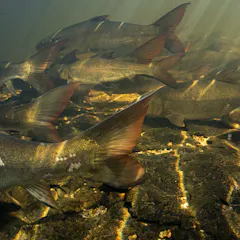
Sandfish keep the rivers clean and the food web balanced but their numbers are declining. Farmers are helping to lift these numbers.
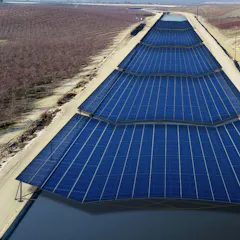
Covering the state’s canals with solar panels would reduce evaporation of precious water and help meet renewable energy goals – all while saving money.
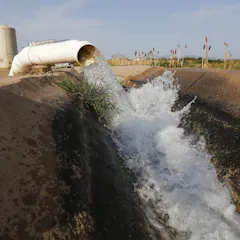
A long-expected federal drought declaration underlines how serious the Colorado River water shortage has become for Western states.
Top contributors
-

Regents Professor Emeritus and Morris K. Udall Professor of Law & Public Policy Emeritus, University of Arizona
-
Senior Research Scientist, Colorado Water Institute, Colorado State University
-
Professor of Law, Texas A&M University
-
Associate Professor in Environmental Science, Western Sydney University
-
Director of the Kyl Center for Water Policy, ASU Morrison Institute for Public Policy, Arizona State University
-
Postdoctoral Research Fellow, Global Change Institute, University of the Witwatersrand
-
Adjunct Associate Professor in History, University of New England
-
Distinguished Professor of Engineering, University of California, Merced
-
Public policy advice, Australian National University
-
Postdoctoral research associate, Wilkes Center for Climate Science & Policy, University of Utah, University of Cambridge
-
Professor of Conservation Science, Bangor University
-
Senior Lecturer, Western Sydney University
-
Visiting professor, University of Saskatchewan
-
Portfolio Leader (Society, Culture & Policy), Manaaki Whenua - Landcare Research
-
Samual A. Graham Dean, and William B. Stapp Collegiate Professor of Environmental Education, School for Environment and Sustainability, University of Michigan