
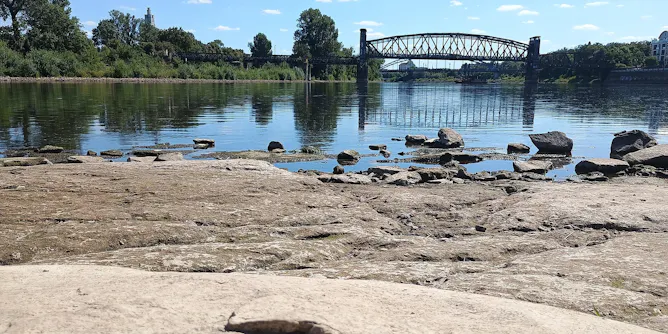
To protect our planet’s waters, we need to better understand these new economic and technological factors that underlie disputes over water.
Articles on Water conflict
Displaying all articles
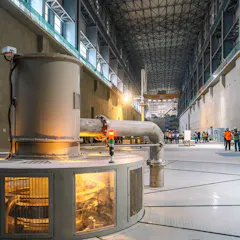
Egypt and Sudan’s insistence on keeping their historical water shares cannot be considered equitable and reasonable.
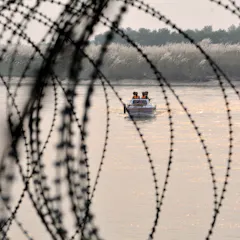
China has announced the speeding up of a dam project in Pakistan. It follows the suspension of a key water-sharing treaty by India.

Nationalistic behavior can put people, economies and ecosystems, and even peace, at risk. The US, which paused Columbia River talks with Canada, isn’t the only country shifting in this direction.
Better monitoring of groundwater is important for sustainable management.

After almost half a century, the United Nations has waded back into the murky world of water policy. But one of the ideas following this year’s international meeting has been shot down.
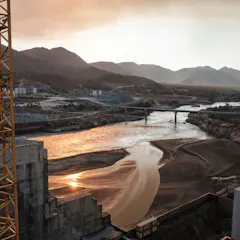
Hundreds of rivers are shared between two or more countries – this could be a source of cooperation or conflict.
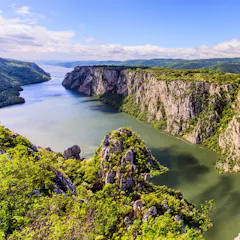
Transboundary water cooperation can reduce conflict and promote sustainable development.
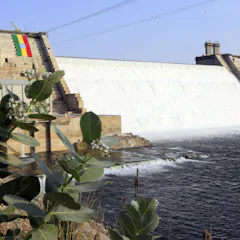
The dam has helped to shift longstanding power relationships and could pave the way for more cooperation among all the countries that depend on the Nile.
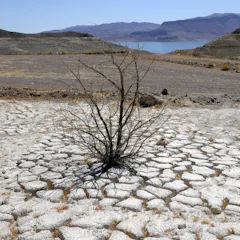
Record heat and low rainfall are drying up water sources shared by the American Southwest and northern Mexico.
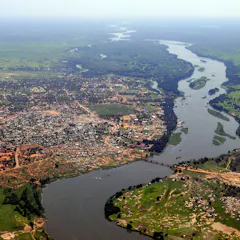
CC BY-NC-ND6.39 MB (download)
It won’t be easy to get the 11 countries in the basin to agree to a plan that avoids chronic water shortages in the future. Good information sharing and technical cooperation are critical.

Beyond the struggle for land and water, new triggers of conflict between farmers and herders have emerged in northern Nigeria.
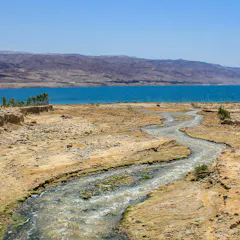
The holy river is used and abused so much that it barely reaches the Dead Sea these days.
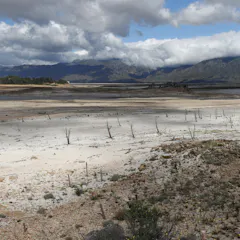
A new international report makes for bleak reading on the state of the world’s soils. It predicts that land degradation will displace up to 700 million people worldwide by mid-century.
Mass hysteria and lawlessness during disasters are remarkably rare, contrary to Western Cape Premier Helen Zille’s prediction of anarchy when Cape Town’s taps run day.

From turkeys to salmon and brussels sprouts, modern living is putting mounting pressure on the festive feast.

The leaders of Ethiopia, Egypt and Sudan have shown some commitment to sharing the waters of the Nile. But hard negotiations on the Grand Ethiopian Renaissance Dam are only beginning.
Ambitious plans to divert rivers are all very well, but what is needed is to manage water sources at the local level.
Top contributors
-

Professor, Weber State University
-
Professor of Environmental Sciences & Engineering, City & Regional Planning, University of North Carolina at Chapel Hill
-
Professor of Environmental Engineering, University of Sydney
-
Postdoctoral Researcher in Remote Sensing Hydrology, Binghamton University, State University of New York
-
Professor of Law, Northumbria University, Newcastle
-
Professor of Water Security, Graduate Institute – Institut de hautes études internationales et du développement (IHEID)
-
Professor of Peace and Conflict Research, Uppsala University
-
Professor of Sociology (Criminology, Victimology and Security Studies), University of Ibadan
-
Research Professor of Environmental Policy, University of Arizona
-
Associate Professor in Political Studies, University of the Western Cape
-
PhD in Civil and Environmental Engineering, University of Washington
-
Matthew Flinders Professor in Water Economics, Flinders University
-
Deputy Director, Environment and Production Technology Division, International Food Policy Research Institute (IFPRI)
-
Researcher in Environmental Change, Vrije Universiteit Amsterdam
-
Professor of Political Science, Colorado State University