
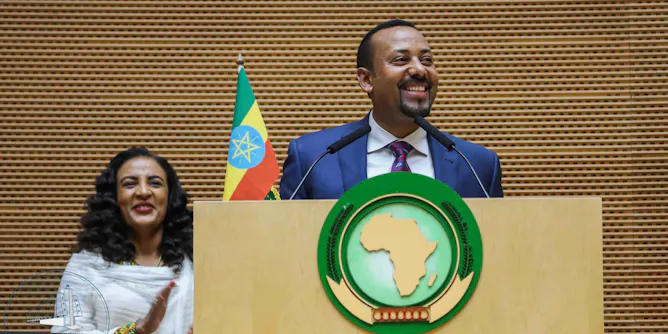
A national dialogue is usually convened during moments of political crisis or transition.
Articles on Grand Ethiopian Renaissance Dam
Displaying all articles

Egypt’s potentially destabilising presence in the Horn of Africa is a direct consequence of Ethiopia’s port agreement with breakaway Somaliland.
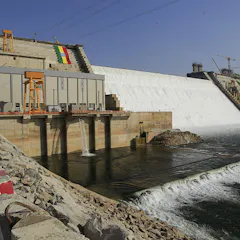
The Nile Basin states are keen to see what kind of deal Ethiopia reaches with Egypt and Sudan.
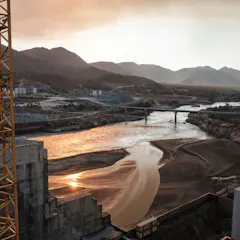
Hundreds of rivers are shared between two or more countries – this could be a source of cooperation or conflict.
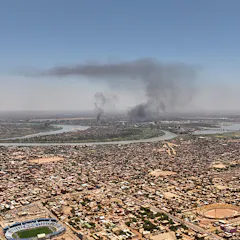
Sudan’s current conflict will have economic, social and political ripple effects across a number of countries

South Sudan’s diplomatic support around energy and water is much sought after in Ethiopia, Egypt and Sudan.
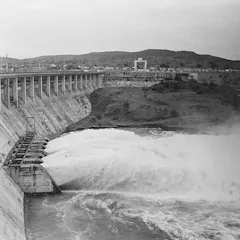
The mega dam in Jinja was meant to give Uganda energy independence, but this was constrained by Britain’s agricultural interests in Egypt.

Ethiopia’s direct engagement with Somalia’s regional governments will likely weaken the prospects of restoring a functioning Somali state.
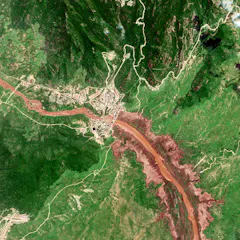
Communicating scientific findings is a potential route to reach common ground and avoid political tensions in the Nile region
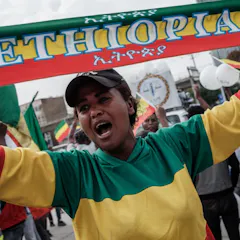
A new government with popular legitimacy will have power to address lingering political, economic and security challenges.
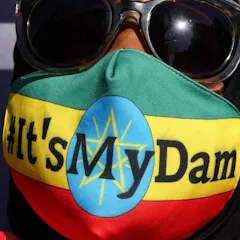
Ethiopia, Sudan, Egypt and their neighbours could deploy large-scale solar and wind farms, connected by a regionally integrated power grid.
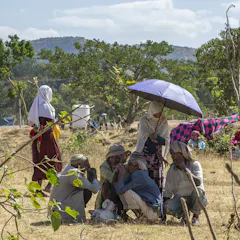
It’s a confluence of local, regional, national and, possibly, foreign interests.
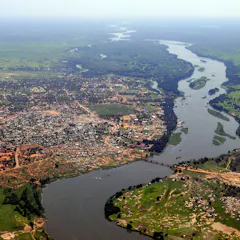
CC BY-NC-ND6.39 MB (download)
It won’t be easy to get the 11 countries in the basin to agree to a plan that avoids chronic water shortages in the future. Good information sharing and technical cooperation are critical.
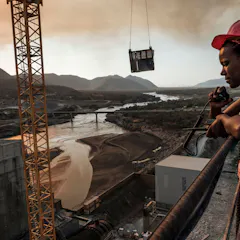
America has historically been a strong Ethiopia ally, but this latest move to withhold foreign direct assistance has thrown its loyalty into question.
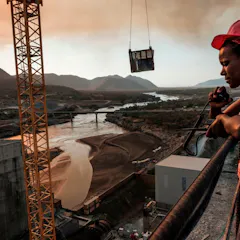
Egypt wants a guarantee that the filling and operation of the Renaissance Dam will not affect the rights it got in 1959.
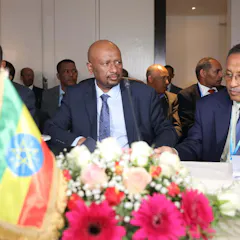
The Nile Treaties prevent upstream countries from using the waters of the Nile without the consent of those downstream. This results in an Egyptian bias.
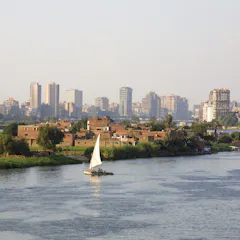
Instead of allocating the Nile waters based on a fixed, perpetual water supply Ethiopia, Sudan, and Egypt must consider changes in weather patterns, among other factors.
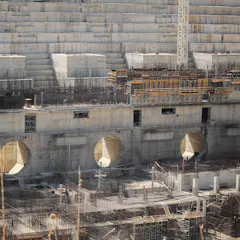
It’s important for the Nile nations to make Ethiopia’s planned dam work for all.
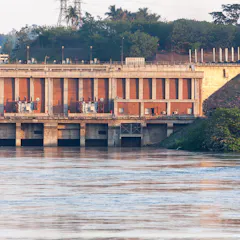
Many countries in eastern and southern Africa rely on hydropower for electricity generation and there are plans for several more dams.
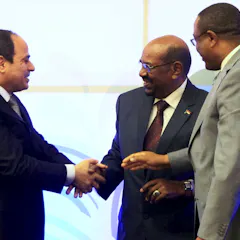
The leaders of Ethiopia, Egypt and Sudan have shown some commitment to sharing the waters of the Nile. But hard negotiations on the Grand Ethiopian Renaissance Dam are only beginning.
Top contributors
-

PhD candidate, University of the Pacific
-
Professor, Weber State University
-
Senior Lecturer of Political Science, Georgia Gwinnett College
-
Professor of Environmental Sciences & Engineering, City & Regional Planning, University of North Carolina at Chapel Hill
-
Researcher in Environmental Change, Vrije Universiteit Amsterdam
-
Postdoctoral Researcher in Remote Sensing Hydrology, Binghamton University, State University of New York
-
Fellow, King's College London
-
DPhil Candidate, Department of Politics and International Relations, University of Oxford
-
PhD in Civil and Environmental Engineering, University of Washington
-
Senior Research Scholar at the Center on Global Energy Policy, Columbia University
-
Assistant Professor, Energy Meteorology, Vrije Universiteit Brussel
-
Professor of History, Colgate University
-
Lecturer and Researcher, Bahir Dar University
-
Postdoctoral Associate at Department of Earth & Environment, and Southeast Environment Research Center of the Institute of Water and Environment, Florida International University
-
Lecturer and Reseacher, Political Science, Debre Markos University,