
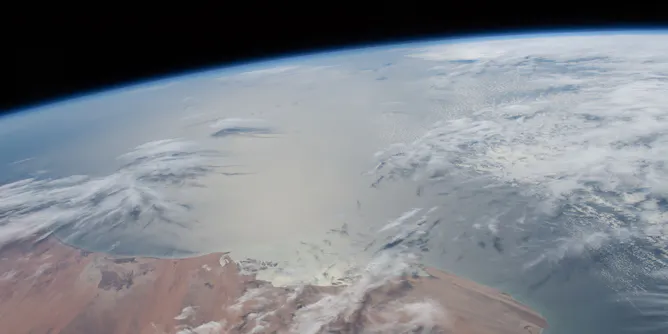
At the very beginning of its history, Earth was dry. How did it become a blue planet? A new theory could provide an answer.
Articles on Water
Displaying 141 - 160 of 832 articles

Blue, green orange, brown − water comes in many colors, depending on what’s in it.

The organisms that cause greening are highly concentrated in Kenya’s shallow Winam Gulf.

Aridity is silently spreading through many of the world’s cocoa-producing regions. There are steps we can take to save them.
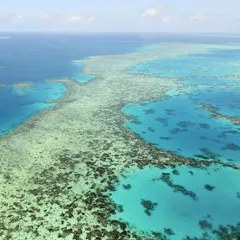
A new study of water quality in Australian rivers reveals surprising changes since the turn of the century: good for the Murray-Darling Basin but bad for the reef.
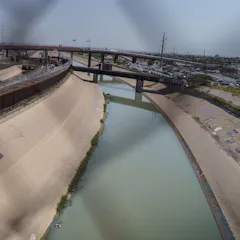
Immigration isn’t the only hot-button issue along the US-Mexico border. There’s also a growing water shortage that’s affecting farmers, businesses and cities on both sides.

Cities across the normally wet Northeast scrambled to reduce water use amid a 2024 drought. It was a reminder that drought isn’t a problem only in the West.
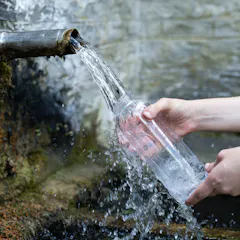
Raw water may not be as safe as it looks. Like raw milk, untreated water comes with dubious health claims and high risks.

Canadians over-consume water at alarming rates with an antiquated water licensing system that promotes competition and misuse over sustainability.

The country should focus on reusing water and demanding less of it in the first place.
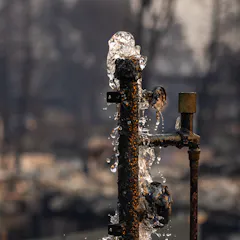
Fires can make drinking water, and the water pipes and tanks themselves, unsafe. A researcher who has worked with communities after several wildfires explains why, and what to do.
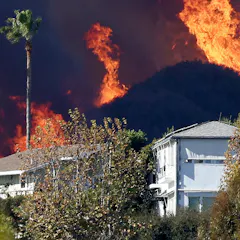
The state is seeing a sharp water divide this year, with lots of rain in the north while the south has stayed dry. A hydrologist explains what’s happening.

Water availability regulates tree growth and can have ‘legacy effects’ long after conditions change.

From dried-up rivers to flooded crops and cities, rising temperatures in 2024 wreaked havoc with water, creating life-threatening challenges for people and nature alike. Explore this interactive map.

Opposition to bottled water has primarily focused on blocking plants and increasing access to tap water. The closure of Ontario’s largest bottled water plant shows that these efforts can succeed.

Once these chemicals are in an environment they almost never break down.
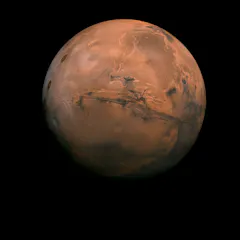
If Mars was once habitable, it needed to have water. For the past 3 billion years, it’s been rather cold and dry. But what about the early days?
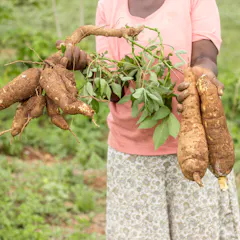
Local water conservation measures could buffer the potential negative impacts of climate change in eastern Africa and boost food production.
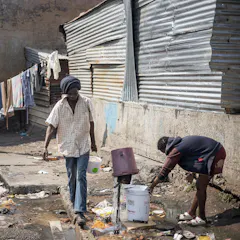
During colonialism and apartheid, Black South Africans were largely not supplied with clean, running water. New water laws must overturn this water inequality.

New research shows how river flows in the once-mighty Murrumbidgee have dwindled over time, leaving the floodplain high and dry. But the main culprit is not climate change and we can fix it.
Top contributors
-

Associate Professor in Environmental Science, Western Sydney University
-
Visiting Adjunct Professor, School of Governance, University of the Witwatersrand
-
Professor of Civil, Environmental and Ecological Engineering, Purdue University
-
Regents Professor Emeritus and Morris K. Udall Professor of Law & Public Policy Emeritus, University of Arizona
-
Senior lecturer, Nelson Mandela University
-
Executive Co-Director, UNU Hub on Empowering Communities to Adapt to Environmental Change, United Nations University; University of Calgary
-
Research Associate, Department of Economics, SOAS, University of London
-
Matthew Flinders Professor in Water Economics, Flinders University
-
Professor, School of Biological, Earth and Environmental Sciences, UNSW
-
Distinguished Professor of Engineering, University of California, Merced
-
Distinguished visiting professor, University of Glasgow
-
Research Fellow, Monash Sustainability Institute, Monash University
-
Associate Professor of Environmental Economics and Policy, School of Environment, Science and Engineering, and Fellow of the Marine Ecology Research Centre, Southern Cross University
-
Professor, Fenner School of Environment & Society, Australian National University
-
Senior Lecturer, Melbourne Law School, The University of Melbourne