
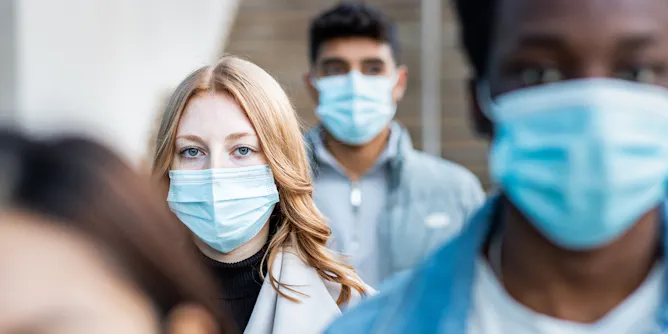
Decades of research show that respiratory illnesses are dramatically reduced when people wear face masks.
Articles on Viruses
Displaying 121 - 140 of 564 articles

A Pandoravirus has been revived after remaining dormant in the Siberian permafrost for nearly 50,000 years.
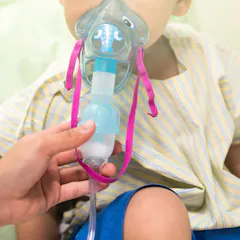
As visits to emergency departments surge — and in some cases overwhelm hospitals — here are answers to frequently asked questions about Respiratory syncytial virus (RSV).

Family physicians are on the frontline of health care, and their observations and support can help us get through the upcoming winter season.
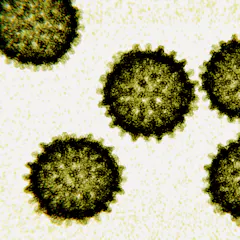
Using a Nobel Prize-winning technique called cryo-EM, researchers were able to identify potential areas on the hepatitis C virus that a vaccine could target.
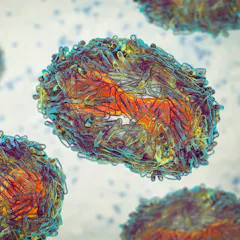
Sexual transmission was suspected in around 90% of transgender women patients but only in 61% of cisgender women and non-binary patients.

Respiratory syncytial virus may be common, but it can lead to severe infection in some children.

Ruth Itzhaki has spent more than 30 years researching whether certain common viruses play a role in the development of Alzheimer’s. But for years her research was greeted with hostility.
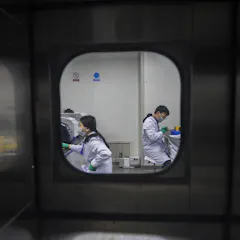
Genetic research is big business and has yielded life-saving treatments. But experts are warning of caution about ‘gain of function’ research that has the pandemic potential.

Hunters are warned to take precautions handling wild birds, and the virus can spill over to non-avian species, so no one should approach wild animals that appear ill.
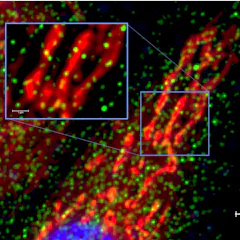
COVID-19 causes lung injury and lowers oxygen levels in patients because the SARS-CoV-2 virus attacks cells’ mitochondria. This attack is a throwback to a primitive war between viruses and bacteria.
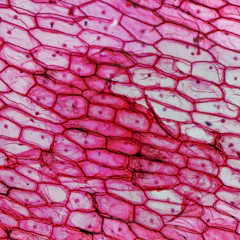
Cell membranes are a basic structure common to most living organisms – but they can be hijacked.
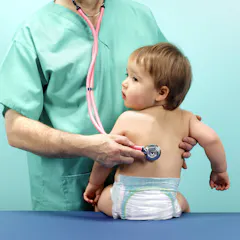
Tens of thousands of children have tested positive for respiratory syncytial virus in the last months in what is the largest outbreak of the virus in recent years.

Bits of viral genes incorporated into human DNA have been linked to cancer, ALS and schizophrenia. But many of these genes may not be harmful, and could even protect against infectious disease.
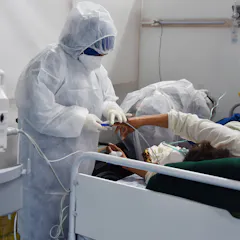
The enigmatic envelope protein seems to hold the key to understanding why some human coronaviruses cause more severe disease than others.
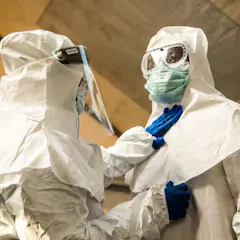
The Sudan strain of the Ebola virus has been identified in Uganda for the first time in more than a decade.
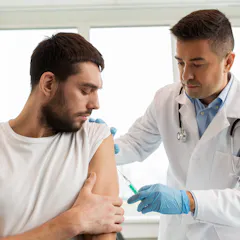
Public health measures have played a big role in curbing the current outbreak.
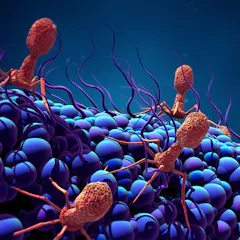
Phages, or viruses that infect bacteria, can lie dormant within chromosomes until they’re triggered to replicate and burst out of their hosts.
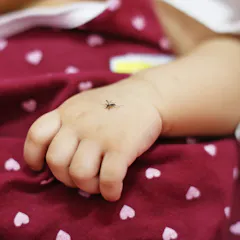
Not all cases of La Crosse disease affect the neurological system, but those that do can be severe and sometimes fatal – especially in children.
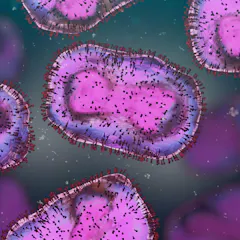
As with COVID, monkeypox may do more damage than initially thought. A new study looks at the evidence for neurological damage.
Top contributors
-

Lecturer in Virology, Queen's University Belfast
-
Senior Lecturer in Clinical Microbiology, University of Leicester
-
Professor Emerita of Biology, Indiana University
-
Professor of Medicine, University of East Anglia
-
Principal Scientist and Canada Research Chair in Zoonotic Virus and Animal Reservoirs at the Vaccine and Infectious Disease Organization and Co-Lead of One Health at the University of Saskatchewan, University of Saskatchewan
-
Adjunct Associate Professor, Faculty of Medicine
-
Clinical Associate Professor, School of Medical Science & Sydney Infectious Diseases Institute; Principal Hospital Scientist, University of Sydney
-
Regents' Professor & Chair, Medical Laboratory Science, Texas State University
-
Senior Lecturer, Medical Microbiology, University of Westminster
-
Professor of Biological Sciences, University of Maryland, Baltimore County
-
Melbourne Laureate Professor, University of Melbourne; Director, The Peter Doherty Institute for Infection and Immunity
-
Associate Professor of Public Policy, University of Maryland, Baltimore County
-
Professor, Discipline of Paediatrics and Child Health, University of Sydney
-
Associate Professor and Research Leader in Virology and Infectious Disease, Griffith University
-
Director of Microbiology, University of California, San Diego