
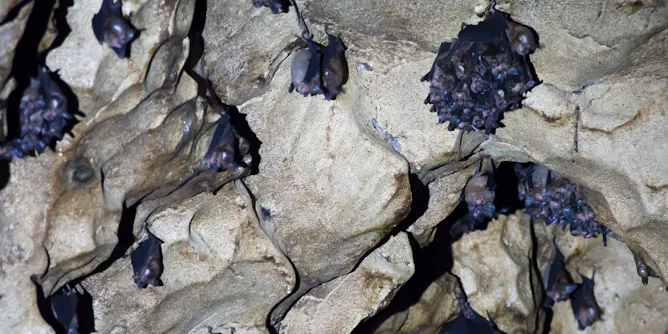
How can nations prevent more pandemics like COVID-19? One priority is reducing the risk of diseases’ jumping from animals to humans. And that means understanding how human actions fuel that risk.
Articles on Viruses
Displaying 181 - 200 of 564 articles

Vaccination campaigns like the ones that eventually eliminated polio and measles in the United States required decades of education and awareness in order to achieve herd immunity in the U.S. population.
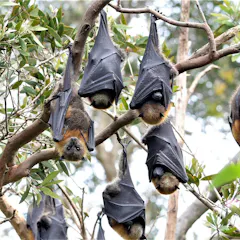
Virologists are beginning to assess which other viruses could have pandemic potential

As winter approaches, every family has a favourite cold remedy, but experts say few work.
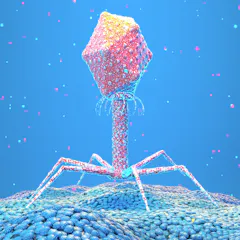
Viruses have gotten a bad rap for the many illnesses and pandemics they’ve caused. But viruses are also genetic innovators – and possibly the pioneers of using DNA as the genetic blueprint of life.
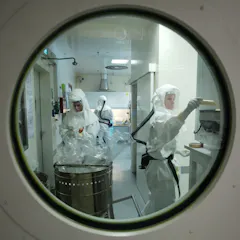
A centralized reporting system for laboratory incidents involving dangerous pathogens in biological research does not exist in the US or internationally.
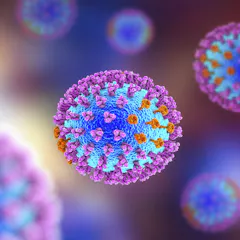
Two different respiratory viruses were found to swap proteins when they infected the same cell.
Evolution explains why the Delta variant spreads faster than the original Wuhan strain. It explains what we might see with future variants. And it suggests how we might step up public health measures.
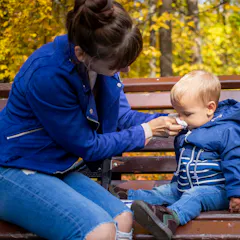
It’s still reasonably easy to catch a cold even during lockdown.

You’ll probably want to wash your sheets after reading this.
COVID vaccines don’t contain any live virus to shed. Here’s the science to put the myth of viral shedding after the COVID vaccine to bed.

A fear of microbes, like germs, could be harming human health.
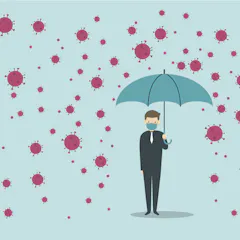
COVID-19 vaccination produces a more consistent immune response than a past infection. With the delta variant, the difference in protection may be even greater.
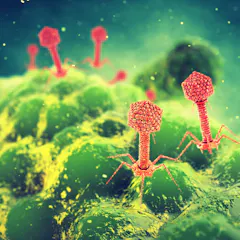
You could say there are a ‘crapload’ of viruses in the human gut. Luckily, most of these do not attack our cells, but instead feed on bacteria.
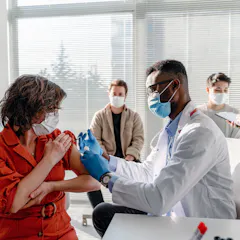
Vaccines have successfully curtailed viral diseases for decades. But as COVID-19 vaccination hesitancy shows, mistrust and misinformation continue to put lives at risk.
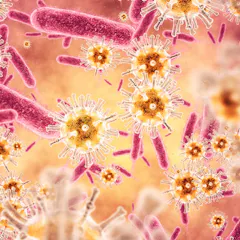
Scientists get up close and personal with deadly pathogens to give doctors the tools they need to treat people sickened by germs. The key is keeping the researchers – and everyone around them – safe.
Bat hosts, lab leaks – tracing SARS-CoV-2 to its origins involves more than just tracking down patient zero.
Gain-of-function studies make a natural virus more dangerous or transmissible to humans. Could the Wuhan Institute of Virology be the source of SARS-CoV-2?
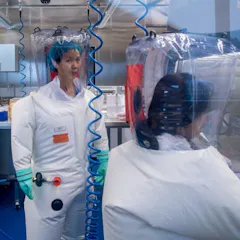
The lab accident theory of the origins of Covid-19 has gained traction in recent months. We need a proper investigation to find out what really happened.

A more coordinated effort by scientists, stakeholders and community members will be required to stop the next deadly virus that’s already circulating in our midst.
Top contributors
-

Lecturer in Virology, Queen's University Belfast
-
Senior Lecturer in Clinical Microbiology, University of Leicester
-
Professor Emerita of Biology, Indiana University
-
Professor of Medicine, University of East Anglia
-
Principal Scientist and Canada Research Chair in Zoonotic Virus and Animal Reservoirs at the Vaccine and Infectious Disease Organization and Co-Lead of One Health at the University of Saskatchewan, University of Saskatchewan
-
Adjunct Associate Professor, Faculty of Medicine
-
Clinical Associate Professor, School of Medical Science & Sydney Infectious Diseases Institute; Principal Hospital Scientist, University of Sydney
-
Regents' Professor & Chair, Medical Laboratory Science, Texas State University
-
Senior Lecturer, Medical Microbiology, University of Westminster
-
Professor of Biological Sciences, University of Maryland, Baltimore County
-
Melbourne Laureate Professor, University of Melbourne; Director, The Peter Doherty Institute for Infection and Immunity
-
Associate Professor of Public Policy, University of Maryland, Baltimore County
-
Professor, Discipline of Paediatrics and Child Health, University of Sydney
-
Associate Professor and Research Leader in Virology and Infectious Disease, Griffith University
-
Director of Microbiology, University of California, San Diego