
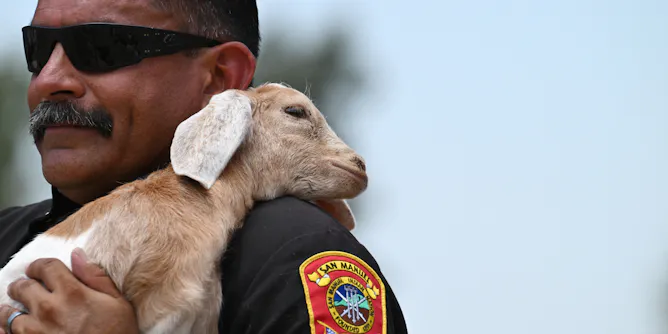
Targeted grazing is gaining interest as fire risk rises, particularly in hard-to-manage areas of the Western US. But it isn’t always as simple as it seems.
Articles on US wildfires
Displaying 1 - 20 of 35 articles
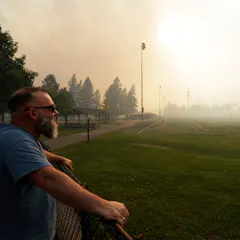
Extreme fire conditions converged in suburban neighborhoods built into the forests, shrubland and grasslands and quickly spread.
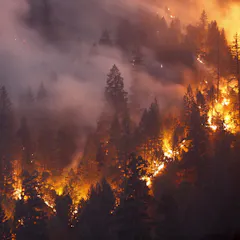
Heat waves do more than dry out vegetation that can easily burn. They also play a role in lightning strikes, particularly dry lightning.

For decades, wilderness lands have been left largely unaltered by human activity. But those places are still changing, and keeping them wild and special may require action, not inaction.

Managing fire risk is about more than regulations and rules. It’s also about caring for neighbors and taking steps on your own property and in your community to help keep neighbors safe.
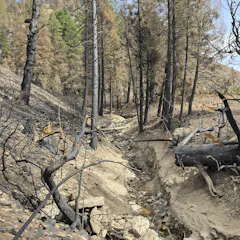
Debris flows can move with the speed of a freight train, picking up and demolishing anything in their path.
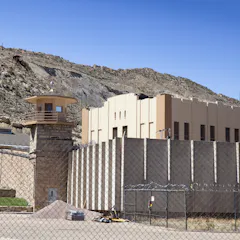
More than 65% of formerly incarcerated people reported experiencing climate-related hazards, according to survey results.
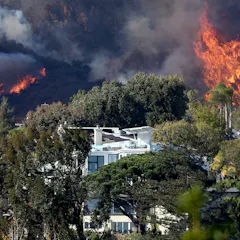
In many parts of the US, Americans must learn to live with fire. That means careful decisions on where homes are built and what’s around them, and allowing more low-risk fires to burn.
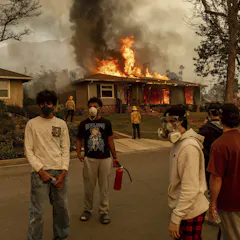
Human bodies aren’t prepared for the toxic chemicals in smoke, and the effects can be harmful in the short term and long term.
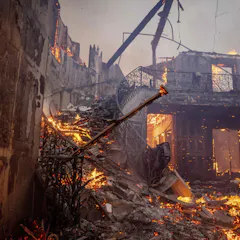
The causes of the wind-driven fires that burned thousands of homes in the Los Angeles area are under investigation, but there were no lightning strikes reported at the time.
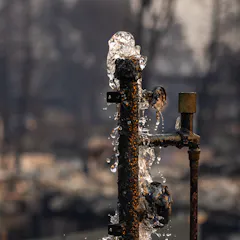
Fires can make drinking water, and the water pipes and tanks themselves, unsafe. A researcher who has worked with communities after several wildfires explains why, and what to do.
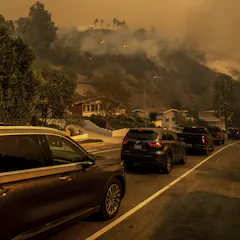
The chemicals emitted when buildings and vehicles burn can find their way into nearby homes. Studies show the health risks can stick around.
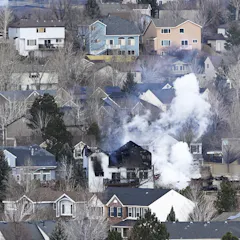
A series of surveys in the months and years after the devastating blaze near Boulder revealed continuing health concerns in surviving buildings, and tips for how to clean up smoke-damaged homes.
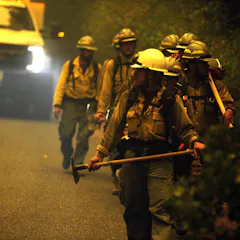
Firefighters work long hours to protect communities, often in dangerous conditions and for low starting pay. Surveys show the impact that can have on their physical and mental health.
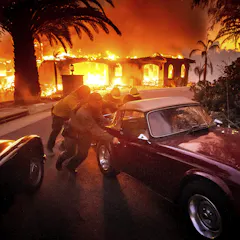
The US has seen huge wildfires in recent years. The vast majority of those that affect communities are started by human activity.
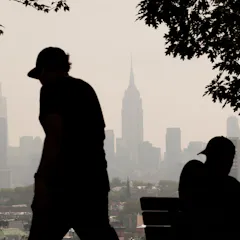
Which is riskier for your health: a few days of very bad PM₂.₅ exposure or many more days of slightly bad exposure? Researchers developed new metrics to provide better answers.
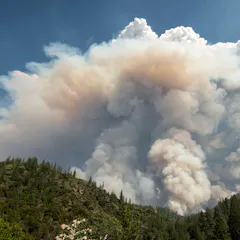
Fire-produced thunderstorms and tornado-like fire whirls are more common than anyone realized, as high-resolution satellite images and data now show.
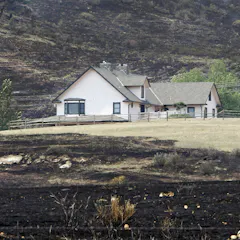
Roofs, windows and siding all affect how vulnerable a home is and how likely it is to survive a wildfire. So does what’s around it in the ‘home ignition zone.’
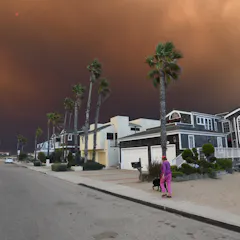
Breathing wildfire smoke can cut years off people’s lives. As fires become more frequent in a warming world, smoke is leading to a public health crisis, harming people far from the flames.
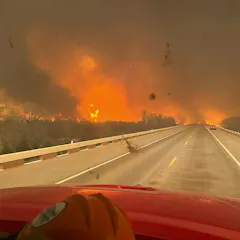
An analysis of 88 million wildfire observations over the past 21 years shows a strong increase in the frequency and intensity of the most extreme fires around the world.
Top contributors
-

Associate Professor of Civil Engineering, Boise State University; United Nations University
-
Professor of Civil, Environmental and Ecological Engineering, Purdue University
-
Interim Earth Lab Director, University of Colorado Boulder
-
Professor of Fire Ecology, University of Montana
-
Professor of Marketing, University of Montana
-
Professor of Engineering, University of California, Merced
-
Associate Professor of Geography, University of Colorado Boulder
-
Associate Director of the Huntington-USC Institute on California and The West, USC Dornsife College of Letters, Arts and Sciences
-
Postdoctoral Research Fellow, University of Montana
-
Emeritus Professor of Atmospheric Sciences, University of Hawaii
-
Professor of Environmental Health Sciences, University of California, Los Angeles
-
Ph.D. Student, Dept. of Geography, University of Colorado Boulder
-
Associate Professor of Geography and Director, Earth Lab, University of Colorado Boulder
-
Research Scientist in Atmospheric Science, Colorado State University
-
Research Fellow in Environmental Science, University of Tasmania