
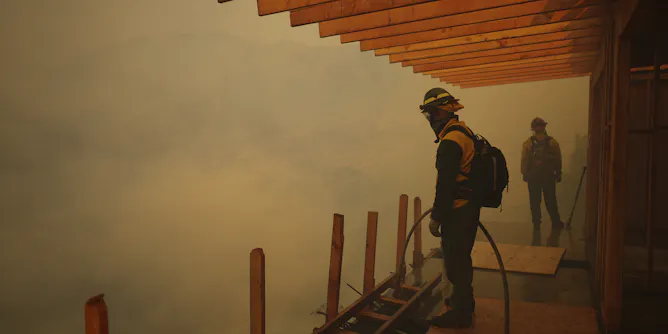
When cities burn, plastics, electronics, cleaning chemicals and much more create a toxic brew. Studies launched during the LA fires a year ago show exposure is often strongest inside homes.
Articles on LA fires
Displaying 1 - 20 of 34 articles

Managing fire risk is about more than regulations and rules. It’s also about caring for neighbors and taking steps on your own property and in your community to help keep neighbors safe.
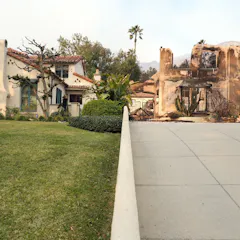
Hedges and trees may actually reduce home exposure to radiant heat and flying embers, but they must be well maintained. Two scientists who study how plants burn explain.
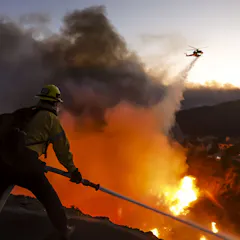
Fire seasons on both sides of the Pacific overlap for seven weeks a year – and changes in Australia’s climate are driving the problem.

It starts with better building policies that recognize future risks, but there are many other important steps.
Compassion starts with the individual – self-care and personal wellness. It then radiates out to the wider community in the form of action and engagement.
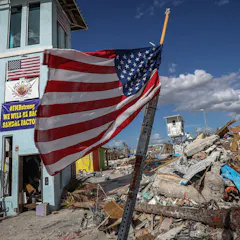
FEMA pools national resources to help states quickly manage disasters. Without that federal support, each state would be left to build its own expensive response capabilities.
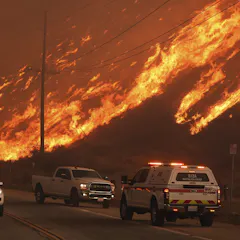
Fire spotters used to watch with binoculars from forest towers. Now, technology can help forecast fire behavior, but human experience is still essential.
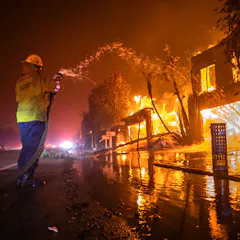
Accepting change in the aftermath of natural disasters is hard. But long-term survival may require embracing managed retreat rather than repeated rebuilds.
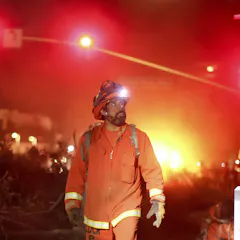
The use of prison labour in fighting wildfires caused by climate injustice is only an extension of this injustice and a continuation of indentured servitude.
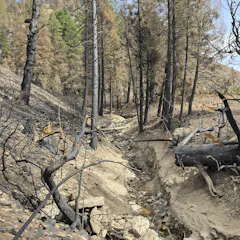
Debris flows can move with the speed of a freight train, picking up and demolishing anything in their path.
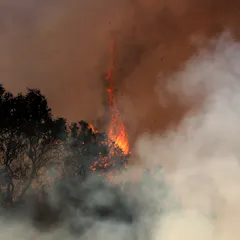
Paleoecologist Emily Lindsey on the wildfires that led to mass extinction during California’s Ice Age. Listen to The Conversation Weekly.
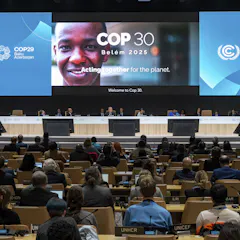
With the US out of the tent, the rest of the world can get on with climate action without Trump’s corrosive influence.
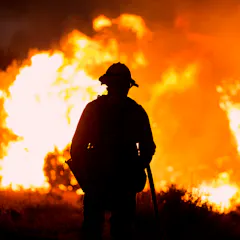
Private firefighters in affluent LA neighbourhoods are a sign of an increasingly privatised response to disasters.

Large organizations often partner with local nonprofits that are uniquely positioned to mobilize quickly, leveraging their deep understanding of community needs and established trust with residents.
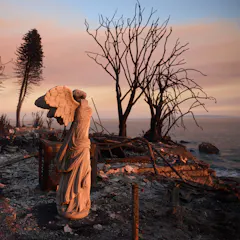
What celebrities and the super-rich losing their homes reveals about climate change injustice.
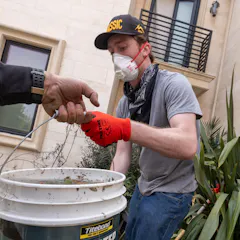
In emergencies, when every minute counts, research shows family, friends and neighbors are often saving lives. These local efforts go uncounted, yet they’re crucial.
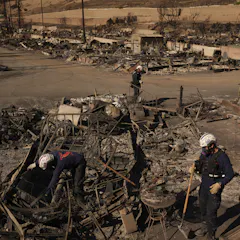
Philosophers explain how our mainstream understanding of ‘home’ is a culturally specific one, and how it could be broadened.
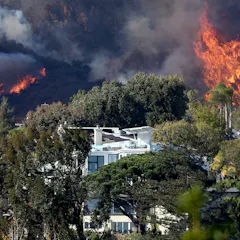
In many parts of the US, Americans must learn to live with fire. That means careful decisions on where homes are built and what’s around them, and allowing more low-risk fires to burn.
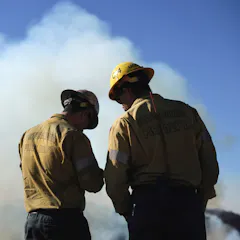
Extreme heat, invasive plants and the demise of indigenous management have converged with disastrous results.
Top contributors
-

Reader in Cultural Geography and Communication, University of Westminster
-
Professor of Environmental Health Sciences, University of California, Los Angeles
-
Associate Director of Research, Smithsonian Environmental Research Center, Smithsonian Institution
-
ARC Future Fellow and Associate Professor in Climate Science, ARC Centre of Excellence for 21st Century Weather, The University of Melbourne
-
Professor emeritus, The University of Melbourne
-
Professor of Civil, Environmental and Ecological Engineering, Purdue University
-
Professor of Pyrogeography and Fire Science, University of Tasmania
-
Research Ecologist, USGS; Adjunct Professor, University of California, Los Angeles
-
Associate Professor of Geography, University of Colorado Boulder
-
Senior Research Hydrologist, University of California, San Diego
-
Adjunct Professor of Environmental Geography, CQUniversity Australia
-
Interim Earth Lab Director, University of Colorado Boulder
-
Senior Lecturer, Discipline of English and Writing, University of Sydney
-
Associate Professor of Disaster and Emergency Management, York University, Canada
-
Associate Director of the Huntington-USC Institute on California and The West, USC Dornsife College of Letters, Arts and Sciences