
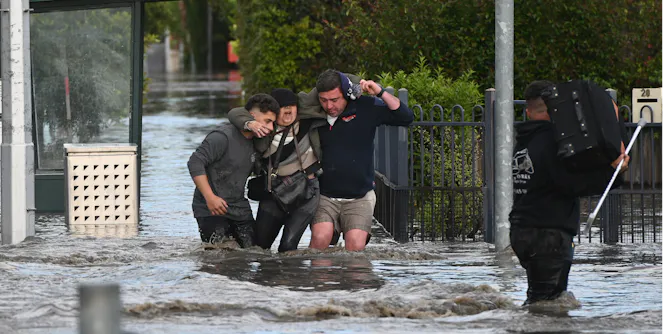
Australian cities remain woefully unprepared for the more extreme weather we are already seeing with climate change. But some cities overseas stand out for having developed readymade solutions.
Articles on Urban heat
Displaying 21 - 40 of 55 articles

The first chief heat officers appointed in Australia are part of a global partnership that’s responding to the dangers of rising city temperatures and the need to manage the risks.

Urban plantings are part of the solution to living in warmer cities, but most tree and shrub species in the world’s cities will struggle too. The impacts on liveability could be huge.
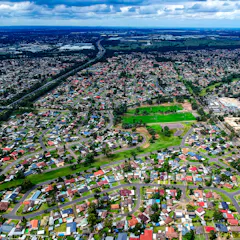
Western Sydney can be up to 10°C hotter than the coast. Poorly constructed housing can’t handle the heat.
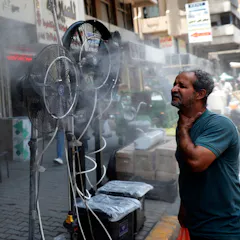
Hot, humid population centers are becoming epicenters of heat risk as climate changes worsens. It’s calling into question the conventional wisdom that urbanization uniformly reduces poverty.

As our cities get hotter, rebuilding whole suburbs better suited to the heat is not an option. Instead, we can draw from the best examples of how to adapt neighbourhoods and behaviours.
Climate models are likely underestimating the true severity of future warming in urban areas.
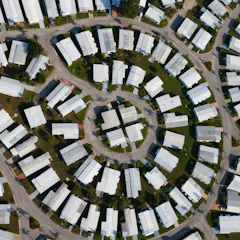
Buildings soak up the sun’s heat, but research shows that white roofs and surfaces can reduce temperatures inside, particularly during heat waves.

Half-a-dozen strategies are effective for cooling urban areas. Used in combination, these strategies can drop the temperature even more.
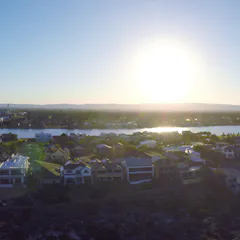
At the peak of a summer heatwave in Adelaide, an aerial survey of land surface temperatures reveals just how much cooler neighbourhoods with good tree and vegetation cover can be.
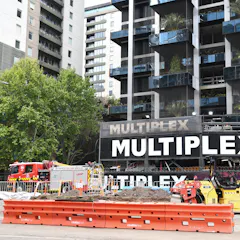
Inner Melbourne alone has lost 2,000 street trees to major developments within a decade. Losing tree cover makes it even more difficult for our cities to cope with an increasingly tough climate.

Air conditioning isn’t the answer for everyone, especially for residents of the less affluent – and often hotter – suburbs of our big cities. But there are other ways to make hot days more bearable.
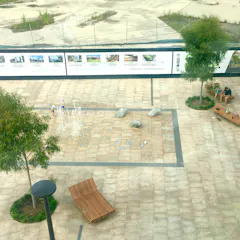
Trees and the shade they provide are one of the best ways of cooling cities. But they also present challenges that are best resolved by managing this shared resource as part of an urban commons.
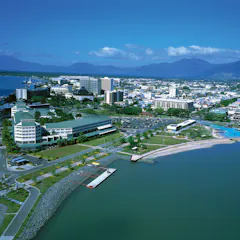
The world’s fastest-growing cities are in the tropics. They are highly exposed to climate change, especially as urban heat island effects and humidity magnify the impacts of increasing heatwaves.
The research has been done. The evidence is in. We know how to create cities that are sustainable, liveable and affordable. But we have yet to apply that knowledge widely across Australian cities.

Thirty tree species make up more than half of Australia’s urban forests. Some won’t survive climate change, so cities must plant a more diverse mix of the right species to preserve their tree cover.

Good urban design and walkability boost local economic activity by increasing public activity, but cities need to pay more attention to the effects of microclimates on streets and public spaces.

Not all of the solutions to the climate and ecological crisis have to be painful.
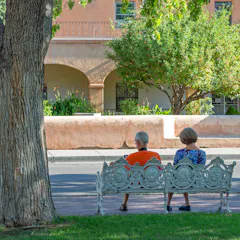
Two trends in Australia, an ageing population and warming climate, are increasing the threat that heatwaves pose to our health. Increasing vegetation cover is one way every city can reduce the risk.
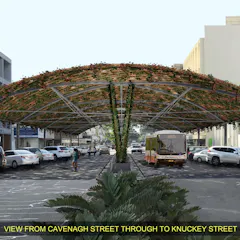
Darwin’s climate is getting even hotter and it’s one of the main reasons people leave the city. A lot more can be done, though, to make our tropical cities safe, cool and enjoyable.
Top contributors
-

Professor, Social Design, Faculty of Design and Society, University of Technology Sydney
-
Associate Professor, Human Geography and Urban Studies School of Social Sciences/ Institute for Culture and Society, Western Sydney University
-
Senior Lecturer in Urban and Environmental Planning, Griffith University
-
Professor of Human Geography and Planning, University of Tasmania
-
Professor, School of Design, University of Technology Sydney
-
Lecturer in Landscape Architecture, The University of Melbourne
-
Associate Professor in Urban Science, University of California, Davis
-
Lecturer and Researcher, Urban Design and Town Planning, University of the Sunshine Coast
-
Associate Director Smart Green Cities, Macquarie University
-
Distinguished Professor, Director of Smart Green Cities, Macquarie University
-
Professor and ARC Future Fellow, Hawkesbury Institute for the Environment, Western Sydney University
-
Associate Professor of Economics, Australia Director - Centre for International Trade and Business in Asia (CITBA), James Cook University
-
Vice-Chancellor's Research Fellow, Centre for Urban Research, RMIT University
-
Professor in Urban Horticulture, The University of Melbourne
-
Spatial analyst, Macquarie University