
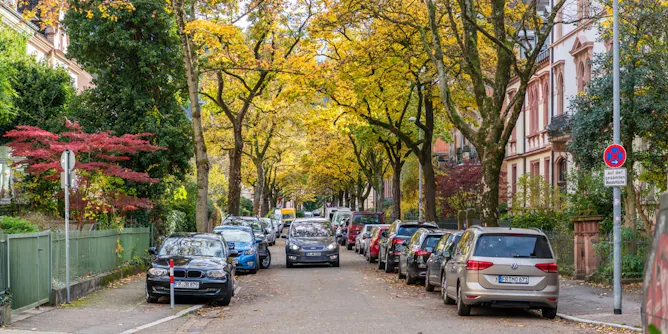
The tiny gardens beneath street trees can boost biodiversity and our connection to where we live.
Articles on Urban greening
Displaying 1 - 20 of 65 articles
A new study has shown that more vegetation is not automatically better.

Annual temperatures are rising in Ghana’s capital, Accra.

Nature-centric housing solutions already exist in places Brazil, Italy and the Netherlands. The challenge is how to build these at scale and adapt them to the UK.

Have you heard of the 3+30+300 rule for urban forestry? See how Melbourne and Sydney compare to New York, Denver, Seattle, Buenos Aires, Amsterdam and Singapore on trees, canopy and park proximity.
The terrain ahead is full of challenges. But, glimmers of a better world are already here.
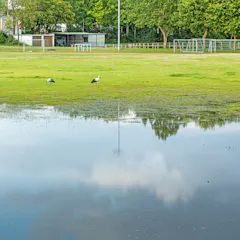
As mums, it’s been frustrating to see so many of our kids’ sport matches cancelled due to waterlogged grounds. Research shows how we can tackle this through smarter design and green infrastructure.
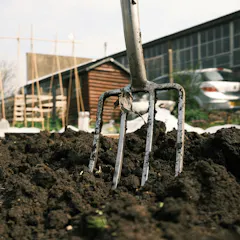
Access to nature is provenly beneficial. Yet the UK’s urban green spaces are poorly funded and are vulnerable to local government budget cuts.
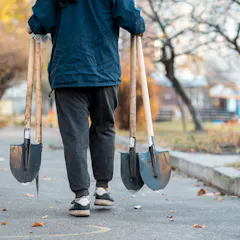
Many people are gardening on land that is not theirs – here are some things to consider to avoid getting into trouble.
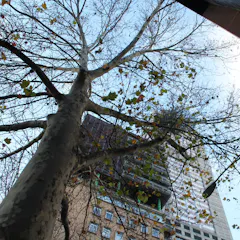
Mistletoes are ecological keystones that boost habitat value for wildlife, so we added them to established plane trees in the inner city.

A public survey found 86% of people want more space for nature in the city. The city council is already taking steps to add green space and increase biodiversity, which should boost public wellbeing.
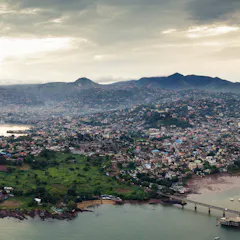
Freetown, the capital city of Sierra Leone, has a chief heat officer, the first in Africa. She has her work cut out for her.

Australian cities remain woefully unprepared for the more extreme weather we are already seeing with climate change. But some cities overseas stand out for having developed readymade solutions.
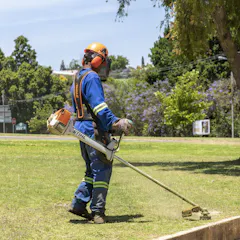
People may think that green spaces often hide criminals. On the contrary, there is evidence they contribute to reducing crime.
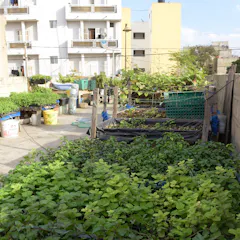
Green spaces have the potential to reduce heat and improve health, especially in urban areas.

The first chief heat officers appointed in Australia are part of a global partnership that’s responding to the dangers of rising city temperatures and the need to manage the risks.

Urban plantings are part of the solution to living in warmer cities, but most tree and shrub species in the world’s cities will struggle too. The impacts on liveability could be huge.

Urban farming is an ancient tradition in Bamberg, and the gardeners’ district is an integral part of the World Heritage City, growing food, promoting sustainability and fighting climate change.
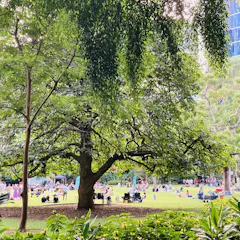
When the pandemic hit, green space was there for us at a time when others weren’t or couldn’t be. Urban greening might be the solution to the ‘lonelygenic environment’ that our cities have created.

Our cities are filled with historical infrastructure long past its first usage. New ways of thinking about urban planning though can turn them into much needed green spaces.
Top contributors
-

Professor of Human Geography and Planning, University of Tasmania
-
Senior Lecturer in Urban and Environmental Planning, Griffith University
-
Professor of Urban Health and Environment, UNSW
-
Professor of Cities and Planetary Health, ARC Future Fellow in nature-based solutions for loneliness, University of Sydney
-
Senior Lecturer, Department of Architecture, Federal University of Technology, Akure
-
Professor, Urban Ecology and Biodiversity, The University of Melbourne; RMIT University
-
Senior Lecturer, School of Agriculture, Food and Ecosystem Sciences, The University of Melbourne
-
Research Fellow, Centre for Urban Research, RMIT University
-
Vice-Chancellor's Research Fellow, Centre for Urban Research, RMIT University
-
Postdoctoral Research Fellow, The University of Queensland
-
Professor of International Planning, Centre for Urban Research, RMIT University
-
Distinguished Professor, Director of Smart Green Cities, Macquarie University
-
Professor, School of the Built Environment, University of Technology Sydney
-
Lecturer, Australian Urban Design Research Centre, The University of Western Australia
-
Associate Professor in Urban Ecology and Urban Horticulture, The University of Melbourne