
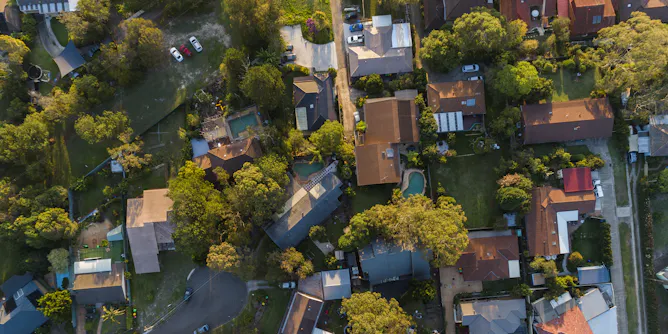
Thirty tree species make up more than half of Australia’s urban forests. Some won’t survive climate change, so cities must plant a more diverse mix of the right species to preserve their tree cover.
Articles on Urban greening
Displaying 41 - 60 of 65 articles

Not all of the solutions to the climate and ecological crisis have to be painful.
Two trends in Australia, an ageing population and warming climate, are increasing the threat that heatwaves pose to our health. Increasing vegetation cover is one way every city can reduce the risk.
Koalas can cope with the stresses of city life provided we plan urban developments in ways that help meet their basic needs.
Barangaroo is an example of a development with admirable green credentials, but it is also an exclusive precinct that has played a role in displacing the disadvantaged from this part of Sydney.
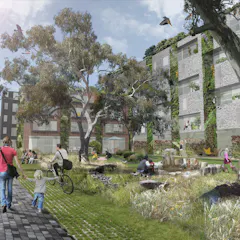
Australian cities are home to many threatened species but are also where biodiversity is being destroyed by development. But what if planning and design processes built nature into the urban fabric?
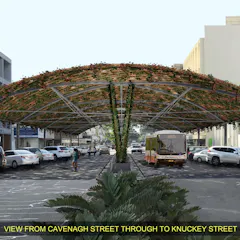
Darwin’s climate is getting even hotter and it’s one of the main reasons people leave the city. A lot more can be done, though, to make our tropical cities safe, cool and enjoyable.
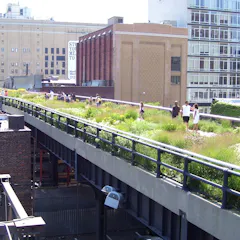
If the nature we desire is, in fact, its expression as untamed wildness, then we should turn to the creativity of artists as well as urban designers when building our cities.
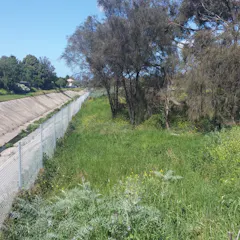
Residents often have concerns about informal green space but some still use it. Work to enhance these areas should aim to resolve these concerns without destroying what residents do value.
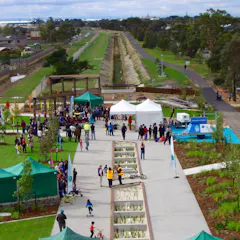
Tree plantings are making a visible difference to Melbourne’s west. It’s the result of a collaborative model of greening, one that Australian cities need to apply more widely.
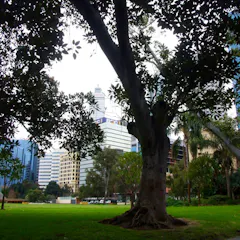
A new study shows major Australian cities are suffering an overall loss of green space –
although some areas are doing better than others.

Drains take up precious but inaccessible open space in our cities. Converting these to living streams running through the suburbs could make for healthier places in multiple ways.

Successful parks and urban green spaces encourage us to linger, to rest, to walk for longer. That, in turn, provides the time to maximise the restorative mental benefits.

Greening cities have a huge impact. The trees go beyond just lowering temperatures. They help decrease the demand for indoor cooling like air-conditioners saving money.
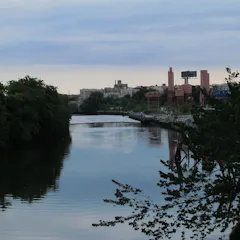
We can’t return degraded landscapes to their original state but we can change the way people relate to their local environments.

Urban green spaces are most effective at delivering their full range of health, social and environmental benefits when physical improvement of the space is coupled with social engagement.
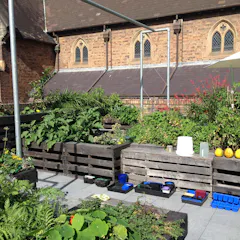
In a world of increasing urbanisation, density, pressure and, some say, isolation, there’s a natural salve for stress, pressure and mental illness. And it’s right above our heads.
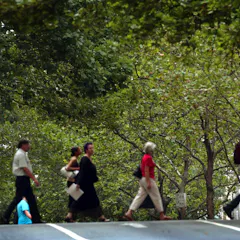
Greening cities that are becoming denser is a major challenge. City-dwellers’ health benefits from both well-designed green spaces and urban density, so we must manage the tensions between them.
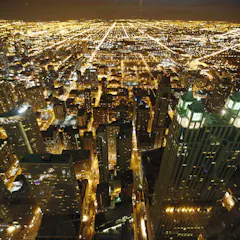
Urban greening programs need to consider the harmful impacts of artificial lighting on ecosystems. Fortunately, we can do a lot to create more biosensitive lighting.
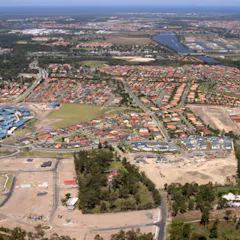
Recently published research has found that the concentration of poorer people in hotter places is a real problem for cities’ capacity to cope with climate change.
Top contributors
-

Professor of Human Geography and Planning, University of Tasmania
-
Senior Lecturer in Urban and Environmental Planning, Griffith University
-
Professor of Urban Health and Environment, UNSW
-
Professor of Cities and Planetary Health, ARC Future Fellow in nature-based solutions for loneliness, University of Sydney
-
Senior Lecturer, Department of Architecture, Federal University of Technology, Akure
-
Professor, Urban Ecology and Biodiversity, The University of Melbourne; RMIT University
-
Senior Lecturer, School of Agriculture, Food and Ecosystem Sciences, The University of Melbourne
-
Research Fellow, Centre for Urban Research, RMIT University
-
Vice-Chancellor's Research Fellow, Centre for Urban Research, RMIT University
-
Postdoctoral Research Fellow, The University of Queensland
-
Professor of International Planning, Centre for Urban Research, RMIT University
-
Distinguished Professor, Director of Smart Green Cities, Macquarie University
-
Professor, School of the Built Environment, University of Technology Sydney
-
Lecturer, Australian Urban Design Research Centre, The University of Western Australia
-
Associate Professor in Urban Ecology and Urban Horticulture, The University of Melbourne