

Although the government has identified a real problem, its heavy-handed regulation would create unnecessary red tape for universities and exclude students who should get a second chance.
Articles on University funding
Displaying 61 - 80 of 149 articles
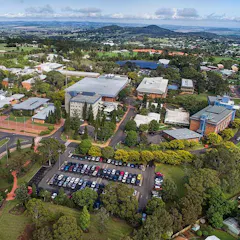
All universities face job losses. But the impacts of these job losses are greatest for regional communities.

Doubling the cost of degrees in the humanities and social sciences has a disproportionate impact on women because they account for two-thirds of the students.
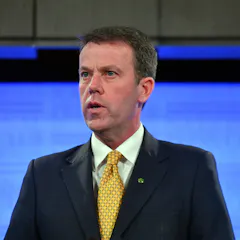
More than 70 of Australia’s Laureate professors have signed a letter to the minister for education, Dan Tehan, outlining the flaws in the proposed university reforms.

From December 2017 (when the government put a cap on demand-driven funding) to 2024 (when the Job-ready graduates package is fully implemented) — the government will save nearly A$1 billion annually.
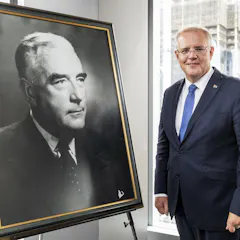
Developments in the 80s set the parameters for much of the political discourse around the humanities since.

Experts predict today’s graduates will have several different careers throughout their working life. The government’s university changes seem ignorant of this.

Research shows predictions for the jobs of the future are unreliable, and the government’s funding changes don’t match what their own data shows about future earnings.

The reduced rate of funding to universities (of up to 17%), per place, for national priority courses sends perverse messages to universities.

The implications of the government’s announcement are about more than incentivising the career trajectories of students. They are a direct assault on the premise of universities.

The education minister has outlined reforms to higher education funding aimed at producing ‘job ready graduates’. But his announcements don’t seem completely in line with the data.

Albertans expect a draft agreement for performance-based funding for universities — but here’s why it should be scrapped.

This essay explores the way the social contract between universities, society and the state has changed over the course of the 20th century. And how generations of students paid and benefited.
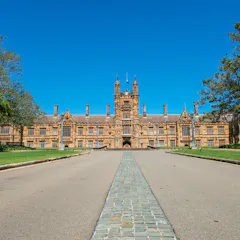
The government’s new funding package for universities is a good first step. But its plan for low-cost online courses is problematic.

For years, we’ve heard Australia’s spending on tertiary education is some of the lowest in the OECD. This is only true if you ignore GDP growth. Real spending was actually going up, until 2016.
In 2018, domestic numbers for undergraduate courses fell for the first time since 2013 – they will remain stagnant for some years. This and other factors put unis at face financial risk.

Graduate employment outcomes will determine 40% of the $80 million extra government funding for universities. This is a problem for three reasons.

Around 7.5% of university government funding will be tied to performance measures, including graduate outcomes and participation rates of disadvantaged students.

Evaluation is a critical tool for decisions on improving performance. It also assures that African universities are getting value for money from grants, donations and the like.

Many universities were built in the 1960s and 1970s and the government isn’t providing funds to maintain them.
Top contributors
-

Professor of Higher Education Policy, Monash University
-
Professor and Director, Mitchell Institute, Victoria University
-
Associate Professor, Melbourne Centre for the Study of Higher Education, The University of Melbourne
-
ARC Laureate Fellow, Swinburne University of Technology
-
Policy Fellow, Mitchell Institute, Victoria University
-
Honorary Senior Fellow, Centre for the Study of Higher Education, The University of Melbourne
-
Honorary Senior Fellow, Melbourne School of Psychological Sciences, The University of Melbourne
-
Professorial Fellow, University of Canberra
-
Professor of Research, Foundations & Higher Education, Northern Arizona University
-
Senior Research Fellow, Curtin University
-
Policy Analyst, Mitchell Institute, Victoria University
-
Professor, Environment and Development Sociology, The University of Queensland
-
Vice-Chancellor, Southern Cross University
-
Professor of Higher Education, University of KwaZulu-Natal
-
Deputy Executive Dean and Associate Dean (Academic), Faculty of Humanities, Arts and Social Sciences, The University of Queensland