

Labor’s main election promise for higher education is to restore the demand-driven system of funding, also known as scrapping the “cap” on government funding. Here’s why that would be a good policy.
Articles on University funding
Displaying 81 - 100 of 149 articles
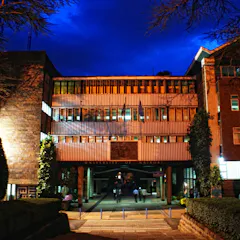
Kenya’s once financially healthy universities are in financial straits.

Nigeria’s higher education system is the biggest on the continent but it lags behind on research output.

As students return to campuses this week, new research shows universities could save money by not asking professors to teach tutorials because they are no more effective than student instructors.
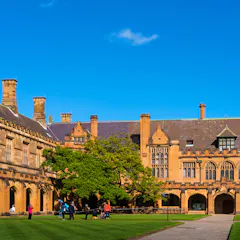
Tensions between the government and the university sector ran high in 2018, with the government cutting funding to student places and research and a big push back from universities.

Australian tertiary education policy and funding debates are better served by domestic data.

If Labor is to once again uncap university funding, vocational education reform is a vital.

Most universities do, in fact, mention academic freedom in several policy documents, such as enterprise bargaining agreements and other codes of conduct.
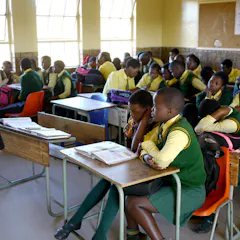
In South Africa the preparation of history teachers as well as the teaching of history is in serious need of attention.
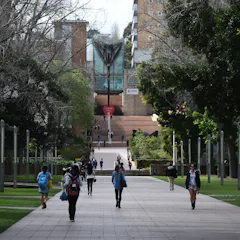
Australian higher education policy debates focus primarily on how and by whom universities are funded. This diminishes understanding of universities’ democratic purpose and wider social mission.

Despite the Federal Government’s teacher education reforms and the push for evidence-based teaching, less than 2% of ARC research funding is directed to educational research.

Universities could mine alumni databases to improve individual institutions’ work - and raise funds.

The benefits of university are clear and measurable, but we can do more with constructive reform.

The freeze on university funding not only limits opportunities for students, it puts limitations on the communities unis serve, the economy, and business interested in forming collaborations.

Vice-chancellors often benchmark their salaries against comparable positions in other corporate sectors, a symptom of the trend towards the corporatisation of universities in Australia.

New analysis of education expenditure shows spending on the vocational education and training sector has declined while other sectors have experienced growth.

Though more moderate than the 2014 version, the new higher education reform package represents groundhog day for the major political parties.
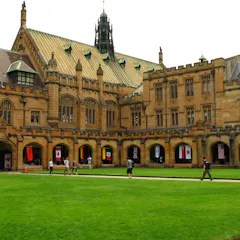
The fact that a university has a surplus doesn’t mean it has a profit to be either reinvested or returned to shareholders. Grants, for example, should be spent on the projects they’re intended for.
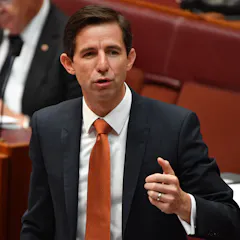
The government is seeking savings of $2.8 billion from higher education over the budget period, in another attempt at a major shake-up of Australia’s university sector.

There are already signs of this happening in Australia, but research from overseas reveals few benefits.
Top contributors
-

Professor of Higher Education Policy, Monash University
-
Professor and Director, Mitchell Institute, Victoria University
-
Associate Professor, Melbourne Centre for the Study of Higher Education, The University of Melbourne
-
ARC Laureate Fellow, Swinburne University of Technology
-
Policy Fellow, Mitchell Institute, Victoria University
-
Honorary Senior Fellow, Centre for the Study of Higher Education, The University of Melbourne
-
Honorary Senior Fellow, Melbourne School of Psychological Sciences, The University of Melbourne
-
Professorial Fellow, University of Canberra
-
Professor of Research, Foundations & Higher Education, Northern Arizona University
-
Senior Research Fellow, Curtin University
-
Policy Analyst, Mitchell Institute, Victoria University
-
Professor, Environment and Development Sociology, The University of Queensland
-
Vice-Chancellor, Southern Cross University
-
Professor of Higher Education, University of KwaZulu-Natal
-
Deputy Executive Dean and Associate Dean (Academic), Faculty of Humanities, Arts and Social Sciences, The University of Queensland