
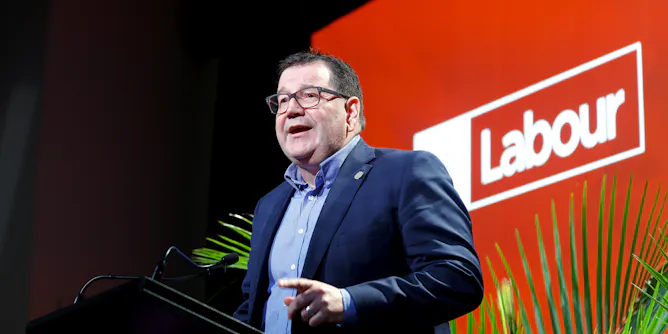
The former finance minister starts as vice-chancellor of Otago University in July. But such appointments call for more robust debate about the perceived independence of our tertiary institutions.
Articles on University funding cuts
Displaying 1 - 20 of 30 articles
Universities should shift toward co-operative governance structures that foster collaborative approaches to teaching and research, which can help tackle the crises we collectively face.

From commerce to public policy, cuts to New Zealand’s university humanities departments will have repercussions well beyond the so-called ‘ivory towers’.

The country’s creative and critical music culture will be substantially diminished if the university funding crisis hits any harder.
Stuff cuts are just the most visible aspect of critical problems within the modern university, as a new survey of academic workers reveals.
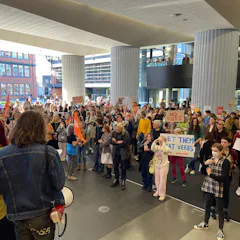
The crisis in New Zealand universities is directly traceable to years of sustained underfunding and means they now lack vital research and development capacity.
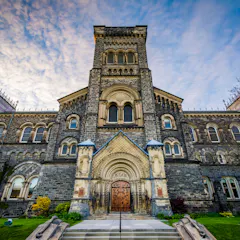
Forcing universities to only serve the needs of the labour market undermines their abilities to educate students and conduct research.
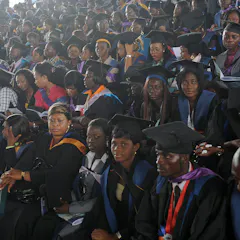
Nigeria’s lecturers’ strike raises fundamental questions about how Nigerian universities are run and funded.

Puerto Rico has reached an agreement to partially settle its historic bankruptcy crisis. But public cuts to education and health care are unlikely to ease, creating ongoing challenges for Puerto Ricans

The subsidies for student places up to 2024 fall about $1.1 billion short of the level needed to create the extra places the government promised its Job-ready Graduates policy would deliver.

With high fees and COVID restrictions in place, student satisfaction in England is on the downturn. How should they think about the value of their studies?
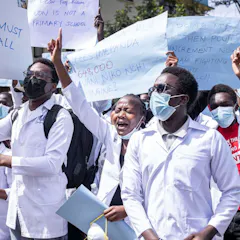
Universities will need strategies that can defuse constant disruption of learning due to student protest.

The 2021 Federal Budget should be used as an opportunity to invest in ideas: in arts, culture, universities, the ABC, and First Nations Australians.

It’s one of the largest funding cuts to any university course, and will leave Australia ill-equipped to deal with the environmental challenges of the future.

What is musicology and why is it important?
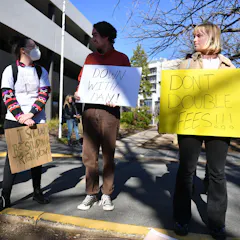
Three decades ago, in another time of upheaval in higher education, 7% of working-age Australians had a degree. Today 33% have one. More people than ever have a stake in what happens to universities.

The implications of the government’s announcement are about more than incentivising the career trajectories of students. They are a direct assault on the premise of universities.

The education minister has outlined reforms to higher education funding aimed at producing ‘job ready graduates’. But his announcements don’t seem completely in line with the data.
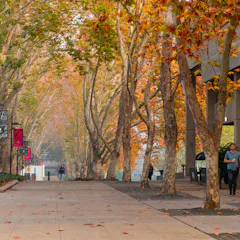
In 2018, domestic numbers for undergraduate courses fell for the first time since 2013 – they will remain stagnant for some years. This and other factors put unis at face financial risk.
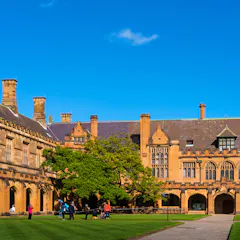
Tensions between the government and the university sector ran high in 2018, with the government cutting funding to student places and research and a big push back from universities.
Top contributors
-

Honorary Senior Fellow, Centre for the Study of Higher Education, The University of Melbourne
-
Vice-Chancellor, Western Sydney University
-
Adjunct Professor, Department of Leadership, Higher and Adult Education, OISE, University of Toronto
-
Vice Chancellor, Victoria University
-
Associate Professor, Composition and Sonic Arts, Te Herenga Waka — Victoria University of Wellington
-
Adjunct Associate Professor of Public Health, Victoria University
-
Professor, University of Cape Town
-
President and Vice Chancellor, Monash University
-
Vice-Chancellor, Southern Cross University
-
Honorary Fellow, Centre for Cultural Diversity and Wellbeing, Victoria University
-
Professor of International Affairs and the Vice-Provost and Associate Vice-President (Academic), Carleton University
-
Professor, Leadership and School Transformation, School of Education, University of Newcastle, University of Newcastle
-
Professor of Research, Foundations & Higher Education, Northern Arizona University
-
Director of the MacDiarmid Institute for Advanced Materials and Nanotechnology, University of Auckland, Waipapa Taumata Rau
-
Executive Director, IRU, La Trobe University