

In the castle, talk is cheap and not to be trusted.
Articles on Truth
Displaying 1 - 20 of 74 articles

Research on language processing fluency can help us become aware of our psychological tendencies, and how to use them more productively with gen AI chatbots.

Everyone likes being told they’re clever, even if it’s coming from an AI chatbot. But their sycophancy has serious consequences for truth and trust.

In practice, most of our experiences of shared realities are not involved in truth. Think of myths, neighbourly feeling, or the sense of community.
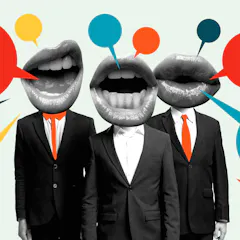
Experts can combat misinformation by sharing their opinions, instead of just information.

Being open and honest is meant to build trust in science but research suggests it can sometimes have the opposite effect.

Allegations of untruth over The Salt Path raise questions of what we expect from truth in memoir, in this age of ‘fake news’. What is the contract with the reader?

Donald Trump aims to rewrite America’s official history. George Orwell − who wrote, ‘Who controls the past controls the future. Who controls the present controls the past.“ − would recognize that impulse.

We need to learn how to spot deceit in politics, media and business – and hold those behind it to account.
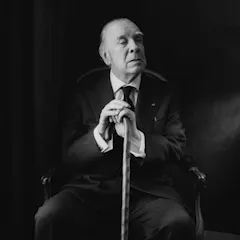
Borges imagined an endless library that contained every possible permutation of letters. The truth is out there, but it’s embedded among hordes of lies and gibberish.
No one wants to spend their hard-earned money on a dud product, so we’ll seek advice from strangers. Online reviews can help – but often lead us down the wrong path.

In a series of surveys, researchers studied when and why voters put up with inaccurate statements from their leaders.
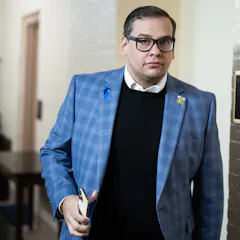
A scholar of political deception says there is something especially deceitful about George Santos, and his success getting elected demonstrates mastery of something more than just pathological lying.

Researchers are interested in whether who you’re communicating with and how you’re interacting affect how likely you are to lie.

When sincerity counts as honesty, accuracy no longer matters.

These histories remind us how long First Nations people have waited for political recognition in this country – and that, compared to other former colonial sites, Australia is the exception, not the rule.
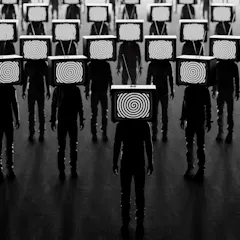
To restrict the spread of fake news on social media platforms, researchers designed an algorithm that can flag potential misinformation.

What does it mean to say, ‘I have spoken my truth’? Can the truth really be relative – and how can we have reasoned debates if it is?

Why you shouldn’t judge a book by its cover: the limitations of reading body language.

AI chatbots can’t take responsibility for what they say, so we shouldn’t trust them.
Top contributors
-

Associate Professor of Psychology, Vanderbilt University
-
Senior Lecturer in Philosophy and Education; Curriculum Director, UQ Critical Thinking Project, The University of Queensland
-
Professor of Screen Media, King's College London
-
Professor in Psychology / Director of Research, Bangor University
-
Postdoctoral Researcher, School of Media Arts and Technology, Southampton Solent University
-
Research Associate, University of Manchester
-
Research Fellow, Center for Philosophy and History of Science, Boston University
-
Senior Lecturer in Philosophy and Co-Director of the Centre for Engaged Philosophy, University of Sheffield
-
Michael Hintze Chair of International Security, University of Sydney
-
Dean of the Reed College of Media, West Virginia University
-
Assistant researcher, University of Sydney
-
Assistant Professor of Marketing, University of Oregon
-
Professor of Informatics and Computer Science, Indiana University
-
Professor of Psychology, University of Michigan
-
Associate Professor in the Department of Political Sciences and Director of the Centre for Mediation in Africa, University of Pretoria