
Donald Trump’s false claims about the Iran War, Epstein files, tariffs and inflation have left some supporters who have traditionally believed all he says feeling duped and abandoned. Why now?
Articles on Lies
Displaying 1 - 20 of 46 articles

When officials lie time and again, people don’t know what to trust. And when this happens, citizens cannot deliberate, approve or dissent coherently, because a shared world no longer exists.
Obvious lies aren’t necessarily failed lies. They can confuse, distract, excite and intimidate a range of audiences. They can also be believed, no matter how obviously false they seem.

Two US wars based on lies, in which tens of thousands of American troops and millions of civilians died, offer a cautionary tale about the rush to war.
We need to learn how to spot deceit in politics, media and business – and hold those behind it to account.
Borges imagined an endless library that contained every possible permutation of letters. The truth is out there, but it’s embedded among hordes of lies and gibberish.
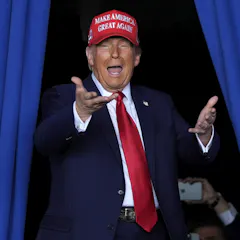
A new book sorts the myths from the facts in a comprehensive account of how the former president became the United States’ most powerful businessmen.
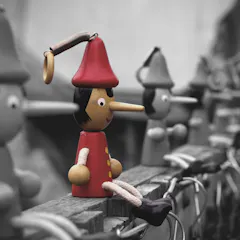
These people share conspiracy theories to promote conflict, cause chaos, recruit and radicalize potential followers, make money, harass, or even just to get attention.

Good liars can easily bypass classic lie detection stereotypes.
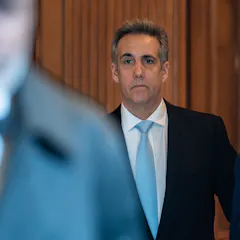
Lying liars and closed eyes − both played roles in the most recent chapter of former President Donald Trump’s criminal trial in New York City.
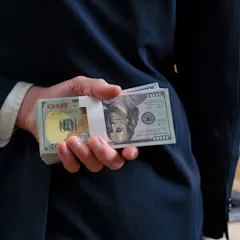
If you want to get involved in shady business, find someone who’s loyal − but not ethical.
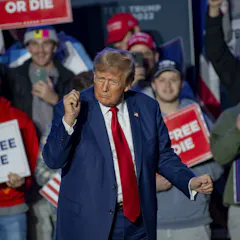
Artificial intelligence is likely to make the ‘fake news’ problem worse. But it can also be used to help us counter misinformation.
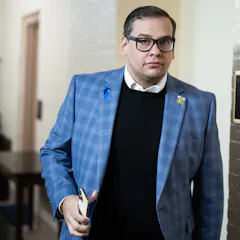
A scholar of political deception says there is something especially deceitful about George Santos, and his success getting elected demonstrates mastery of something more than just pathological lying.

A political philosopher writes that voters may put up with some degree of deception from politicians, but they may not accept being lied to unnecessarily.
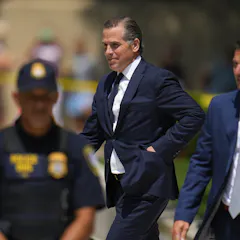
Researchers are interested in whether who you’re communicating with and how you’re interacting affect how likely you are to lie.
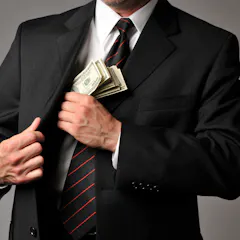
Financial analysts have a gullibility problem − and the better their reputation, the worse it is.
It’s far easier to throw around accusations of damage to one’s reputation than it is to actually prove it in court. A journalism scholar explains the criteria that must be met.

Most methods for detecting lies actually detect signs of stress – which makes them extremely unreliable.

Kids need to learn when little lies are the right choice. But research suggests parents may not be clear in the messages they send about how they value the truth.

Constituents’ willingness to overlook deception may depend, in part, on whether politicians lie well and with a good purpose.
Top contributors
-

Professor of Philosophy, Public Policy and Governance, University of Washington
-
Associate Professor, Grady College of Journalism and Mass Communication, University of Georgia
-
Managing Director of the McCourtney Institute of Democracy, Associate Research Professor, Political Science, Co-host of Democracy Works Podcast, Penn State
-
Associate Professor of Psychology, Concordia University
-
Research Associate, University of Manchester
-
Dean of the Reed College of Media, West Virginia University
-
Graduate Student in History, Northwestern University
-
Associate Dean for Academic Affairs and Professor of Law, Georgia State University
-
Intermittent Lecturer I in Information, University of Michigan
-
Assistant Professor of Marketing, University of Oregon
-
Emeritus Professor of Psychiatry, Lecturer on Bioethics & Humanities at SUNY Upstate Medical University; and Clinical Professor of Psychiatry, Tufts University School of Medicine; Editor-in-Chief Emeritus, Psychiatric Times., Tufts University
-
Senior Lecturer in Cognitive Psychology, Keele University
-
Professor of Psychology, University of California, San Diego
-
Professor of Educational Psychology, University of Wollongong
-
Professor of French and Comparative Literature, Georgetown University