
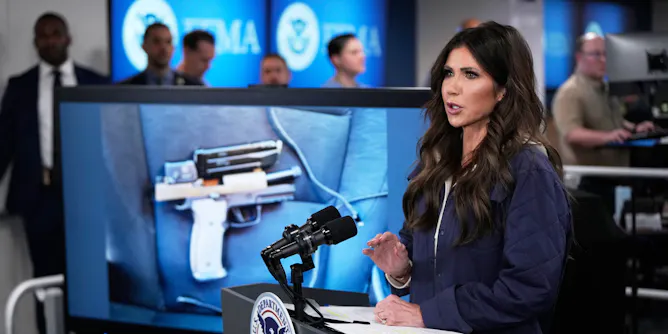
When officials lie time and again, people don’t know what to trust. And when this happens, citizens cannot deliberate, approve or dissent coherently, because a shared world no longer exists.
Articles on Facts
Displaying 1 - 20 of 36 articles
Cultural ideas are inextricably entwined with the people who do science, the questions they ask, the assumptions they hold and the conclusions they land on.

Historical examples abound of American news consumers being presented with verified facts about controversial figures or events, only to have the excellent journalism have little to no effect.

A professor shows science students how humanities classes are the real stem that other disciplines sprout from. They learn that critical thinking and skepticism don’t stop when they leave the lab.
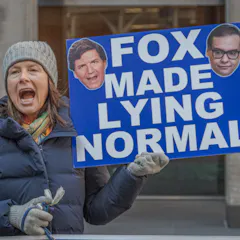
A news organization doesn’t have to publish or broadcast the facts or the truth. And there are no standardized requirements to be a journalist.

Two concepts can help explain why society seems increasingly unable to agree on basic facts.

ChatGPT and other AI chatbots seem remarkably good at conversations. But you can’t believe anything they say. Sometimes, though, reality isn’t the point.

Here are some reasons for the natural human tendency to avoid or reject new information that runs counter to what you already know – and some tips on how to do better.

Instead of complacent acceptance of misinformed beliefs, we need institutional moves to cultivate trust between experts and the public.

Fact-checking risks oversimplifying and distorting Americans’ political conflicts, while not actually helping people find ways to work together productively.
How you respond to a risk depends on how you weigh the costs and benefits of an action. The problem is you’re not just a logical computer, and emotions bias your interpretation of the facts.

Cognitive shortcuts help you efficiently move through a complicated world. But they come with an unwelcome side effect: Facts aren’t necessarily enough to change your mind.
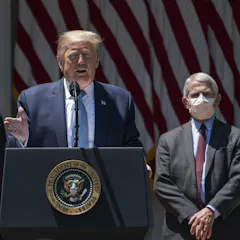
Whether in situations relating to scientific consensus, economic history or current political events, denialism has its roots in what psychologists call ‘motivated reasoning.’

It’s common to encounter people who are misinformed, but don’t know it yet. What’s the best way to talk to someone else about what they think is true?

Is making sense of a story more important than getting at its truth? Looking at the treatment of myth in ancient Greece may help us navigate what is true, and whether that matters.

Images without context or presented with text that misrepresents what they show can be a powerful tool of misinformation, especially since photos make statements seem more believable.
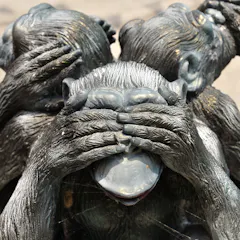
Whether in situations relating to scientific consensus, economic history or current political events, denialism has its roots in what psychologists call ‘motivated reasoning.’

The world faces a collision between facts and alternative facts – so how do experts get their message heard over the din of fake news?
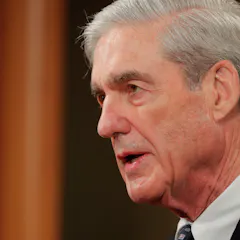
What’s the role of someone who, like
Robert Mueller, speaks only facts in a tornado of partisan bombast? Is it a breath of fresh air or an abdication of responsibility to protect America’s interests?
How can a community decide the direction it should go, if its members cannot even agree on where they are? Two political scientists say the growing phenomenon of dueling facts threatens democracy.
Top contributors
-

Professor of Philosophy, Wake Forest University
-
Associate Professor of Psychology, Vanderbilt University
-
Professor and Chair of Linguistics, University of Sydney
-
Senior Lecturer in Philosophy and Education; Curriculum Director, UQ Critical Thinking Project, The University of Queensland
-
Professor of Social Psychology in Society, University of Cambridge
-
Professor of Astroparticle Physics, Queen's University, Ontario
-
Professor of Communication & Director of the School of Communication, The Ohio State University
-
Visiting Research Fellow in Philosophy, University of Hertfordshire
-
Assistant Professor of History of Behavioral Science, The Ohio State University
-
Emeritus Professor of Psychiatry, Lecturer on Bioethics & Humanities at SUNY Upstate Medical University; and Clinical Professor of Psychiatry, Tufts University School of Medicine; Editor-in-Chief Emeritus, Psychiatric Times., Tufts University
-
Senior Research Fellow, Melbourne School of Psychological Sciences, The University of Melbourne
-
Professor of English, University of Minnesota
-
Associate Professor of Journalism, American University
-
Associate Professor of Law, University of Dayton
-
Professor of Philosophy, Public Policy and Governance, University of Washington