

Two concepts can help explain why society seems increasingly unable to agree on basic facts.
Articles on Truth
Displaying 21 - 40 of 74 articles
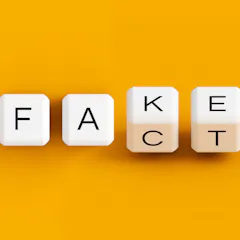
A philosopher unpacks the ‘ethics of belief’ for an age awash in bad information.

Truth is fundamental to our lives. Human beings cannot exist without truth, but this concept is more complex than we think.

ChatGPT is a sophisticated AI program that generates text from vast databases. But it doesn’t understand the information it produces, which also can’t be verified through scientific means.
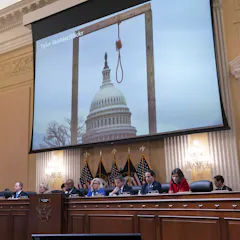
There are genuine political disagreements, and then there are time-worn strategies for selling denial to the public. A sociologist breaks down the patterns.
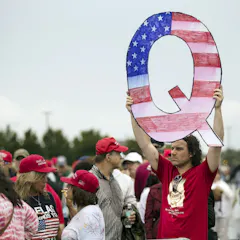
Overcoming conspiracy theories isn’t just about information. A scholar of religion explains that the emotions they inspire are part of their appeal.

What if cultivating your authentic self doesn’t involve self-reflection, but instead means focusing on what feels good and natural?

Fact-checking risks oversimplifying and distorting Americans’ political conflicts, while not actually helping people find ways to work together productively.

Though many people are just paying attention to these problems now, they are not new – and they even date back to ancient Rome.
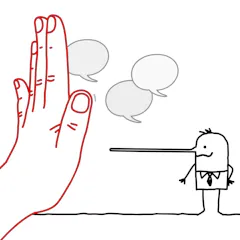
A social psychologist explains how to avoid being misled, and how to prevent yourself – and others – from spreading inaccurate information.

Americans who believe aliens have visited Earth are more likely than disbelievers to say that Joe Biden is not the legitimate winner of the 2020 presidential election.

When a decision is made and people don’t get the outcome they want, they often tend to see it as unfair. Here’s why.

It turns out liars and truth-tellers behave very differently when questioned.

How much weight would you put on a scientist’s expertise versus the opinion of a random stranger? People on either end of the political spectrum decide differently what seems true.

The CDC has released conflicting messages on masks and transmission of the coronavirus. A scholar explains the nature of trust and why institutions need to be careful.

Whether in situations relating to scientific consensus, economic history or current political events, denialism has its roots in what psychologists call ‘motivated reasoning.’

Journalism’s ethics code says the press must ‘seek truth and report it,’ and also minimize harm. During a public health crisis, how should the press deal with President Trump’s inaccuracies and lies?

Is making sense of a story more important than getting at its truth? Looking at the treatment of myth in ancient Greece may help us navigate what is true, and whether that matters.

Post-truth questions the very nature of truth itself – that’s why it’s so dangerous.
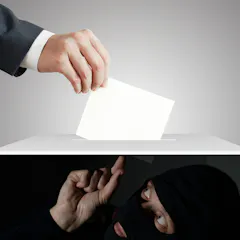
Information warfare has gone global. Here are some recent campaigns, and a couple of ideas about how to fight back.
Top contributors
-

Associate Professor of Psychology, Vanderbilt University
-
Senior Lecturer in Philosophy and Education; Curriculum Director, UQ Critical Thinking Project, The University of Queensland
-
Professor of Screen Media, King's College London
-
Professor in Psychology / Director of Research, Bangor University
-
Postdoctoral Researcher, School of Media Arts and Technology, Southampton Solent University
-
Research Associate, University of Manchester
-
Research Fellow, Center for Philosophy and History of Science, Boston University
-
Senior Lecturer in Philosophy and Co-Director of the Centre for Engaged Philosophy, University of Sheffield
-
Michael Hintze Chair of International Security, University of Sydney
-
Dean of the Reed College of Media, West Virginia University
-
Assistant researcher, University of Sydney
-
Assistant Professor of Marketing, University of Oregon
-
Professor of Informatics and Computer Science, Indiana University
-
Professor of Psychology, University of Michigan
-
Associate Professor in the Department of Political Sciences and Director of the Centre for Mediation in Africa, University of Pretoria