

In her new book, media and technology academic Nicolette Little examines the impact of five Canadian grassroots multi-media projects.
Articles on Trauma-informed
Displaying all articles
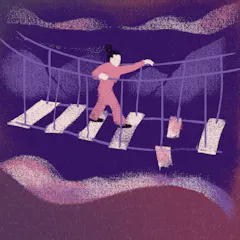
The term is everywhere, but what does it mean? Six guiding principles can help organisations provide care without causing further harm.

Evidence suggests the widespread adoption of trauma-informed care practices can potentially improve access to care as well as quality of care for all patients.

Retraumatisation can lead to mental health crises including suicidal thoughts and actions, self-harm and agoraphobia.

A trauma- and violence-informed approach calls for participants, coaches, managers and organizations to understand the effects of systemic, structural and interpersonal violence.

A contributing factor to a rise in violence in Ontario schools is underfunding of education and the social service sector. Using trauma-informed responses is part of the solution.

Children and youth in care are more likely to have experienced trauma that can affect future health. A comprehensive, trauma-informed health strategy for these children and youth is long overdue.

During spring and summer, as more people consider exercising outdoors, a trauma- and violence-informed approach to physical activity can help ensure equity, inclusion, safety and access.

A trauma-informed approach to education can help educators acknowledge and address the adversities faced by Black and Indigenous students.

Abuse, neglect or witnessing violence at home can lead kids to misbehave. Some schools are doing away with expulsions to focus on childhood trauma instead.

Recording and bearing witness to a Black person’s death from police violence is in itself traumatizing.

In some Manitoba schools, educators are working to recognize that the most urgent need for children who have experienced trauma is to establish the child’s sense of safety in the school.

When care is equity-oriented, patients report fewer depression and trauma symptoms, less chronic pain and improved quality of life.

The National Memorial for Peace and Justice helps demonstrate that the lynching of black people was not the fault of victims. But telling this history risks re-traumatizing the black community.

Childhood trauma impacts women’s health and can be passed from parent to child. New research shows that when new mothers feel supported, the risk of pregnancy complications is reduced.

A new model shows how the Canadian school system can play a healing role - for children traumatized by war, displacement and abuse.
Top contributors
-

Associate Professor, School of Kinesiology and Health Science, York University, Canada
-
Associate Professor, Health Sciences, Carleton University
-
Professor of Education, University of Winnipeg
-
Professor, Faculty of Education, University of Manitoba
-
Associate Professor, Faculty of Education, Wilfrid Laurier University
-
Professor, Canada Research Chair in Determinants of Child Development, Owerko Centre at the Alberta Children’s Hospital Research Institute, University of Calgary
-
Sessional Instructor, Cultural Studies and Critical Theory, McMaster University
-
Professor and Department Head of CTL, Faculty of Education, University of Manitoba
-
Associate Professor, Faculty of Social Work, University of Manitoba
-
Associate Professor, King’s School of Social Work, Western University
-
PhD candidate (health), Dalhousie University
-
Professor, Cumming School of Medicine, Max Bell Burns Policy Fellow, University of Calgary
-
Professor & Distinguished University Scholar, University of British Columbia
-
Associate Professor, School of Psychology, Scientist, Children's Hospital of Eastern Ontario Research Institute, L’Université d’Ottawa/University of Ottawa
-
Professor of Psychology, Pepperdine University