
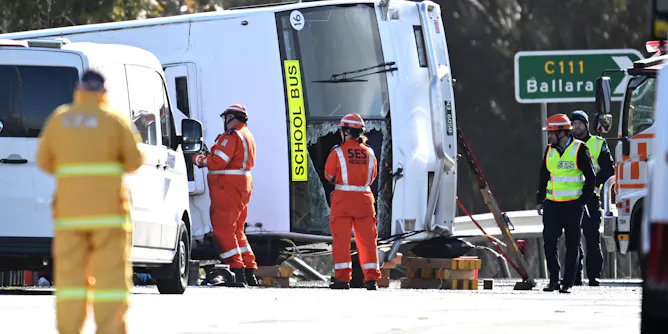
The Stonehaven school bus rollover, which killed a young girl, is a tragic reminder of how devastating such crashes can be. But there are ways to make buses safer.
Articles on Transport
Displaying 41 - 60 of 493 articles

Johannesburg in South Africa and São Paulo in Brazil offer useful insights into how cities in the global south should be managed.
Conquering hills, commuting without a sweat and carrying cargo – e-bikes encourage more people to get out of their cars.

Boosting education and skills training as well as improving transport and strengthening social protection would help people out of extreme poverty.
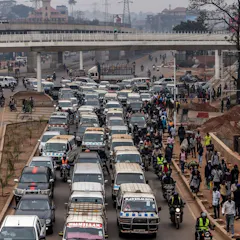
Motorcycle ride-hailing taxis have been hailed as a major boon for African cities. But they also present new risks of their own making.
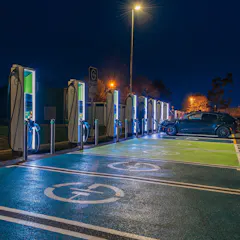
Government investment in neighbourhood EV chargers cannot replace investment at motorway services.
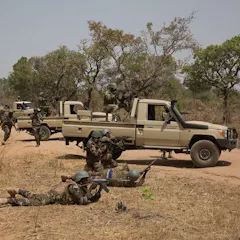
There is fierce competition for access to roads in conflict zones
An estimated 1.5 billion petrol, diesel and LPG cars are on the world’s roads – and will be for decades. Ensuring they run cleanly is vital.
From fires to carbon emissions and electromagnetic fields, misinformation about electric vehicles is rife – and widely believed.

Digital work can be experienced as more dignified than the available alternatives – if rules and pay are fair.
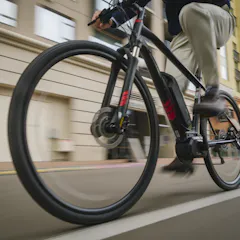
These pilot schemes suggest e-bikes can be popular even in non-riding communities. But easy access, infrastructure and local organisation are all vital.

Airbus, Saab, Dassault and others are part of an initiative involving ‘coopetition’, a practice that can help firms tackle complex challenges like sustainability.

The case of the start-up can be seen as an example of how a ‘pirate organization’ operating in legal limbo transitions to a more established company.

Ending Labor’s EV tax break would make it much harder to cut surging emissions in Australia’s transport sector.
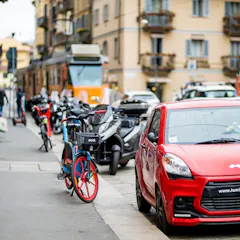
Transport apps and self-driving cars are on the rise, but mobility needs to fit the way people actually live.
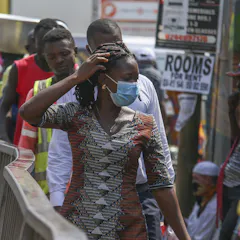
Ghana’s cities pay little attention to the needs of walkers.

How people got stuff around before wheels.
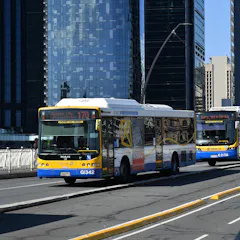
Neither lowering fares or simply increasing enforcement can solve fare evasion alone. Investing in better services and winning public trust are just as important.
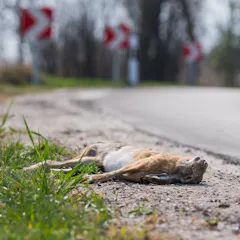
For most animals, unlike humans, cars offer threats rather than benefits.

Walking and cycling get 90c per person each year from the Australian government. What if that figure rose to $5, $10 or $15?
Top contributors
-

Professor of Sustainability, Curtin University
-
Transport and Cities Program Director, Grattan Institute
-
Honorary Principal Fellow, University of Wollongong
-
Professor of Transport Technology and Sustainability, Swinburne University of Technology
-
Associate Professor and Principal Fellow in Urban Risk and Resilience, The University of Melbourne
-
Researcher in Transport Policy and Governance, UCL
-
Honorary Professor of Transport Studies
-
Chris Rissel is a Friend of The Conversation.
Senior Research Fellow, College of Medicine and Public Health, Flinders University
-
Professor of Operations Management, Manchester Metropolitan University
-
Visiting Research Fellow, Intelligent Mobility, Manchester Metropolitan University
-
Associate Professor in Urban Planning, The University of Queensland
-
Adjunct Professor, School of Engineering and Built Environment, Griffith University
-
Professor and Director, Institute of Transport and Logistics Studies, University of Sydney
-
Professor of Transport Governance, University of Leeds
-
Research Fellow, GAMUT, The University of Melbourne