

Although the judgment promotes gender equality, it opens another chapter in the struggle between customs and constitutional rights.
Articles on Traditional leaders
Displaying 1 - 20 of 28 articles
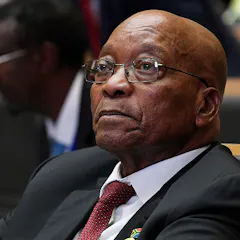
Zuma’s uMkhonto weSizwe is now the largest party in KwaZulu-Natal and the fourth biggest nationally.
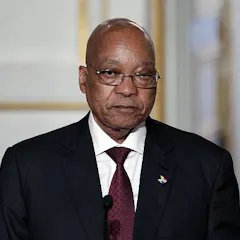
Jacob Zuma claims that his new political home, the Umkhonto we Sizwe Party, is the authentic ANC, not the one led by President Cyril Ramaphosa.

Land disputes arise when the fundamental principles of customary law are breached. The breach can be at the hands of the state or its representatives.

Ghana’s regions have no autonomy, yet creating new ones is contentious as it threatens the interests of chiefs and political parties.
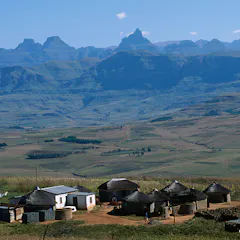
The judgment highlights the lack of interest by successive government ministers in curtailing the self-interested actions of rural elites.
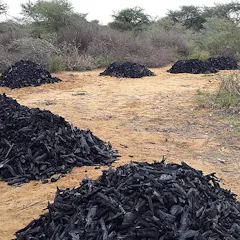
Attempts to formalise charcoal production have been largely unsuccessful.

African leaders can make strategies to fight COVID-19 more accessible to the people.
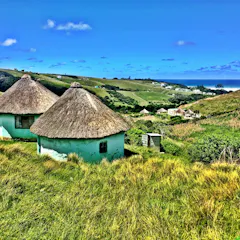
Clashes between mining companies and communities are often about the age-old question of whether mining, with its adverse impacts, can benefit the many or only a selected few.
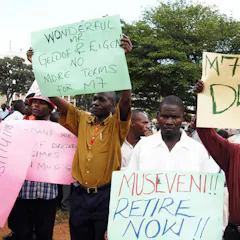
Trouble in Africa’s cities is due to the fact that electoral competition drives leaders to be biased towards rural areas.
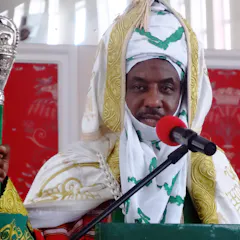
Recently, the Kano State government in the north west region of Nigeria removed the Emir, the first highly westernised and educated person on the throne.
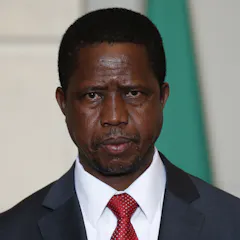
The unstable authoritarian pathway that many post-colonial African states followed was facilitated by the way in which European empires undermined democratic elements within African societies.

The role and efficacy of the traditional crime-prevention measures in Iraye-Oke are widely acknowledged by people who live in the area.
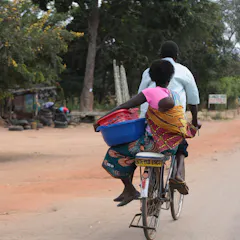
While not all men are willing to become involved in women and children’s health, some situations force them take on ‘women’s work’.

Colonialism and apartheid sought to make traditional leaders accountable to white officials by tying them to land.
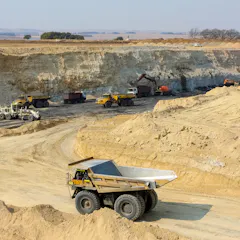
South Africa’s rural communities where mining licenses have been granted are often excluded from consultations and bear the brunt having their environment and livelihoods destroyed.

The mere presence of NGOs, no matter their size or aims, inadvertently reduced the legitimacy of local village headmen.

Villagers from a community in South Africa’s Eastern Cape fought to be consulted and for the power to consent to mining their land.
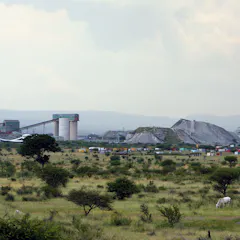
South Africa has made progress towards interrupting the looting of land by chiefs, state officials and mining capital.

The main reason land reform in South Africa has been lethargic is not the Constitution, but a flawed approach.
Top contributors
-

Associate Professor, Sociology, University of Fort Hare
-
Professor in Food Security; Head of the Department of Agricultural Economics, Extension and Rural Development, University of Pretoria
-
Professor of Political Studies, University of Johannesburg
-
Network and Research Manager: ARUA – UKRI GCRF FSNet Africa, University of Pretoria
-
Researcher at the Centre for African Studies, University of Basel
-
Manager: Centre for Learning and Teaching Development, Walter Sisulu University
-
Sociology Lecturer, University of Namibia
-
Associate professor, University of Wisconsin-Milwaukee, College of Nursing
-
Deputy Executive Director in Economic Development and Professor of Social Anthropology, Human Sciences Research Council
-
NRF Accredited & Senior Researcher; Lead Coordinator of the South-South Educational Collaboration & Knowlede Interchange Initiative, Cape Peninsula University of Technology
-
Associate professor, University of Cape Town
-
Associate Professor of History, Southern Methodist University
-
Professor of Democracy, University of Birmingham
-
Chief Albert Luthuli Research Chair, University of South Africa
-
Senior Research Manager in the Developmental, Capable and Ethical State Research Division of the HSRC, Human Sciences Research Council