

Marriage under the age of 18 harms girls’ health, education and gender equality.
Articles on Customary law
Displaying 1 - 20 of 31 articles

The case settles a longstanding question: how does a civil marriage affect a couple’s earlier customary marriage?

Although the judgment promotes gender equality, it opens another chapter in the struggle between customs and constitutional rights.

A balance needs to be struck between the protection of teenagers and the preservation of culture.

Zulu custom opposes divorce except in very particular circumstances. But King Misuzulu kaZwelithini has turned to the courts to end his marriage.

Kumasi was once considered among west Africa’s greenest cities.

South African law hasn’t specifically recognised the traditional concept of a communal family house.

The transfer of township rental houses to inhabitants did not necessarily give families greater security. “Family houses” were frequently acquired by individuals.

Land disputes arise when the fundamental principles of customary law are breached. The breach can be at the hands of the state or its representatives.

The Marriage Bill should strike a balance between preserving non-discriminatory cultural and religious practices and promoting liberal values.
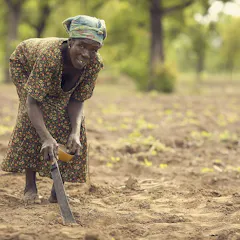
Reforms to land policies and regulations are enabling the traditional custodians of the land in Ghana to transfer ownership. Communal land users could lose their basic rights.

It’s important to understand that a First Nations consultative body such as the Customary Senate doesn’t pose a ‘threat’ to democracy or the rule of law.

When judges, legislators, and policymakers neglect the foundational dynamics of indigenous customs, they worsen conflict between indigenous laws and state laws.

Perceptions of marriage abduction as a recent phenomenon hide the violence that has been done to women as part of culture.

The judgment highlights the lack of interest by successive government ministers in curtailing the self-interested actions of rural elites.

Denying people the right to opt out of the traditional court system conflicts with the notion of customary law as a voluntary and consensual system of law.
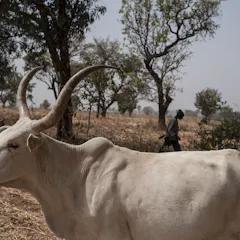
Institutional problems make it difficult to satisfy livestock and crop farmers’ interests, already in contest over agricultural resources.

Traditional leaders do not adequately represent the interests of rural communities in dealing with mining companies.

Countries where traditional laws exist must uphold children’s rights and push for their best interest.

South African customary law should be understood from the perspective of dissonance between the past and the present.
Top contributors
-

Professor of African legal pluralism, University of the Western Cape
-
Associate Professor, Sociology, University of Fort Hare
-
Professor, Department of Legal Studies, School of Public Policy, University of Massachusetts Amherst
-
Professor of Legal Pluralism, Religious Family Laws, and Human Rights, University of Cape Town
-
Postdoctoral Research Fellow, University of Stirling
-
Professor, University of South Africa
-
Emeritus Professor, Poverty, Land and Agrarian Studies, University of the Western Cape
-
Senior Lecturer, Planning and Sustainability, University of Energy and Natural Resources
-
Lecturer, University of the Free State
-
Professor of Environmental Science, University of South Africa
-
Associate Lecturer, Université de la Nouvelle-Calédonie
-
Associate Professor of Development Studies, University of Oxford
-
Senior lecturer, University of Cape Town
-
Post-Doctoral Research Fellow, University of Johannesburg
-
Associate Research Scientist, Wellesley College