

Research shows that market-based land reform in South Africa since 1994 has often benefited white farmers and preserved inequality instead of reducing it.
Articles on Land reform
Displaying 1 - 20 of 85 articles

Today’s basic income proponents say cash payments would be good for everyone. In the 1790s, the idea’s inventor argued something else: It was owed to everyone.

South Africa needs to track whether beneficiaries of land reform policies are participating in the country’s thriving wildlife economy.

Language shapes power and words like restitution, unlike repatriation, speak directly to justice when it comes to returning cultural heritage.

There’s a significant shift towards the recognition of customary rights and the strengthening of women’s land rights.

When South Africa’s Gumbi community got their land back 45 years after the apartheid government took it, they set up a successful community-run game reserve.

President Yoweri Museveni’s effort to stop evictions didn’t address underlying problems, but it enhanced his political legitimacy.

South Africa’s historical honeybush herbal tea farmers were dispossessed of their land during colonialism and apartheid. Steps must be taken to right this wrong.
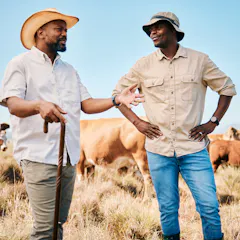
South Africa’s land reform minister should be distributing land owned by the government to black farmers rather than fussing about new laws.
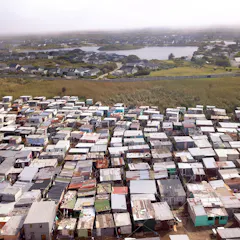
The expropriation of property for land reform purposes is a potential tool for reducing land inequality.

Corrective policies should be implemented as part of a holistic, long-term strategy to address historical injustices and create a more equitable South African society.

Almost 25% of all farmland previously owned by white landowners has been restored, redistributed to black South Africans, or moved away to state ownership.
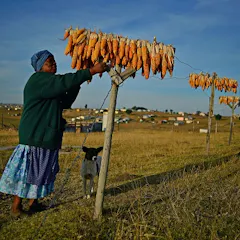
The South African government must act on the ineffective and politics-ridden system of land leases and ensure that beneficiaries are getting secure land rights.

The government’s approach to redistributing farmland has been mostly ineffective. Failure can be attributed to limited implementation, poor institutional capacity and corruption.

Despite its vagueness, the RET has become central to the contemporary ANC. It is destined to remain a powerful bloc within the party, and a constant constraint on Ramaphosa leadership.
Based on official statistics, we conclude that the country has made more progress towards land reform than is generally suggested.
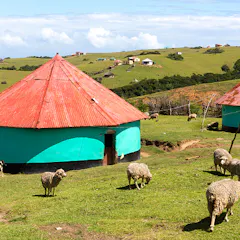
Policies, if implemented, would drive the agricultural sector’s growth in ways that would benefit all.
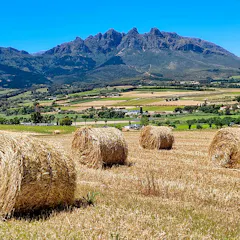
Land reform had not been held back by the constitution but by capacity constraints and a lack of political will.
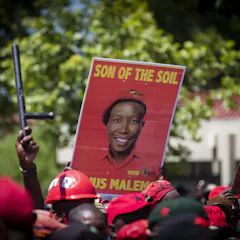
The 2021 election will define for citizens important aspects of South Africa’s political future. What is the governing ANC’s future, and what was the impact of President Ramaphosa on this election?

Zimbabwe’s 2021 bumper harvest is a welcome development but, it’s important to know what’s behind this success and what challenges remain.
Top contributors
-

Professorial Fellow, Institute of Development Studies
-
Senior Fellow, Department of Agricultural Economics, Stellenbosch University
-
Professor of Political Studies, University of Johannesburg
-
Director of the Bureau for Economic Research, Stellenbosch University
-
Emeritus Professor, Poverty, Land and Agrarian Studies, University of the Western Cape
-
Associate Professor, Sociology, University of Fort Hare
-
Associate Professor, Centre for Sustainability Transitions, Stellenbosch University
-
Professor & Research Chair in Interdisciplinary Science in Land and Natural Resource Use for Sustainable Livelihoods, Rhodes University
-
Associate Professor of Sociology & Director of the Centre for Data Ethics at the Institute for Intelligent Systems, University of Johannesburg
-
Lecturer in Law, University of Aberdeen
-
Professor of Sociology, University of the Witwatersrand
-
Emeritus Associate Professor in Public Law, UCT. Visiting Adjunct Professor, WITS School of Governance; Director, Africa Programme, University of Cambridge Institute for Sustainability Leadership, University of Cambridge
-
Oppenheimer-Jamma Research Chair in African Wildlife Economies, Stellenbosch University
-
Research Director, North-West University
-
Post-Doctoral Fellow, Rhodes University