
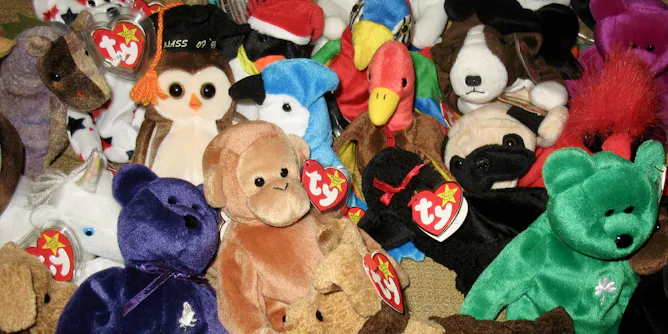
An expert in high-end collectibles explains why certain items can become valuable – and also how they can lose worth.
Articles on Toys
Displaying 21 - 40 of 68 articles

While some children can be convinced to send their old toys to the op shop, or give clothes to younger friends to wear, other kids really struggle. Here’s why – and how parents and guardians can help.
Two experts on children’s play explain why you should be skeptical of toys that are advertised as being educational, and what to look for instead.
How should we understand what toys or ‘loose part’ materials support children’s play, and what’s the relationship of parents’ education and income to this? A study aims to find out.
Even fake guns can be dangerous if they are mistaken for real ones by the police or other armed adults.
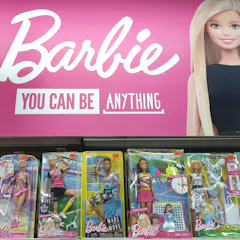
A branding expert explains how this iconic but controversial doll has gone from teenage reject to movie star in 64 years.

Childhood wasn’t more ‘innocent’ or ‘natural’ before digital technologies or the pandemic.
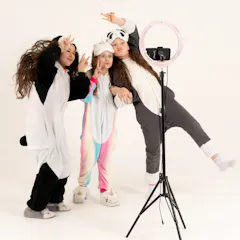
Some finds toys for toddlers based on digital devices a bit confronting. But really they’re just updated versions of traditional toys for make-believe play such as doctor and tradie tool sets.
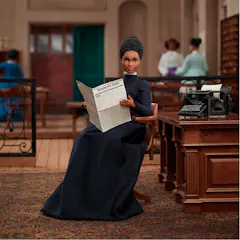
Black children are prone to internalize messages of anti-Blackness. Can a Black doll that honors one of America’s most noteworthy Black women do anything to reverse the trend?

Is a science kit, some Lego, or building blocks best for fostering kids’ STEM skills and creativity? Fear not – it’s not what’s in the box, but what happens after you open it, that’s most important.

Ultimately, screens are a part of modern life – children need to learn how to navigate them.
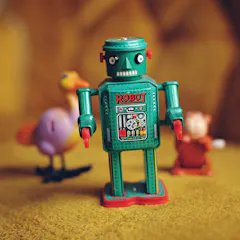
Here are some ideas for dealing with existing toys, as well as the upcoming influx of new ones.
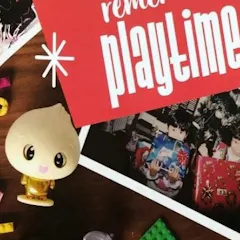
The sensory importance of touch and nostalgia are some reasons retailers won’t turn the page on paper catalogues.
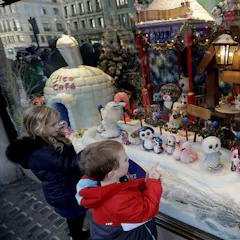
How safe is the toy you may be buying for someone this Christmas? New research suggests that toy companies often take too long to issue recalls after they become aware of safety hazards.
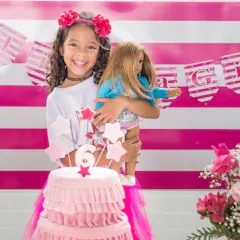
We spoke to 332 Year 3 students about what they want to be when they grow up. Some responses raised alarms.
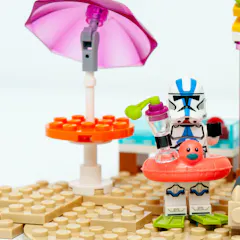
We reviewed research into gender stereotypes and biases in early childhood, and found gender as a social category develops early in life, and insight into some gender stereotypes begins early.
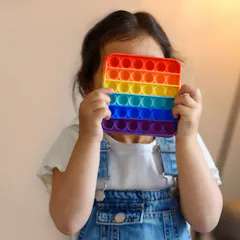
Though research is still ongoing, therapists’ practical experience and adults’ and kids’ self-reflections suggest that fidget toys can be helpful for emotional and cognitive support.

Toy pianos typically have a range of 12-36 keys, roughly one quarter the range of a full piano. But they are used by composers and music makers to write everything from concertos to pop songs.

At Christmas shopping, you may have noticed toys are becoming very complex. They fly, hop, jump and follow you around – some even need to be ‘connected’. But why are we seeing such technical advances?
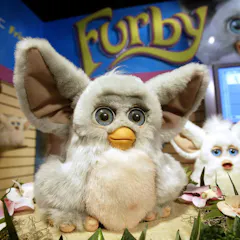
Why do certain toys create a frenzy? Turning raw materials into something that sparks kids’ imagination is no small endeavour.
Top contributors
-

Professor in Internet Studies, Curtin University
-
Associate Professor of Marketing, Tasmanian School of Business and Economics, University of Tasmania
-
Emeritus Professor, University of Tasmania
-
Associate Professor in Education, Concordia University
-
Professor of Psychology, University of Cambridge
-
Professor of Sociology and Criminal Justice, University of Delaware
-
Senior lecturer, School of Psychology, Deakin University
-
Research Chair, Indigenous Approaches to Environmental Management, Keele University
-
Associate Professor of Sociology, Deakin University
-
Senior Lecturer in Global Studies, RMIT University
-
Associate Professor in Literary Studies, Monash University
-
Associate professor, Architecture and Design, Swinburne University of Technology
-
Lecturer, Faculty of Education and Arts, Australian Catholic University
-
Lecturer in Linguistics, Nottingham Trent University
-
Senior Lecturer in Human Geography, University of Portsmouth