
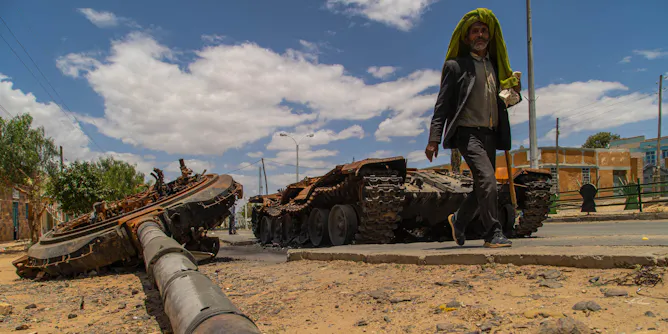
An incomplete peace agreement has become a useful political tool to the Ethiopian government, the TPLF and Eritrea.
Articles on Ethiopia conflict
Displaying all articles
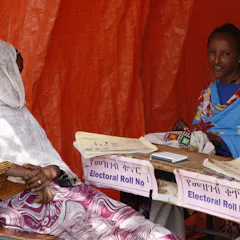
The upcoming elections are arguably among the least politically competitive Ethiopia has experienced since the introduction of multiparty elections in the 1990s.
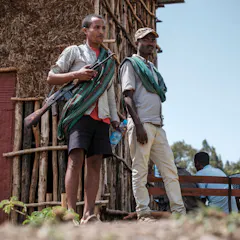
There is a risk of the upcoming election deepening existing regional and political fault lines instead of bridging them.

Global media coverage tends to focus on just one of Ethiopia’s conflicts.
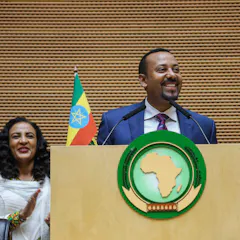
A national dialogue is usually convened during moments of political crisis or transition.
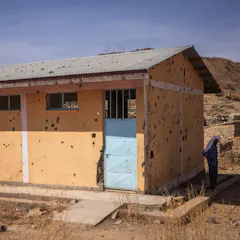
Leaving millions of children out of school has devastating consequences.

The possibilities for a large presence of al-Shabaab fighters in Ethiopia are limited.

The peace agreement was short-lived largely due to the absence of open and genuine commitments by both sides.
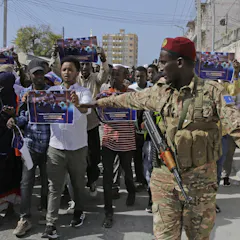
Somalia has demanded that a memorandum of understanding – which would see Ethiopia gain access to the Red Sea via a Somaliland port – be ripped up.
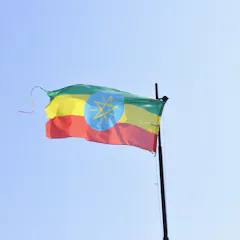
Parties to the conflict in Ethiopia’s Tigray region have agreed to end hostilities after two years. Here is a selection of previously published articles on its devastating consequences.
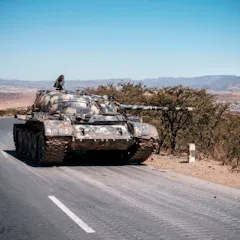
The African Union needs to launch a credible, robust mediation process with mutually accepted mediators.

Mental health problems are major indirect consequences of armed conflicts and can have short-term and long-term effects on people.
Top contributors
-

Senior Fellow, World Peace Foundation, Fletcher School of Law and Diplomacy at Tufts, Tufts University
-
Researcher in Political Sciences and International Studies, Debark University
-
Senior Research Fellow, Horn of Africa and Southern Africa, Institute of Commonwealth Studies, School of Advanced Study, University of London
-
Surgeon, Ayder Hospital, Mekelle University
-
Director of the Precision Pulmonary Medicine Research Program, Indiana University
-
Ph.D. Fellow, Center for Constitutional Democracy, Indiana University
-
Postdoctoral Research Fellow, Deakin University
-
Outstanding Future Researcher, Menzies School of Health Research
-
NHMRC Research Fellow (Public Health), Flinders University
-
Professor of International Relations, Norwegian University of Life Sciences
-
Associate Professor, School of Education, Deakin University
-
Lecturer and Reseacher, Political Science, Debre Markos University,
-
PhD candidate, University of British Columbia
-
Associate Professor of Journalism and Communication, University of Agder
-
Assistant professor in Media and Communication Studies, Bahir Dar University