Daniel Merino, The Conversation; Gemma Ware, The Conversation, and Godfred Boafo, The Conversation
Plus, why reusable food containers aren’t always better for the environment than disposable ones. Listen to The Conversation Weekly.
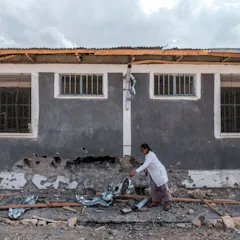
A nurse moves scrap from a damaged part of the Wukro General Hospital which was shelled, in Wukro, north of Mekele, on February 28, 2021.
EDUARDO SOTERAS/AFP via Getty Images
The biggest challenge to the health system is the war in Tigray and other insecurity all over the country. Conflict has made COVID-19 prevention and vaccination efforts impossible in many areas.
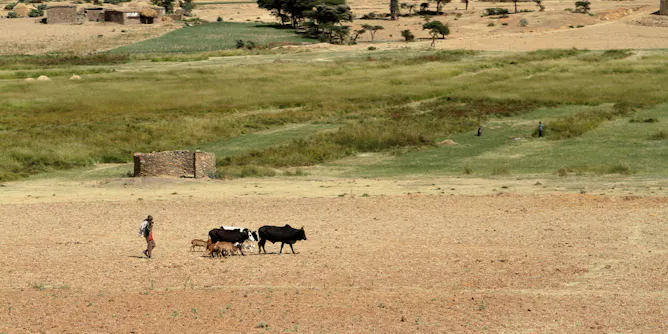
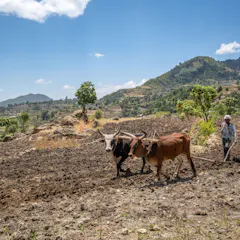
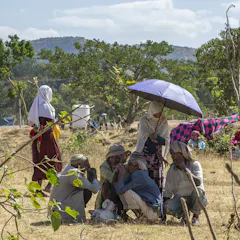
In north Ethiopia, farmers commonly use an ox-drawn single-tined plough called mahrasha.
Photo by: Edwin Remsberg / VWPics/Universal Images Group via Getty Images
Due to warfare, ploughing and planting was not timely in Tigray. This may lead to a second year with failed crops.
Humanitarian agencies are often thrust into the heart of contentious crises without easy or quick solutions.
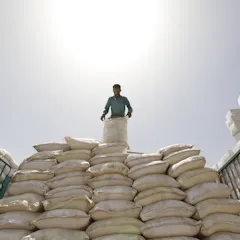
The Houthis accused the WFP of giving out expired food assistance. The UN agency delivers monthly rations or money to 10.2 million people of Yemen's 26-million population. EPA-EFE/YAHYA ARHAB
When humanitarian agencies are obliged to stop operations by political decision or because of huge physical insecurity, the poorest and most vulnerable succumb first through starvation and disease.
Ethiopian Prime Minister Abiy Ahmed arrives to cast his vote during the country’s parliamentary elections in Beshasha, Oromia, in June.
Photo by Stringer/Anadolu Agency via Getty Images
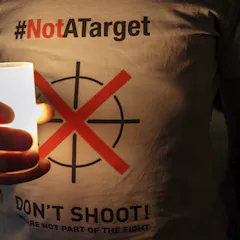
Every aid worker lost in the crossfire of a conflict is a tragedy; when they are deliberately targeted, it is an outrage.
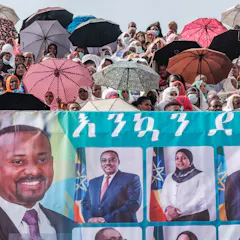
A crowd wait in a stadium in Jimma on June 16, 2021 for an electoral campaign rally of Ethiopian Prime Minister Abiy Ahmed.
EDUARDO SOTERAS/AFP via Getty Images
In Ethiopia’s new and unsettled political space, there are issues related to the current electoral rules, the performance and strength of the opposition parties, and to campaigning.
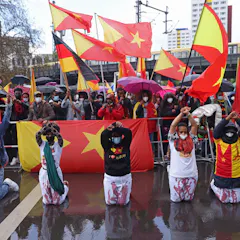
Protesters chant “Stop the genocide in Tigray!” during a demonstration against Ethiopia’s war against Tigray regional forces on May 07, 2021 in Berlin, Germany.
Photo by Sean Gallup/Getty Images
It’s a confluence of local, regional, national and, possibly, foreign interests.
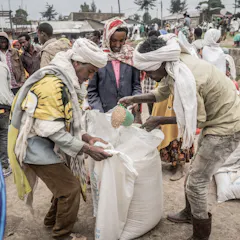
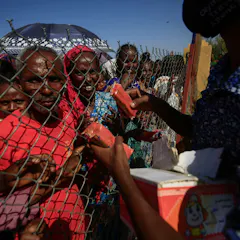
Ethiopian refugees, who fled fighting in Tigray, receive snacks at a Sudanese border reception centre in November 2020.
Photo by ASHRAF SHAZLY/AFP via Getty Images
If a country refuses, or blocks, humanitarian aid this act violates international law.
National Election Board of Ethiopia personnel patrol a warehouse stacked high with boxes of polling kits in Addis Ababa in October 2020.
Photo by Eduardo Soteras/AFP via Getty Images
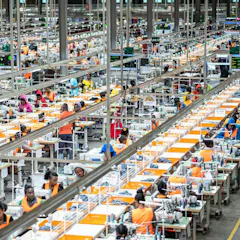
The new conflict in Ethiopia’s Tigray region could be the tipping point for foreign investors in the garment industry.
This image was taken at the Hawzien market in Tigray, two years before the war which has put millions in need of emergency food assistance.
Oscar Espinosa/Shutterstock
The health and wellbeing effects will go beyond the direct impact of war-related fatalities, and are likely to last for years after peace is fully restored.
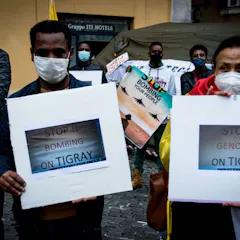
Demonstration in Montecitorio Square, Rome, Italy, on November 12, 2020 calling for the end of the government’s military actions in the northern region of Tigray.
Photo by Andrea Ronchini/NurPhoto via Getty Images
Providers of humanitarian aid haven’t been able to reach civilians in Ethiopia’s Tigray region. There are also reports that hundreds of civilians have been killed.
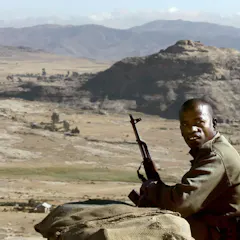
An Ethiopan soldier mans a position near Zala Anbesa in the northern Tigray region of the country, about 1,6 kilometres from the Eritrean border.
Marco Longari/AFP via Getty Images
Conflict between Eritrea and Tigray has long represented a destabilising fault line for Ethiopia as well as for the wider region.
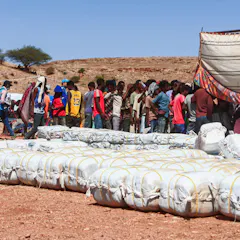
Ethiopian refugees fleeing fighting in Tigray province queue to receive supplies at the Um Rakuba camp in Sudan’s eastern Gedaref province.
Ebrahim Hamid/AFP via Getty Images