
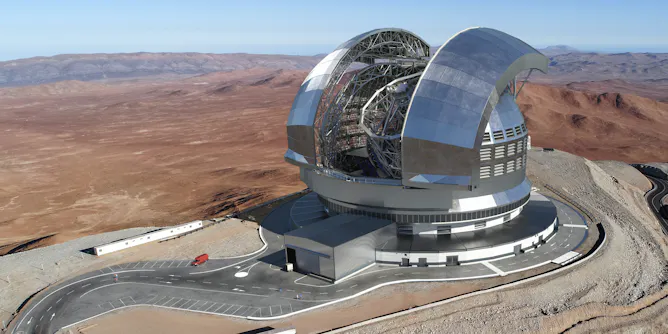
Cosmology could be transformed by a new wave of telescopes – both on the ground and in space.
Articles on Telescope
Displaying 21 - 40 of 112 articles
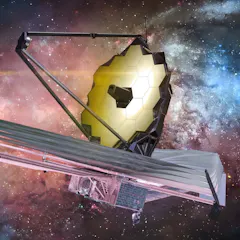
Some of the earliest galaxies found with JWST are also the brightest. That’s a problem for our ideas about the universe.
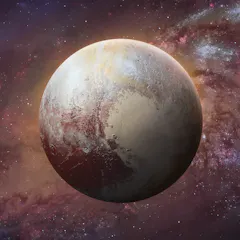
A South African team had a rare chance to capture information about Pluto’s atmosphere.
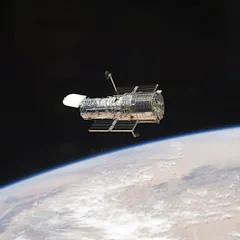
Hubble’s technical issues continue. But through some clever engineering, the telescope can continue operations with just 1 gyroscope.
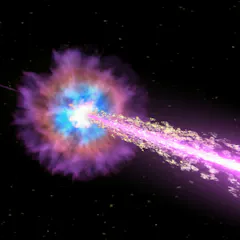
Analysis of two major cosmic blasts deepens the mystery of where the universe’s ‘heavy’ elements come from.

The best spots on the Moon for lunar bases are the same spots where scientists want to build telescopes − can these two interests coexist?
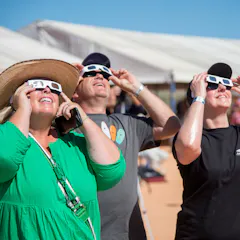
A type of eclipse is crucial for measuring what’s in the atmospheres of planets orbiting distant stars.
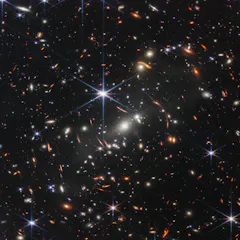
Now out in space for more than two years, the James Webb Space Telescope is a stunningly sophisticated instrument.
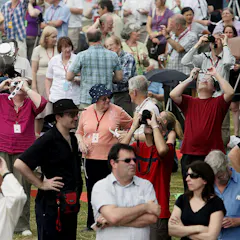
Apart from technical aspects, a successful photograph of the eclipse serves as a lasting reminder of the sense of wonder and the feeling of being part of something larger than ourselves.
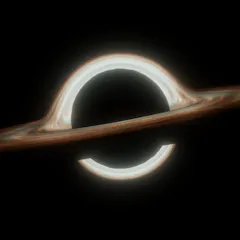
The extreme object could tell us more about the environment around black holes.
Megaconstellations of satellites are hindering the most powerful tool for space exploration: telescopes.
A telescope can reveal so much of the night sky, including Saturn’s rings and the Moon’s craters. But choosing the right telescope is a difficult decision – here’s what you need to know.
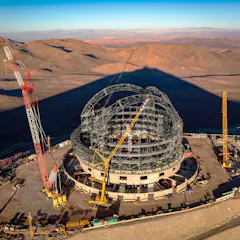
From improving our understanding of dark matter to revealing the location of Earth 2.0, the Extremely Large Telescope promises answers to some of the biggest scientific questions of our time.
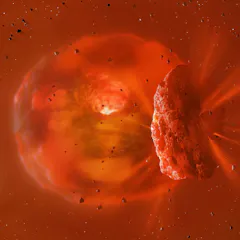
The discovery provides a way to study the birth of an entirely new planet in real time.

Canada’s partnership in the world’s largest radio telescope, located in South Africa and Australia, creates new opportunities for research, but the benefits go beyond astronomy.
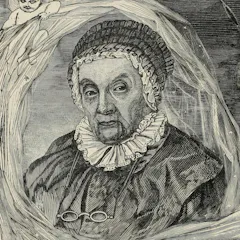
Astronomer Caroline Herschel’s work discovering and cataloging astronomical objects in the 18th century is still used in the field today, but she didn’t always get her due credit.
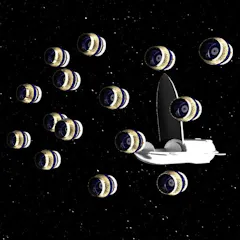
Space telescopes are limited in size due to the difficulties and cost of getting into orbit. By revamping an old optical technology, researchers are working on a lightweight and thin telescope design.
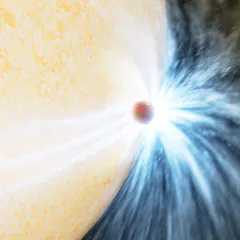
Stars begin to expand when they run out of fuel and can become thousands of times larger, consuming any planets in the way. For the first time, astronomers have witnessed one such event.
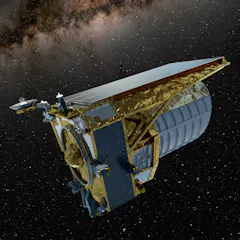
A spacecraft set to launch this year will throw a spotlight on the mysterious ‘dark side’ of the universe.
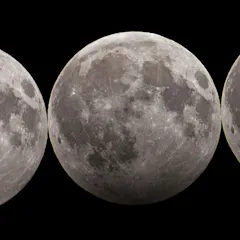
Not all lunar eclipses are alike. An astronomer explains the science behind the slight dimming of the Moon on May 5, 2023.
Top contributors
-

Associate Professor in Astronomy, Monash University
-
University Distinguished Professor of Astronomy, University of Arizona
-
Professor of Astrophysics and Royal Society University Research Fellow, University of Hertfordshire
-
Professor in High Energy Astrophyics, Adelaide University
-
Associate Professor, Japan Aerospace Exploration Agency (JAXA)
-
Assistant Professor of Astronomy and Astrophysics, University of Maryland, Baltimore County
-
Senior Astrophysicist, Smithsonian Institution
-
Senior Curator (Astronomy), Museums Victoria Research Institute; The University of Melbourne
-
SKA Postdoc in Observational Cosmology, University of the Western Cape
-
Dean of Science, University of California, Santa Cruz
-
Professor of Astronomy, UMass Lowell
-
Director of the Abrams Planetarium, Michigan State University
-
Co-Director Space Technology and Industry Institute, Swinburne University of Technology
-
Associate Dean for Research and Professor of Astronomy and Planetary Sciences, University of Arizona
-
Assistant Professor of Chemistry, Dickinson College