

Common chatbots produce generic lesson plans that are unlikely to improve learning, a study finds. It shows how teachers should be critical users – not rapid adopters − of generative AI.
Articles on Teaching
Displaying 41 - 60 of 436 articles

It can take years to collect evidence that shows effective uses of new technologies in schools. Unfortunately, early guesses sometimes go seriously wrong.

A chatbot can produce text, but it can’t sustain a probing conversation about your reasoning. Our work suggests oral assessment has a role in the age of AI.

Teaching should encourage discovery, curiosity and problem solving. Why are teachers holding back?
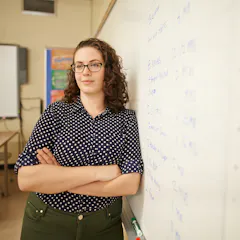
A new book shows how casual educators and teachers play a crucial role in education. But many face underpayment and uncertainty juggling too many contract jobs.

Teachers need help to talk to learners about sexual health topics.

New survey research shows Indigenous teenagers value their education. But they don’t have equal access to computers and may be doing high school away from home.

A new Productivity Commission report looks at how to make workers more adaptable. This starts with making sure school students learn basic maths and English skills.

On Wednesday, Queensland’s public school teachers will walk off the job in their first statewide strike in 16 years.

Students created sci-fi and fantasy stories with characters that represented ideas in statistics.

Play is a big part of early childhood education. But once kids start school, play is frequently dismissed as something fun, that is not part of learning.

Why isn’t academic development working effectively enough in South African higher education?

Three recent developments in AI – in video games, wearable technology and education – suggest that building something like Stephenson’s Young Lady’s Illustrated Primer is possible.

For many of us, calling our teachers by their first names would have been unthinkable. But some teachers are changing the centuries-old practice of formal names.

Whether you think AI is a good or bad thing, the fact is it’s here. AI literacy enables students to make safe and informed decisions when using AI, preventing habits that compromise academic integrity.

In a study of 57 Australian teachers, many shared emotionally-charged accounts of being put in impossible situations at work.
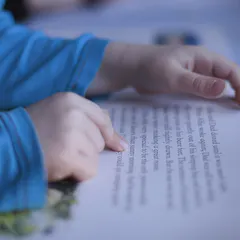
Compared with today’s structured literacy and standardised testing, the 1953 reading syllabus was a remarkably non-prescriptive blueprint for both teachers and pupils.

If AI allows students to automate routine cognitive tasks, it doesn’t mean they’re thinking less. It means their thinking is changing.

Lack of co-ordination means that information important for the safety of children can be missed.

Understanding how the brain functions is important for teachers. We surveyed more than 500 early childhood educators about their neuroscience knowledge.
Top contributors
-

Associate Professor in Language, Literacy and TESL, University of Canberra
-
Associate Professor in Educational Leadership, Australian Catholic University
-
Associate Professor in Education, UNSW
-
Professor Emeritus Melbourne Graduate School of Education, The University of Melbourne
-
Professor of Learning Sciences, Monash University
-
Scientia Professor and Professor of Educational Psychology, UNSW
-
Professor and Director of the Centre for Inclusive Education, Queensland University of Technology
-
Professor, Melbourne Graduate School of Education, The University of Melbourne
-
Laureate Professor of Education, Director Teachers and Teaching Research Centre, University of Newcastle
-
School Education Program Director, Grattan Institute
-
Senior Lecturer & Bachelor of Education (Secondary) Course Coordinator, Curtin University
-
Associate Professor, Digital Transformation, Monash University
-
International adviser, Mitchell Institute, Victoria University
-
Deputy Program Director, School Education, Grattan Institute
-
Professor of Higher Education, Rhodes University, South Africa, Rhodes University