
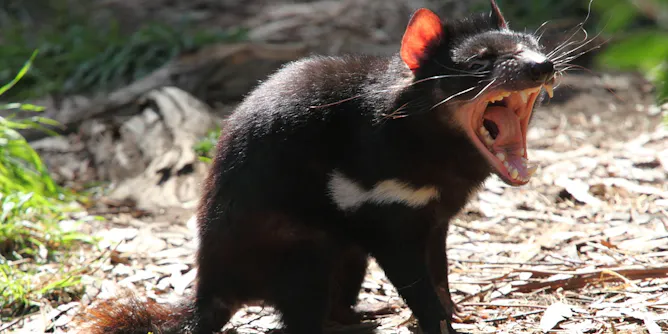
If we brought devils back to the mainland, they could play a similar role to dingoes - keeping foxes and cats under control and potentially boosting the conservation prospects of Australia’s small mammals.
Articles on Tasmanian Devil
Displaying 21 - 40 of 42 articles
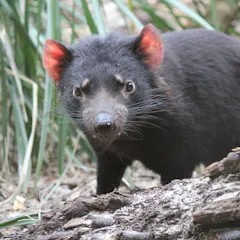
Proposals to reintroduce Tassie devils to the Australian mainland have argued devils could help control feral cats. But new research shows there’s no simple answer.
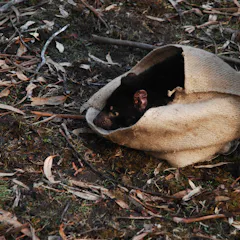
Australia is in the grip of an extinction crisis. Our unique animals, plants, and ecosystems are rapidly ebbing away in a process that began more than 200 years ago with European settlement. Feral cats…
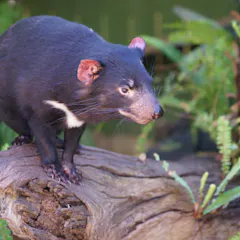
On Monday this week The Conversation published a story under the headline “What’s killing Tassie devils if it isn’t contagious cancer?” The article suggested evidence that the Tasmanian devil facial tumour…
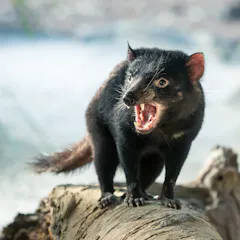
Editors note: The argument in the following piece has been refuted in a seperate article titled Tassie devil facial tumour is a transmissible cancer. Scientists have been trying to figure out the cause…
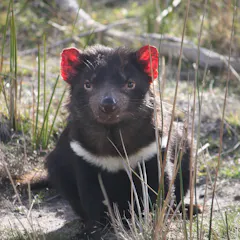
Most people probably know the Tasmanian devil as the iconic animal from Australia’s island state of Tasmania. Fewer know that, up until a few thousand years ago, devils were widespread across mainland…

Earlier this month, a Senate inquiry paved the way for the Parliament to give Environment Minister Greg Hunt legal immunity against future legal challenges to his decisions on mining projects. If it passes…
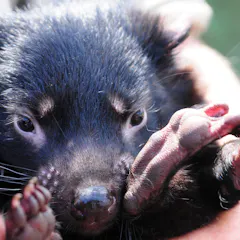
The Federal Government has now approved two mines for the Tarkine region of Tasmania, on condition that the mines fund conservation measures for Tasmanian Devils and other threatened species. The approvals…
A new discovery in the race to cure the Tasmanian devil facial tumour disease has given scientists hope of developing a vaccine…
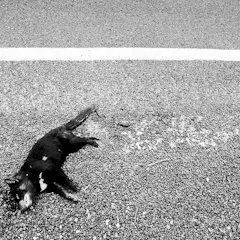
Just a week before Christmas, Environment Minister Tony Burke approved Shree Minerals’ mine near Temma in the Tarkine region of north-west Tasmania. Perhaps he hoped the announcement would get lost in…
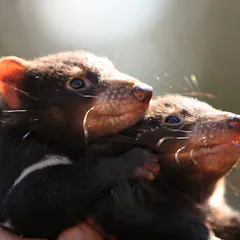
European settlers were not responsible for thinning the gene pool of the Tasmanian devil, new research has found. Tasmanian devils are currently under threat due to the spread of an aggressive facial tumour…
While Tasmanian Devil Facial Tumour Disease (DFTD) tumours all have the same DNA, the regulatory mechanisms controlling the…
New research has found the less often a Tasmanian Devil is bitten, the more likely it is to contract Devil Face Tumour Disease…
Scientist have discovered the Devil Facial Tumour Disease (DFTD) does not age or weaken over time. This has dire implications…
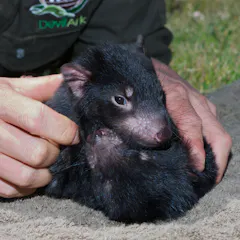
The facial tumour responsible for wiping out 85% of Tasmanian Devils is spreading regardless of genetic differences across the species, undermining the theory that it is mostly deadly in communities whose…
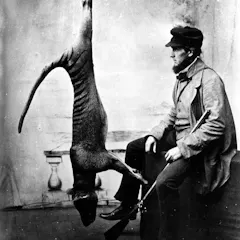
Dingoes were twice the size of female thylacines and could have caused their extinction on mainland Australia through direct attacks, a new Sydney [study](http://www.plosone.org/article/info%3Adoi%2F10.1371%2Fjournal.pone.0034877?utm_source=feedburner&utm_medium=feed&utm_campaign=Feed%3A+plosone%2FEvolutionaryBiology+(PLoS+ONE+Alerts%3A+Evolutionary+Biology…
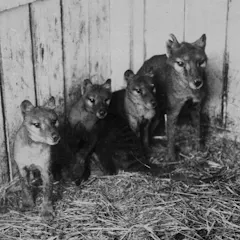
We have all heard at some time or another that Australia has the worst record of mammal extinctions in history, with many of our unique and vulnerable critters succumbing only years after the first Europeans…
The genome of the Tasmanian Devil has been mapped, providing new insight into the facial tumours that are destroying the…
A breakthrough has been made in the attempt to save Tasmanian Devils from the facial tumours that are decimating populations…
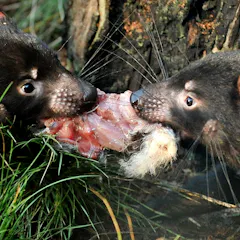
For more than a decade, the Tasmanian devil has been fighting for survival against an unusual enemy – Devil Facial Tumour Disease (or DFTD). This deadly infectious cancer has ravaged the Tasmanian devil…
Top contributors
-

Associate Professor in Zoology, University of Tasmania
-
Emeritus Professor, infectious disease ecology, Griffith University
-
Post Doctoral Research Fellow, Conservation Biology and Wildlife Management, University of Tasmania
-
Professional Research Fellow, University of Tasmania
-
Honorary Research Associate in BioSciences, The University of Melbourne
-
Associate Professor, Animal Anatomy and Physiology, Charles Sturt University
-
Professor Evolution & Ecology, UNSW
-
Adjunct Associate Lecturer, School of Biological, Earth & Environmental Sciences, UNSW
-
Professor & Associate Director, School of Biological Sciences, Washington State University
-
University of Idaho
-
Professor of Wildlife Ecology, University of Tasmania
-
Senior Research Fellow, The University of Melbourne
-
Associate Professor in Biology, Zoology and Animal Science, Western Sydney University
-
Senior Research Fellow in Immunology, University of Tasmania
-
Professor of Pyrogeography and Fire Science, University of Tasmania