
Edible bait vaccines made Europe virtually free from rabies. The approach could work against bird flu – if we invest in new vaccines.
Articles on Tasmanian devils
Displaying all articles
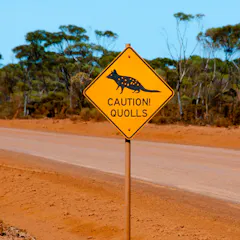
Second generation rat poisons are so potent that they’re banned for home use in Europe and North America. But here, you can pick them up at Bunnings or Coles.

The diets of Tasmanian devil are narrowing in areas where humans have changed the landscape. This has big implications for conserving the species.
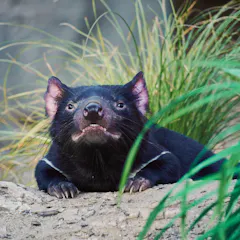
The same technology found in a widely used COVID-19 vaccine could be the key to helping save wild Tassie devils – without any needles.

In the past, wildlife vigilantes have illegally moved Tasmanian devils off the island — an illegal practice known as “covert rewilding”. They may well might try again.
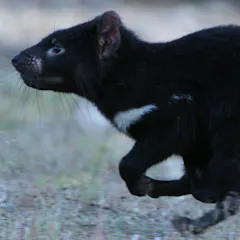
Ten years ago, we feared Tasmanian devils would be wiped out by a bizarre infectious facial cancer transmitted by biting. But new genetic analysis shows they are evolving to live with the disease.
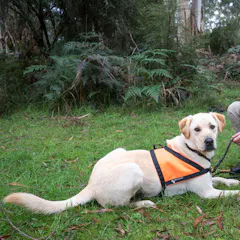
Moss is part of an elite squad of detection dogs that will locate threatened species in the wild and help endangered species breed in captivity.

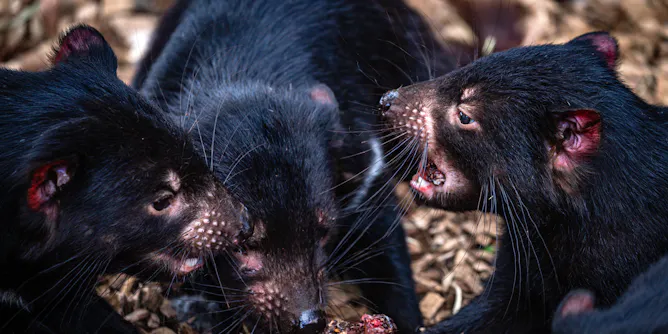
Tasmanian Devils can be incredibly aggressive during mating season and their biting can have fatal consequences.
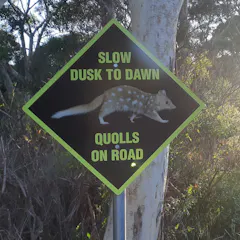
Rewilding is gaining popularity around the world, as a means to restore ecosystems to their ancient state. But just like Vegemite, Australian rewilding projects need to have a unique flavour.
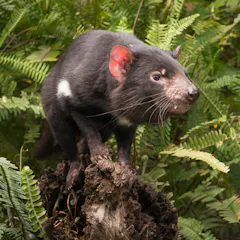
It’s often said you need to look to the past to learn about the future, and that’s what the fossil record can tell about how the Tasmanian Devil survived in the past on mainland Australia.
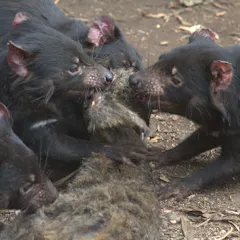
A new study involving leaving animal carcasses strewn across Tasmania shows that in places where devils have dwindled, other scavengers are stepping up to fill the gap, with nasty knock-on effects.
Top contributors
-

Associate Professor in Zoology, University of Tasmania
-
Senior Research Fellow in Immunology, University of Tasmania
-
Senior Ecologist at the National Parks Association of NSW, Research Fellow, University of Sydney
-
Postdoctoral Research Associate, University of Sydney
-
Associate Research Scientist, Ecological Modelling, Arthur Rylah Institute for Environmental Research
-
Professor of Wildlife Conservation, University of Tasmania
-
Research Fellow in Pyrogeography, University of Tasmania
-
Professor of Archaeology and Biological Anthropology, School of Social Science, The University of Queensland
-
Lecturer in Palaeontology, The University of Queensland
-
Associate Professor, Global Ecology, University of Sydney
-
Professor of Wildlife Ecology, University of Tasmania
-
Wildlife detection dog officer at Zoos Victoria and Post-graduate research supervisor at La Trobe university., La Trobe University
-
PhD Candidate, UNSW
-
Canada Research Chair in Human Evolutionary Studies, and Professor of Archaeology, Simon Fraser University
-
Professor of Mathematics, Queensland University of Technology