
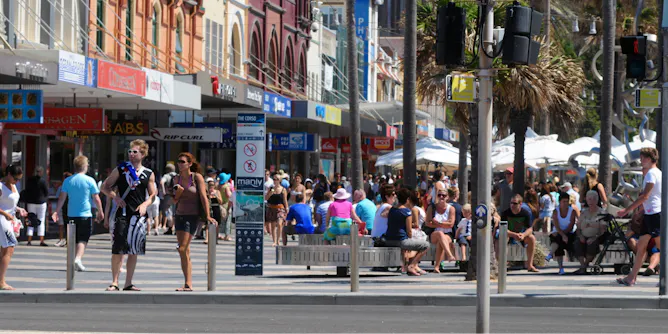
To stay safe in a tsunami, remember that the sequence of waves may occur over hours to days, and the biggest wave in the sequence could occur at any time.
Articles on Sydney
Displaying 101 - 120 of 236 articles
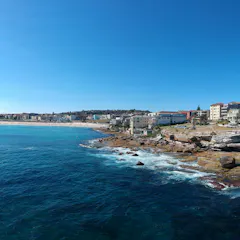
The New South Wales government has turned its back on plans to create sanctuary zones covering 2.4% of waters around Sydney, despite evidence that these ‘no-take’ areas are crucial for protecting fish.
Every year, our big cities vie for global liveability honours. But as well as differences between the cities, liveability varies widely within them, leaving plenty of work to be done.
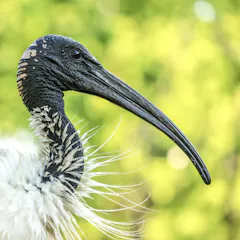
The ibis has become an Australian cultural phenomenon. The birds’ tenacity and fearlessness as environmental refugees mean they attract love and hate alike.
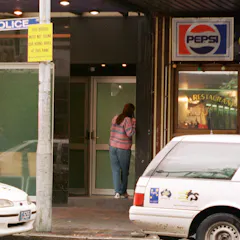
Sydney’s supervised injection room in Kings Cross has helped reduce harmful drug use. But many drug users who live in the outer suburbs find it difficult to get to the inner-city facility.

The loss of creative spaces to development is pricing Sydney artists out of the city. But they could be encouraged back with new cultural policies.

Research shows if Australia encourages greenery on buildings, it will reduce temperatures in the city, as well as potential for flash flooding. It also creates new habitats and socialising spaces.
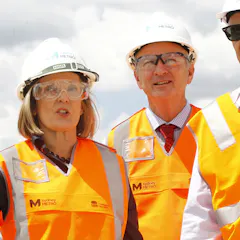
In Sydney, a ‘latte line’, that runs from the airport to Parramatta and up to the northwest, divides white-collar jobs from blue-collar jobs. This perpetuates inequality.
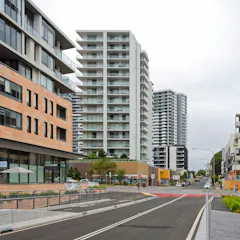
The combination of higher-density living and increasing cultural diversity means we need to think about how to build social cohesion and make the most of the opportunities of apartment living.
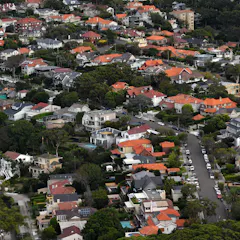
Foreign investment in Australian property has plummeted by more than half, signalling an apparent end to the China-fuelled real estate frenzy. Along the way we learned some useful lessons about boom and bust.
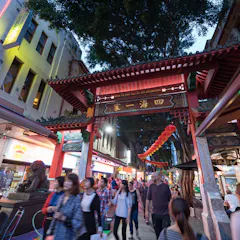
Chinatown Haymarket has emerged as an evolving site where Asian urban modernity is introduced into Sydney.
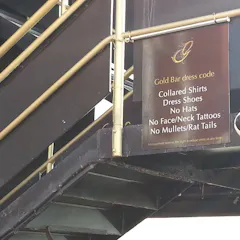
Ultimately, most regulatory interventions in nightlife precincts are about imposing particular ideas of social and moral order not only within these spaces but also in the city more broadly.
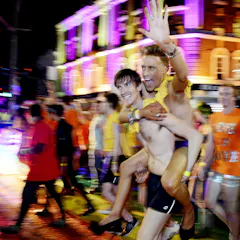
Sydney’s LGBTQI heartland has moved and changed over time, but the importance of urban space to queer communities remains a constant.

In the 1970s, both Kyoto and Melbourne made fateful decisions about their transport networks. Melbourne today enjoys the benefits of trams, while Kyoto lives with the consequences of losing them.

You’d perhaps expect property investors not to mind foreign investors who might push up prices. More surprisingly, house hunters are also more supportive than those who are not looking to buy.
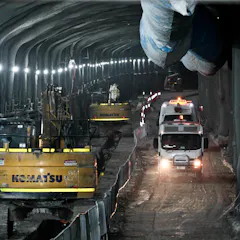
Analysis of the business cases for three of the biggest projects deemed “high priority” by Infrastructure Australia raises questions about the process.
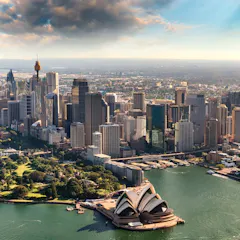
The connections between city planning and health are many and varied, but getting health objectives integrated into all aspects of planning in New South Wales has been a long struggle.
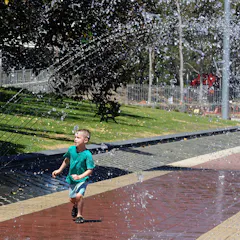
Record-breaking April heat is likely to continue for at least another month.
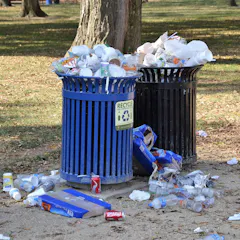
Researchers are installing sensors to collect data about the use of public spaces. This can improve the management and public amenity of these places, but will users see the technology as intrusive?
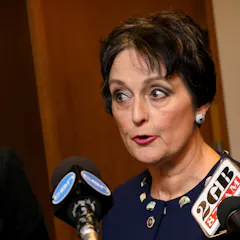
The evidence is clear on the sort of support that is needed to reduce the harms of drug use. A punitive approach that denies people a second chance makes it more likely they will reoffend.
Top contributors
-

Head of Urbanism and Associate Professor of Urban Studies, School of Architecture, Design and Planning, University of Sydney
-
Alan Morris is a Friend of The Conversation.
Professor, Institute for Public Policy and Governance, University of Technology Sydney
-
Professor Spatial Transformation, Hanze University of Applied Sciences, Groningen
-
Associate Professor in Environmental Science, Western Sydney University
-
Emeritus Professor of Housing, UNSW
-
Research Fellow, School of Communication, Society & Culture, Macquarie University
-
Professor in Cultural and Social Analysis, Western Sydney University
-
Emeritus Professor, Urban Planning and Policy, University of Sydney
-
PhD Candidate, School of Social Sciences, University of Tasmania, and Senior Research Consultant, Institute for Sustainable Futures, University of Technology Sydney
-
Engaged Research Fellow, Institute for Culture and Society, Western Sydney University
-
Associate professor, University of Sydney
-
Emeritus Professor of Cultural Research, Institute for Culture and Society, Western Sydney University
-
Deputy Director, Engagement and Impact, The ARC Centre of Excellence for the Weather of the 21st Century, Australian National University
-
Australian Laureate Fellow, University of Sydney
-
Associate Professor of Property, UNSW