

There is no shortage of global objectives and targets driving ocean conservation. However, protecting oceans depends on the communities that steward them.
Articles on Sustainability
Displaying 21 - 40 of 858 articles

Saying no to kids who want to buy stuff can be tricky, but gifting experiences or opting for open-ended toys such as building blocks can help.
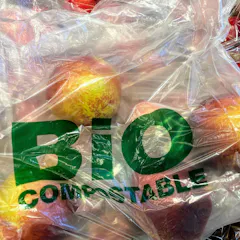
Not everything marked ‘biodegradable’ should go in your home compost bin.

Chemists have been working on new approaches to reducing waste and finding new functions for existing materials.

Many companies today overpromise what they can do with AI. They should learn from efforts to combat greenwashing and tighten standards.

Research among adult visitors to the Montréal Insectarium reveals that many people will consider eating insects, especially when they are ground up as flour.

A New Zealand-focused analysis finds businesses in areas with healthier ecosystems tend to generate higher sales and profits, revealing an overlooked green benefit.

NZ’s world-first regime aimed to improve transparency in how institutions assess climate risk. So why are some choosing to say little about changes being made?

Landing on the Moon can disturb its environment – people are discussing how to balance those concerns with political and economic goals.

Simple changes to your home can keep the warmth in, the winter cold out, and power bills down.

Fashion brands promise sustainability. But a formal investigation into Lululemon reveals a deeper problem: green claims that no one is required to prove.

Fashion made out of recycled polyester mostly uses plastic bottles. That’s not a good thing.
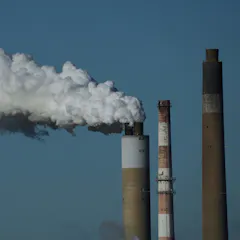
Environmental impacts are often overlooked in supply chain debates. A new framework shows how businesses can respond more fairly and effectively.

Planting grass or succulents along tram tracks can cool streets, cut pollution and make cities feel more beautiful.
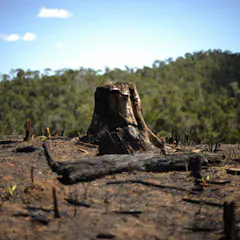
In the past 11 years, we’ve lost roughly 300 million hectares of forest. Three ecologists explain why our current conservation strategies aren’t working.
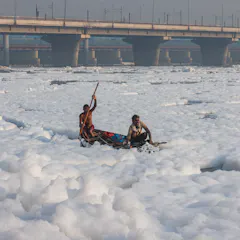
Human rights and the rights of nature are the two missing links in the international community’s efforts aimed at achieving sustainable development goals (SDGs).
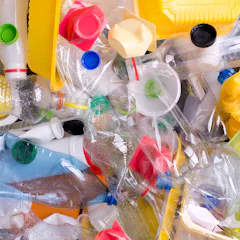
Scientists have shown that plastic bottles could be converted into levodopa, an important Parkinson’s drug, with implications for both medicine and the environment.

The oil shocks of the 1970s spurred marine energy innovation. Fifty years on, New Zealand still has vast untapped ocean power waiting to be harnessed.

Many alternatives to animal leather – even the ones made with plants – are plastic‑based composites with short lifespans.

As prices surge, the Middle East crisis highlights New Zealand’s exposure to global oil – and the need to accelerate more resilient alternatives.
Top contributors
-

Academic Director, School for International Training, The University of Melbourne
-
Associate Professor in Property, Construction and Project Management, RMIT University
-
Professor of Tourism, Griffith University
-
Associate Deputy Vice Chancellor in Research & Innovation, RMIT University
-
Associate Professor in Construction and Environmental Performance, The University of Melbourne
-
John Thwaites is a Friend of The Conversation.
Chair, Monash Sustainable Development Institute & ClimateWorks Australia, Monash University
-
Former Visiting Fellow, SPRU, University of Sussex Business School, University of Sussex
-
Associate Professor of Quantitative Analytics, ESCP Business School
-
Associate Professor, Global Management Studies, Toronto Metropolitan University
-
Professor of Construction and Environmental Assessment, The University of Melbourne
-
Professor of Ecological Economics, UCL
-
Founding Director, Institute for Sustainability, University of Surrey
-
Lecturer, School of Life and Environmental Sciences, Deakin University
-
Postdoctoral researcher, Universität Wien
-
Professor of Sustainability, Curtin University