
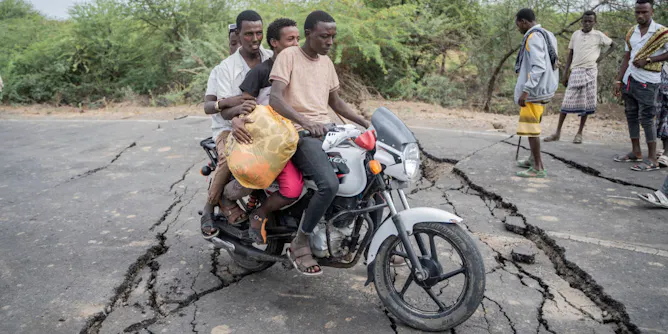
A geologically dynamic region in the Great Rift Valley is closely watched by scientists as a fascinating natural laboratory.
Articles on Earth's crust
Displaying all articles
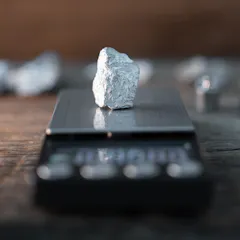
Rare earth elements aren’t necessarily rare – they’re just difficult to find in economically viable deposits.
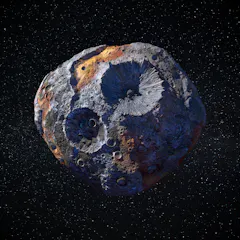
Liftoff to the distant asteroid is scheduled for Oct. 5, 2023 – the beginning of a six-year journey to one of the most unusual objects in the solar system.
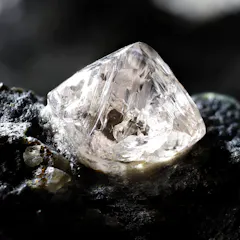
Scientists were not previously certain how the precious stones arrived at the Earth’s surface.
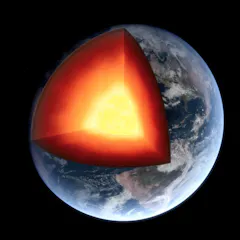
Starting at the surface, you would have to dig nearly 2,000 miles before reaching the Earth’s core. No one could survive that trip – and the 10,000-degree F heat once there would vaporize you anyway.
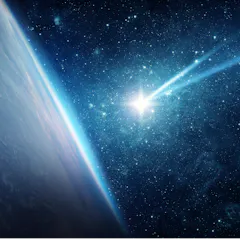
There’s a curious 200-million-year rhythm to Earth’s crust production. Now, it seems like our very place in the galaxy is tied to it.
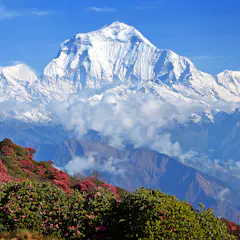
Mountains can’t be created without lubricant, and 2 billion years ago that lubricant was graphite produced by the carbon broken down from layers of dead plankton on the ocean floor.
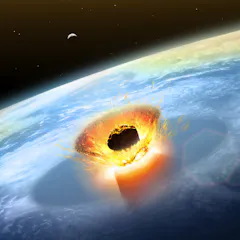
Impact craters are relatively shallow, so these bowl-shaped “dents” in Earth’s rocky crust can be easily buried or erased by erosion.
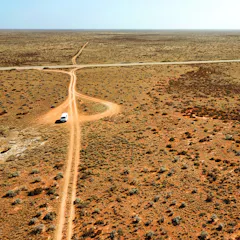
When borders reopen, take an Aussie road trip and explore the continent’s unique geology, from meteorites in the Nullarbor Plain to rock formations that are billions of years old.
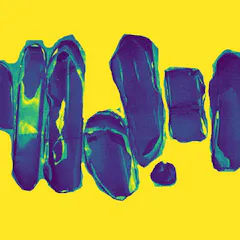
Evidence from the Pilbara region suggests Earth in its youth behaved very differently to how it does today, and had more water within it than previously thought.
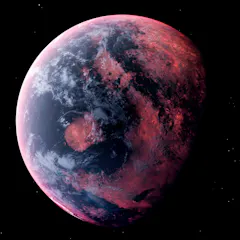
The rocks provide rare evidence of a time when Earth’s surface was a deep sea of incandescent magma.
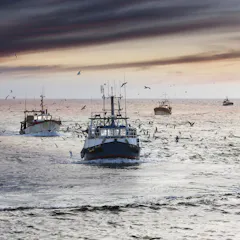
The Atlantic Ocean is still growing physically, but humans are over-harvesting its rich fisheries. The most famous one – North Atlantic cod – has become a textbook example of harmful overfishing.
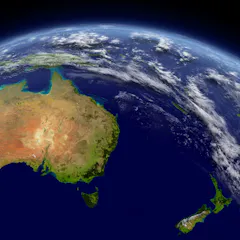
New research uncovers the fundamental factors that control the Earth’s surface, providing insights into how land levels will respond to the melting of ice sheets and sea level rise.
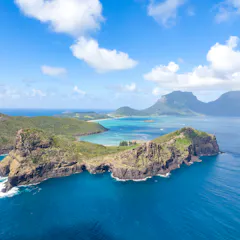
We undertook a 28-day voyage to explore a possible lost continent in a remote part of the Coral Sea, in an area off the coast of Queensland. Here’s what we found.
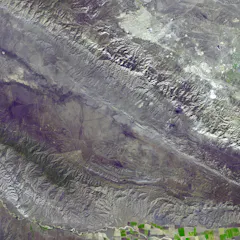
Fifty years on from a groundbreaking paper, geophysicists have progressed from believing continents never moved to thinking that every movement may leave a lasting memory on our planet.
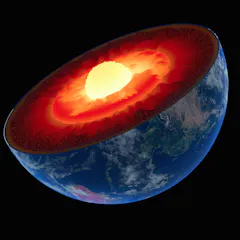
The discovery of a thickly viscous layer which traps sinking plates below Earth’s surface has wide implications, not least as a cause of earthquakes.
Studies of mineral veins from New Zealand’s Southern Alps have found that rainwater can penetrate many kilometres below the…
The analysis of microscopic zircon crystals from Western Australia’s Jack Hills region has strengthened the theory of a “cool…
New research into early plate tectonics suggests the conditions for life on Earth may have existed up to a billion years…

A little more than 90 years ago, British geologist Herbert Hall Turner noticed some earthquake data that suggested a surprising explanation. The only way to explain it was if the quake had occurred hundreds…
Top contributors
-

Professor of Geochronology, Curtin University
-
Associate Professor in Geophysics, Te Herenga Waka — Victoria University of Wellington
-
Professor in Earth Sciences, Nanyang Technological University, Singapore, and Emeritus Professor of Mineral Physics, University of Cambridge
-
Assistant Professor, Environmental Geophysics, University of Toronto
-
Senior Lecturer in Astrophysics, University of Lincoln
-
Associate professor, University of Tasmania
-
Associate Professor, University of Tasmania
-
Maître de conférences, économiste, laboratoire Amure (UBO, Ifremer, CNRS), Université de Bretagne occidentale
-
Adjunct Research Fellow, Curtin University
-
Professor of Structural Geology and Metamorphic Petrology, University of the Witwatersrand
-
Associate Professor, School of Geosciences, University of Sydney
-
Reader in Geochemistry, University of Cambridge
-
Research Affiliate, Monash University
-
Professor, Geology, Curtin University
-
Professor in Earth & Climate Science, University of Southampton