
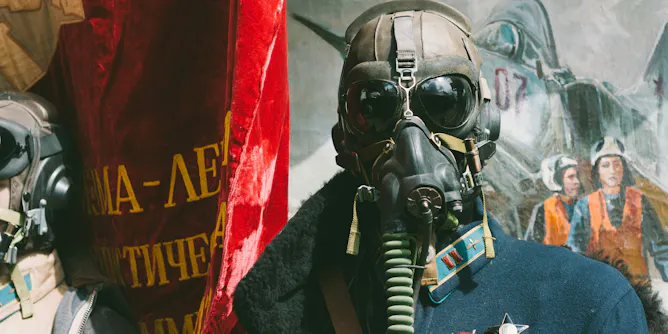
The use of chemical weapons has been outlawed for nearly a century.
Articles on Sudan war
Displaying 1 - 20 of 39 articles
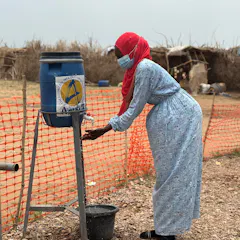
While cholera launched modern epidemiology and has nearly disappeared in many countries, the disease never went away. It has instead retreated to the places least equipped to fight it.
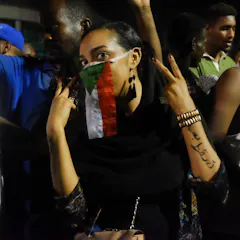
Music created the networks, identities and spaces of trust that made collective political action possible in Sudan’s 2019 revolution.
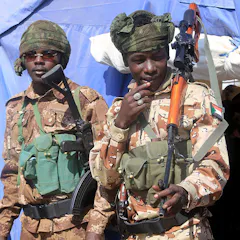
A new peace initiative has put the future of Sudan’s Islamist movement at the centre of post-war politics.
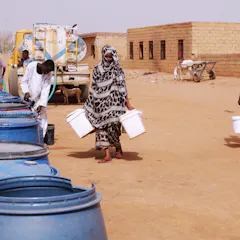
Sudan is one of the most dangerous places in the world to deliver humanitarian assistance. It is also home to one of the most chronically underfunded.
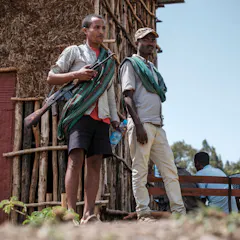
There is a risk of the upcoming election deepening existing regional and political fault lines instead of bridging them.
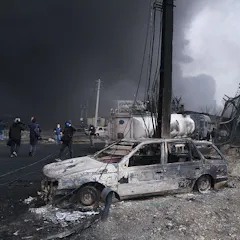
Gulf states have been opportunistic players in the Horn of Africa.
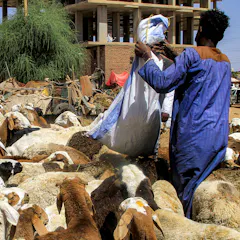
Armed actors in fragile contexts typically engage in sectors where they can quickly extract profits.

Sudan’s neighbourhood committees represent a unique blend of political and practical action. They mobilise for change while addressing immediate community needs.
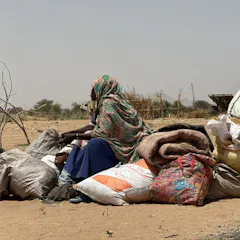
Hundreds of returnees and forced migrants reported being terrorised by soldiers and armed militias on both sides of the Sudan civil war.
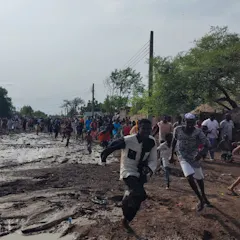
Armed drones are increasingly being seen as a solution to security challenges in African conflicts.
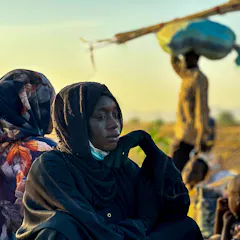
As fighting escalates in Sudan, the latest peace efforts seem unlikely to achieve more than a fragile ceasefire.

While sanctions aim to punish regimes, they often punish citizens instead.

Egypt has hosted more Sudanese refugees than any other country since the start of the 2023 civil war.
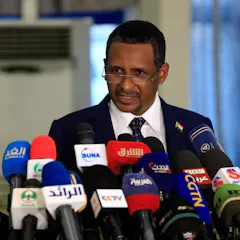
The creation of a parallel government risks cementing a permanent division of Sudan.

Mercenaries have returned to the central stage in Africa’s conflicts.
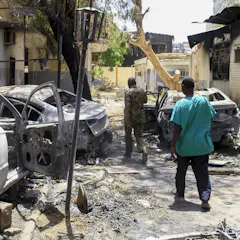
If the conflict endures, the value of Sudan’s economy will contract by up to 42% – with 7 million more people falling into poverty.
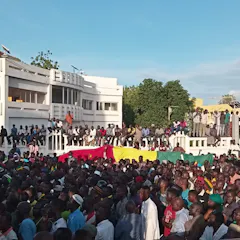
Five years since the Mali coup of 2020, the key lesson is that the international community must move beyond the view of coups as isolated events.
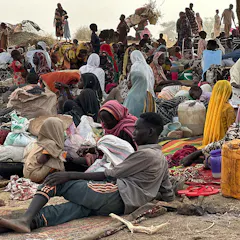
International involvement must be limited to building up Sudan’s capacity to solve its governance problems.
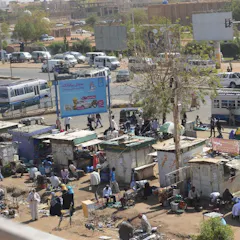
It’s time to rethink how Africa’s public spaces are defined and designed – by listening to how people already make cities public.
Top contributors
-

Researcher, Helwan University
-
Professor, Weber State University
-
Researcher at the Austrian Institute for International Affairs, Österreichisches Institut für Internationale Politik (OIIP)
-
Associate Professor of Urban & Environmental Design, University of Khartoum
-
Senior Lecturer in International Law, The University of Western Australia
-
Associate Professor, Khalifa University
-
Research Fellow, International Food Policy Research Institute (IFPRI)
-
Senior Research Fellow and Program Leader for the Sudan Strategy Support Program, International Food Policy Research Institute (IFPRI)
-
Associate Professor of International Relations, University of Trieste
-
Associate Professor of International Relations of the Middle East, University of Birmingham
-
Associate professor in Politics and International Relations, Leeds Beckett University
-
Lecturer and Senior Research Fellow at the South African Research Chair in International Law (SARCIL), University of Johannesburg
-
Assistant Professor in the Department of Anthropology and African Studies, University of Toronto
-
Assistant Professor, Department of Archeology, University of Khartoum
-
Director of Programs, Congo Research Group, Center on International Cooperation, New York University