
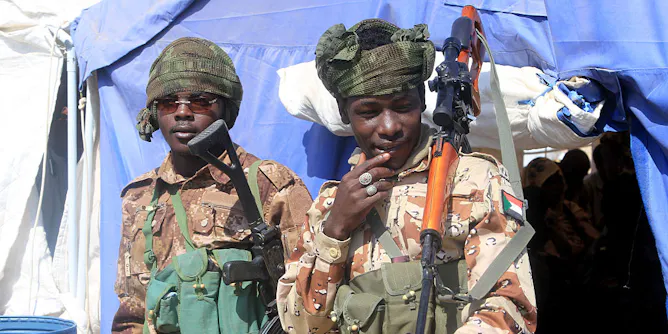
A new peace initiative has put the future of Sudan’s Islamist movement at the centre of post-war politics.
Articles on Abdel Fattah al-Burhan
Displaying 1 - 20 of 38 articles
Armed actors in fragile contexts typically engage in sectors where they can quickly extract profits.
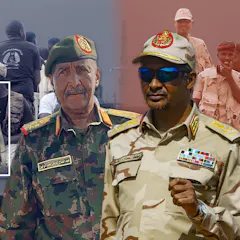
Since fighting broke out in April 2023, some 150,000 people have been killed in Sudan and an estimated 13.5 million displaced.

Sudan’s neighbourhood committees represent a unique blend of political and practical action. They mobilise for change while addressing immediate community needs.
As fighting escalates in Sudan, the latest peace efforts seem unlikely to achieve more than a fragile ceasefire.
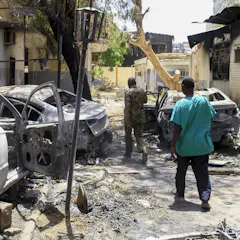
If the conflict endures, the value of Sudan’s economy will contract by up to 42% – with 7 million more people falling into poverty.
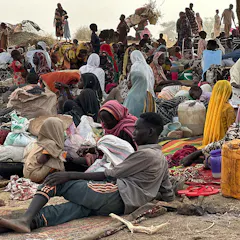
International involvement must be limited to building up Sudan’s capacity to solve its governance problems.

The longer the Sudan war drags on, the higher the risk of fragmentation – turning one conflict into many.

Sudan’s war has triggered a massive displacement crisis, with more than 14 million people forced to flee their homes.
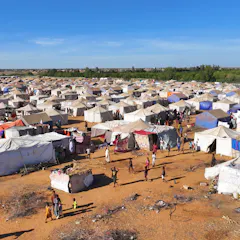
Sudan’s conflict didn’t break out because of the UAE and Saudi Arabia – but local actors felt able to go to war because of external support.

Sudan must find the right formula to manage its diverse political, economic and cultural interests.
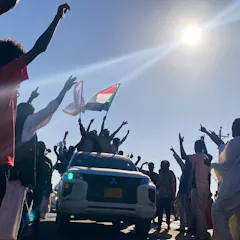
The Sudanese army is tapping into nationalist and xenophobic sentiments to gain domestic support and distract attention from its actions and failures.

There are no shortcuts to peace in Sudan, but a Marshall Plan-like investment and UN peacekeepers can help local actors diversify the economy and implement reforms once the fighting ends.

The conflict in Sudan is the world’s biggest hunger and displacement crisis.
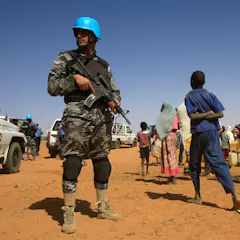
While the gravity of the need in Sudan is clear, there are barriers to deploying a peacekeeping mission.
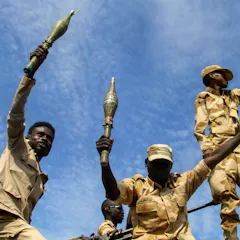
The United Arab Emirates is emerging as the foreign player most invested in Sudan’s conflict.
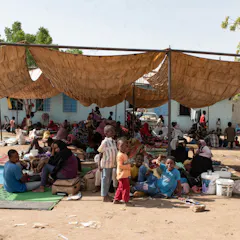
Sudan is the site of one of the world’s worst humanitarian crises, with around 25 million people in need of urgent assistance.

Armed groups looking to infiltrate the state to influence policy first pursue their objectives without openly antagonising the government.

By capping immigration applications from Sudanese people fleeing the civil war at 3,250, and limiting eligibility to Sudanese with family in Canada, the federal government is leaving millions behind.
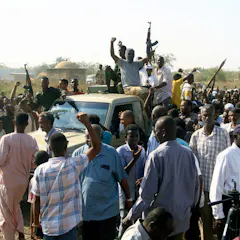
Peace in Sudan requires a focus on the concerns of historically marginalised populations in conflict zones.
Top contributors
-

Professor, Weber State University
-
Senior Research Fellow and Program Leader for the Sudan Strategy Support Program, International Food Policy Research Institute (IFPRI)
-
Researcher, Helwan University
-
Senior Research Scholar at the Center on Global Energy Policy, Columbia University
-
Researcher and lecturer, City University of New York
-
Research Professor and Executive Director of the World Peace Foundation at The Fletcher School, Tufts University
-
Lecturer in Political Science, American University School of International Service
-
Associate Professor of History, University of Washington
-
Associate Professor of International Relations of the Middle East, University of Birmingham
-
Research Fellow, International Food Policy Research Institute (IFPRI)
-
Associate Professor of International Relations, University of Trieste
-
Senior Researcher and Coordinator of the Small Arms Survey's Human Security Baseline Assessment project on Sudan and South Sudan, Graduate Institute – Institut de hautes études internationales et du développement (IHEID)
-
Researcher at the Austrian Institute for International Affairs, Österreichisches Institut für Internationale Politik (OIIP)
-
Lecturer in History, Newcastle University
-
Associate Professor, United Arab Emirates University