
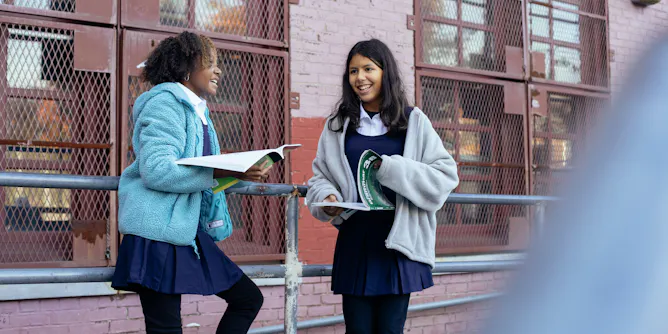
A new study looks at how students’ capacity to handle adversity relates to their ability to manage changes at school.
Articles on Student wellbeing
Displaying 1 - 20 of 45 articles

Student disengagement during the early high school years shouldn’t be dismissed as ‘just being a teenager’.

High school students can skip exams and do an ‘enabling program’ in years 11 and 12. This can qualify them for certain undergraduate degrees.
A new study checked in with students weekly, to ask them about their wellbeing, sleep and concentration.
Boarding schools in Australia are diverse, and not like Hogwarts or other caricatures.
Researchers heard from students who described ‘being picked last for everything’, as well as teasing and physical pushing at school.

Some nursing and teaching students will have access to a new $331 a week payment. But medical, physio and psychology students all miss out.

New rules prompt schools to respond to harmful behaviour after hours. This makes them responsible for students after the bell and beyond.
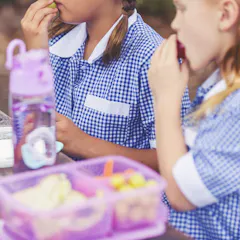
Australia is one of the few high-income countries that does not provide children with a daily nutritious meal at school.
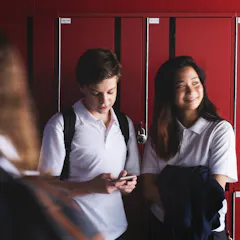
If we understand their motives, we can help children who bully change their behaviour.

A survey of more than 4,000 Year 12 students suggests young people want schools to focus less on uniform rules and more on preparing for life after school.

This year’s New South Wales selective school tests have featured police, tears and months of tutoring. What is the impact on students?

The survey tracked students in Tasmania in 2022 and 2024. More than a quarter are often going without food because they can’t afford it.
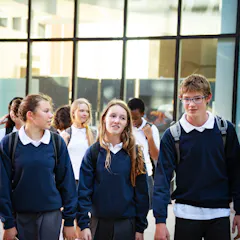
In an Australian study, Year 7 students reflect on their recent move to high school. And what would help make this big change easier.
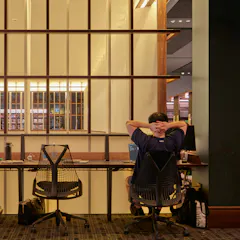
First year uni can be a lonely experience. It can also see students question whether they have chosen the right path.

Approaches to school bullying have shifted from just dealing with the victim and perpetrator to involving the whole school in prevention.
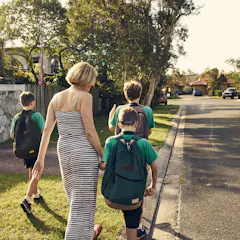
In 1987, researchers lamented how schools were organised ‘around the assumption that the nuclear family is the norm’. New research suggests very little has changed.
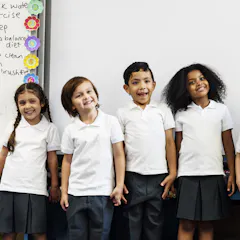
If your child is in a different class or has changed schools, they may be missing certain friends or confused if old friends are behaving differently.
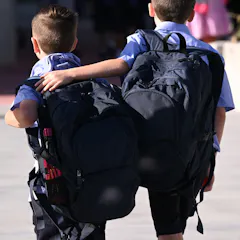
Let your child know it is OK to start small. You don’t have to make ten best friends all at once.
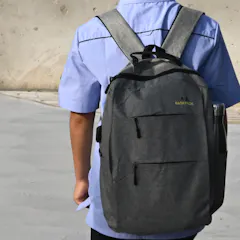
If your child is spending lots of time in sick bay or has extreme difficulty getting ready for school, they could be signs of school refusal.
Top contributors
-

Scientia Professor and Professor of Educational Psychology, UNSW
-
Associate Professor, School of Nursing, University of Wollongong
-
Senior Lecturer, Management, University of Tasmania
-
Lecturer, School of Nursing, University of Wollongong
-
Senior Lecturer, School of Education, Macquarie University
-
Senior Lecturer in Nutrition and Dietetics, University of Wollongong
-
Postdoctoral research fellow, UNSW
-
Associate Professor in Educational Leadership, Australian Catholic University
-
Lecturer in Curriculum and Pedagogy with a focus on Educational Psychology, University of Southern Queensland
-
Senior Research Fellow, Charles Sturt University
-
Post doctoral research fellow, The University of Queensland
-
Lecturer in Nursing, Edith Cowan University
-
Professor of Clinical Psychology, The University of Queensland
-
Associate Professor of Sociology, Rutgers University
-
Research associate, Adelaide University