
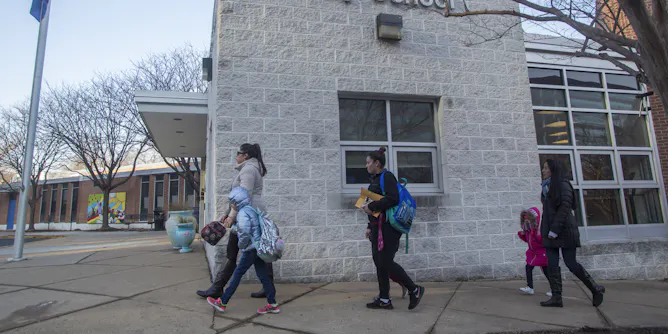
Three years observing in a public school has given one scholar a close-up look at the sweeping challenges in public education.
Articles on Student mental health
Displaying 21 - 40 of 68 articles
There are opportunities for intervention in the education system to address gaps in psycho-social provision and support.

Surveillance cameras, metal detectors, door-locking systems and armed guards have not prevented school shootings. A school safety scholar examines other possible approaches.

School violence prevention requires professionals – counselors, psychologists and social workers – who know how to create an emotionally safe environment. Those staffers are in very short supply.

Waiting for kids to show signs of distress has little value, says a researcher who is pushing schools to take a more proactive approach toward student mental health.

As concerns about college students’ mental health continue to rise, a sociology researcher offers tips for college instructors to help students who may be in crisis.

Teachers can inspire children and young people to feel hopeful and promote a sense of agency through thoughtful, honest discussion and developmentally appropriate activities.
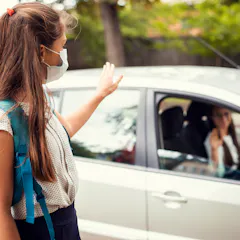
Many Australian children are returning to school after spending the best part of two years learning from home. Such a long break can understandably make many anxious. But there are ways to help.

We investigated the initiatives schools around the world took to help support and maintain the well-being of their students and staff. We pulled out seven things that made a difference.

The pandemic has introduced a new context for university instructors navigating boundaries and responsibilities around their students’ and their own well-being and mental health.

Peer support, opportunities to engage in responses to combat racism and bias and culturally responsive counselling are important for the mental health and well-being of international students.
Since the pandemic began university decision-making has become more student-centred in response to students’ demands for flexibility.
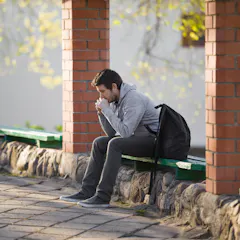
Our study shows almost one in four university and vocational education students report extremely high levels of distress during the pandemic.

Indian students in Australia haven’t had the experience they hoped and paid for. Campuses closed, they lost work and they watched helplessly from afar as COVID-19 ravaged their home country.
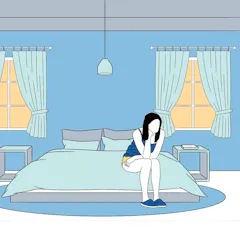
Is there a mental health crisis among young people, or are worry and sadness to be expected? Pathologizing normal, healthy responses to adverse events promotes misunderstanding about mental illness.

New research shows mindfulness training can be effective when delivered online. The benefits for university students included one particularly notable development for well-being.

Cancelling campus events won’t address the potential harms of binge drinking this fall. Universities must plan additional activities to curb risky alcohol use and promote student wellness.

Universities can best prepare students by teaching them in ways that reflect the realities of how professionals and the wider community now operate.

International students are a vulnerable population who have faced many stressors in the COVID-19 pandemic. Emotional intelligence can help navigate these.

Queer people have learned to build and rely on “chosen families.” Finding ways to creatively bolster and expand our networks of care takes on renewed importance in the pandemic.
Top contributors
-

Affiliated researcher, School of Policy Studies, Queen's University, Ontario
-
Professor of Inclusive Education, L’Université d’Ottawa/University of Ottawa
-
S.J. Axelrod Collegiate Professor of Health Management and Policy, University of Michigan
-
Professor of Psychology and Licensed Mental Health Counselor, Purdue Global, Purdue University
-
Senior Lecturer in Philosophy and Co-Director of the Centre for Engaged Philosophy, University of Sheffield
-
Professor of Educational Policy Studies & Sociology, University of Wisconsin-Madison
-
Senior Lecturer, Psychology and Counselling, School of Human Sciences, University of Greenwich
-
Professor, Department of Educational Administration, University of Saskatchewan
-
Chair, Department of Neuroscience, Carleton University
-
Assistant Professor, Community Rehabilitation and Disability Studies, University of Calgary
-
Professor of School Psychology, University of South Florida
-
Associate Professor, Department of Psychology, and Director, Mental Health Strategy, University of Calgary
-
PhD student, Clinical Psychology, University of Calgary
-
Canada Research Chair in Child Health Equity and Inclusion and Associate Professor, Department of Health Sciences, Brock University
-
Behavioral Scientist, University of Michigan