

The US National Women’s Soccer League was recently rocked by revelations of sexual abuse. But research shows that physical and verbal abuse is also disturbingly common in organized sports.
Articles on Stress
Displaying 201 - 220 of 580 articles

How to be more productive and efficient when working on multiple projects.

New research finds that psychological stress has an odour - and dogs can smell it.

During times of stress and change, people are often advised to practice self-care by looking after themselves, yet what about the benefits of showing kindness to others?

Family routines can provide stability during times of stress. Here are four strategies for building resilience against stress and family challenges to put into place as children head back to school.

Academics and religious leaders address the role of faith and community in managing mental health issues in young people and society as a whole.

Our team studied the activity of neurons in people with epilepsy. Neurons in the brain regions responsible for triggering seizures were much less diverse.
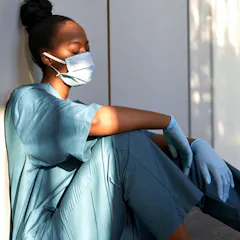
Burnout is a serious problem that deserves all of our attention. An academic who studies the issue offers some practical tips to deal with the problems associated with burnout.

Tackling mental health problems early can help prevent them from getting worse.

The clue is in exercise’s ability to control levels of our “stress” hormone, cortisol.

People who like to feel in control are more prone to ‘catastrophising’.

With teachers reporting record-high levels of burnout, and more burnout than any other profession in the US, scholars examine what’s going on and what it may mean for education.

Therapy dogs are a proven support for students experiencing high levels of stress. During the pandemic, in-person encounters were less possible, but virtual sessions also recorded an improvement.
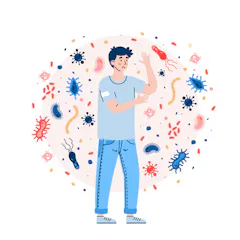
While the immune system naturally gets weaker with age, social stressors like trauma and discrimination can hasten immunosenescence.

Psychosocial and economic stressors can affect health, but neither our doctors nor our health-care system have the tools to integrate these factors into diagnoses or care. Play offers an alternative.

The term is often pejorative: to be hypersensitive is to cry over nothing, to feel things are “too much”, etc. But we now understand that this trait has real evolutionary and social benefits.

Smacking children is illegal in Wales and Scotland.
A first-of-its-kind study investigated what’s going on in other people’s minds during your nail-biting moments.
While it might not be the first thing that comes to mind, new and effective ways to reduce stress in vulnerable members of our communities could be key to ensure supportive social environments.
Our study shows that people who believe they can do things to improve their mental health have higher wellbeing.
Top contributors
-

Associate Professor, Centre for Positive Health Sciences, RCSI University of Medicine and Health Sciences
-
Professor of Organisational Psychology and Health, University of Manchester
-
Associate Professor of Family & Community Medicine and Pediatrics, retired, University of California, San Francisco
-
Associate Professor (Adj) He/Him, Southern Cross University
-
Assistant Professor, Department of Psychology, University of Manitoba
-
Senior Research Fellow in Mental Health, Victoria University
-
Associate Professor of Organisational Behaviour, Bond Business School, Bond University
-
Professor of Psychiatry, Wayne State University
-
Associate Professor, Psychosocial Difficulties, University of Oslo
-
Assistant Professor of Psychiatry and Behavioral Neurosciences, Wayne State University
-
Professor of Psychology, USC Dornsife College of Letters, Arts and Sciences
-
Honorary Professor, Centre for Health Systems and Safety Research, Macquarie University
-
Director, Field Experience (Community-Based), Werklund School of Education, University of Calgary
-
Senior Lecturer in Sport & Exercise Psychology, Sheffield Hallam University
-
Business psychologist, Lancaster University