
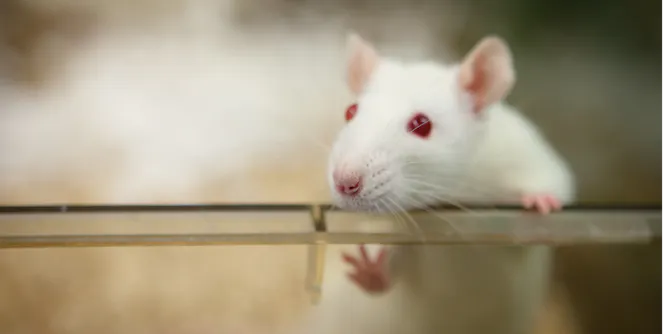
Male rats transfer different hereditary information to their offspring depending on their age.
Articles on Sperm
Displaying 21 - 40 of 76 articles

The guide asks questions about the woman’s age, how long she has been trying for a baby, whether she has been pregnant before, and the percentage of the male partner’s sperm that move normally.
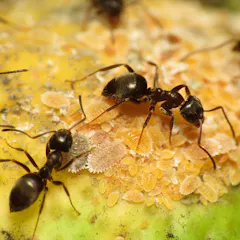
They might be a hated household pest, but ants actually live fascinating and complex lives.

Children with cancer not only endure chemotherapy or radiation treatment but they may also face infertility in adulthood. Now a new procedure, just proven in monkeys, may be close to use in humans.
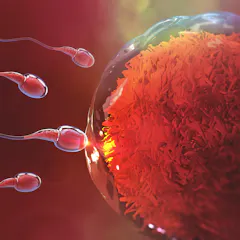
Our new research has discovered what gives human sperm the strength to succeed in the race to fertilise the egg – and it’s all to do with their tails.
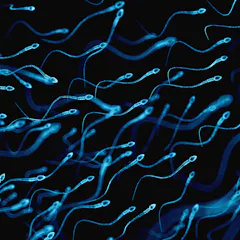
Zebrafish study could have implications for human fertilisation technology.
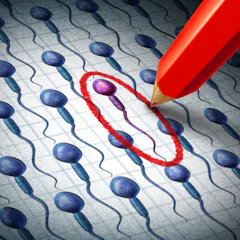
Traditional belief has held that the underlying cause of miscarriage can be found in mothers, but half of recurrent miscarriages have another cause.

Climate change threatens to cause mass extinctions – but how, exactly? New research suggests male fertility may be the weakest link.
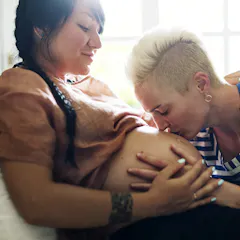
Sperm donation websites are the Ubers and Airbnbs of the fertility world. But why are they so popular? New research explains the reasons why some men donate.
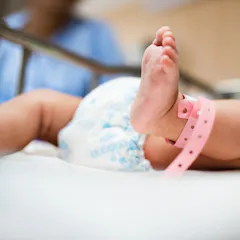
A new study shows that as the father’s age increases, so too the chances of the baby being born prematurely, having a low birth weight, or requiring medical intervention after delivery.

Male contraceptives have been under development for at least the past 50 years, because of the success of the female pill and pessimism about men taking a pill.
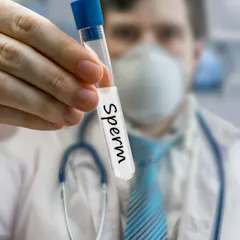
The news that Victorian sperm donor records from the 1970s and 1980s were preserved and are now accessible creates both challenges and opportunities for both donors and their offspring.
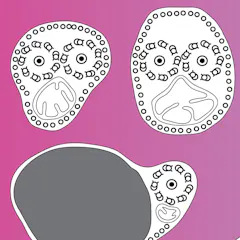
In biology, the study of these very special sperm cells makes it possible to learn more about species such as parasitic worms.

The competition to father young is often most intense behind the scenes.

Research is increasingly finding an association between alcohol consumption and sperm health.

An ancient sexual conflict over mitochondrial inheritance may be responsible for the evolution of the two sexes as we know them.
Health Canada is drafting important regulations for assisted reproductive technologies. Initial documents treat egg donors and surrogates as little more than spare parts and walking wombs.

The release of TV program The Handmaid’s Tale and a study on male sperm numbers have left some worried about the future of human fertility.
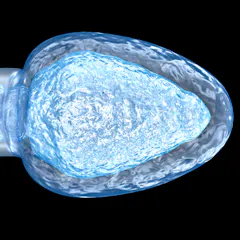
A better understanding of sperm could help develop new fertility treatments and contraceptives for men.
Numerous studies suggest that spirulina could help safeguard fertility.
Top contributors
-

Adjunct Senior Research Fellow, Global and Women's Health, School of Public Health & Preventive Medicine, Monash University
-
Senior lecturer in reproductive Biology, University of Sheffield
-
Professor and Director, Robinson Research Institute, Adelaide University
-
Associate Professor of Medical Sciences, University of Wollongong
-
Principal Lecturer in Wildlife Conservation, Nottingham Trent University
-
Professor of Reproductive Medicine, Queen's University Belfast
-
Professeur, UMR ISYEB (Institut de Systématique, Évolution, Biodiversité), Muséum national d’histoire naturelle (MNHN)
-
PhD Candidate, L’Université d’Ottawa/University of Ottawa
-
Associate Professor, Department of Epidemiology and Preventive Medicine, Monash University
-
Academic; Consultant (Health Law), University of Sydney
-
Adjunct Professsor, School of Psychology, Faculty of Health and Medical Sciences, Adelaide University
-
Postdoctoral Researcher of Evolutionary Biology, University of Pennsylvania
-
Associate Professor, Centre for Evolutionary Biology, The University of Western Australia
-
Distinguished Research Professor, Emerita, Dalhousie University
-
Professor; Director, UWA Centre for Evolutionary Biology, The University of Western Australia