

As social media becomes more prevalent in our lives, a career as an influencer may seem enticing. But those interested in this new career should be aware of the challenges.
Articles on Social media algorithms
Displaying 21 - 32 of 32 articles
The effects social media has on our mental health may depend on how we use it. Taking control, and knowing when to take a break, is crucial.
There’s a tension between facilitating free and fair debate on social media, and businesses’ bottom line. And it must be resolved with the public interest in mind.

While many progressive movements have organised online, conservatives dominate because of better organisation, capital, and social inequality. France’s presidential elections are a case in point.
The system behind apps like Facebook, Twitter, YouTube and WhatsApp isn’t neutral. It encodes political communication, influencing what users see.
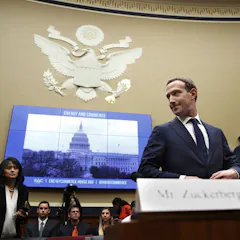
Pressure is mounting on Congress to take action on Facebook. Our panel of experts offers their top priorities: user control of data, banking-like oversight and resources to close the digital divide.
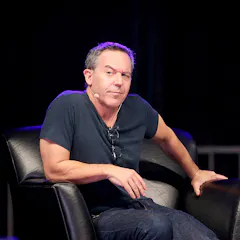
Critics have long pooh-poohed conservative comics. But in today’s fragmented media environment, right-wing comedy has become both a moneymaker and a force in politics.

You have evolved to tap into the wisdom of the crowds. But on social media your cognitive biases can lead you astray.
Social media algorithms are akin to a licence to promote junk food or tobacco to children.

The age of ‘artificial intimacy’ is upon us. What does it mean for the way we love, have sex and build friendships?
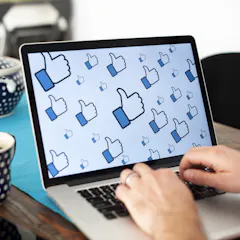
Misinformation isn’t an inevitable product of social media. Proven techniques can help tech companies clean up their acts.

People often worry about whether they may be addicted to digital devices, but addiction to a substance is far different from the habitual behavior that typically underlies digital usage.
Top contributors
-

Postdoctoral research fellow, California Institute of Technology
-
Emerita Provost Professor of Psychology and Business, USC Dornsife College of Letters, Arts and Sciences
-
Assistant Professor of Sociology, Davidson College
-
Professor of Information Systems, Michigan State University
-
Professor of Communication, Inland Norway University of Applied Sciences
-
Professor of Philosophy, University of Southampton
-
Assistant Professor of Computer Science, Johns Hopkins University
-
PhD Student, Department of Kinesiology, University of Windsor
-
Digital Sociologist, Sciences Po Paris, Sciences Po
-
Director of Sydney Executive Plus, Business School, University of Sydney
-
Dean of Global Business, The Fletcher School, Tufts University
-
Senior Lecturer in Cultural Studies and Media, Macquarie University
-
Professor of Informatics and Computer Science, Indiana University
-
Professor of Music Teaching and Learning, University of Southern California
-
Assistant Professor of Management and Organizations, Northwestern University