
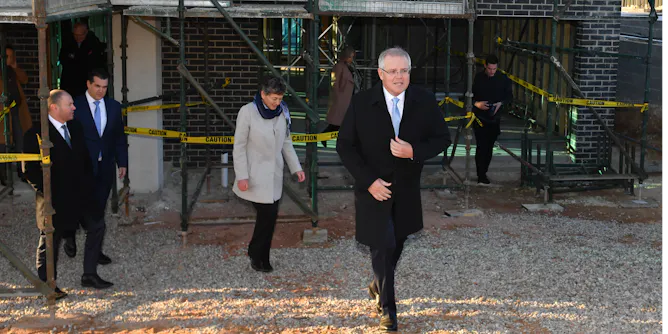
Voters who own housing are strongly invested in increasing the value of their wealth-generating assets. And they strongly favour the Coalition, which knows to protect their interests.
Articles on Social housing
Displaying 101 - 120 of 243 articles

The hard lockdowns of whole blocks have been challenging for many residents due to their histories of trauma, their housing conditions and a lack of communication and understanding from authorities.
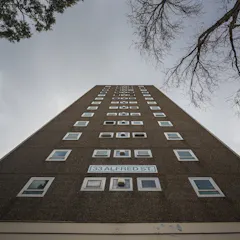
Much of our public housing stock is ageing and substandard. But we can learn from outstanding examples of retrofit projects that have transformed existing blocks into high-quality housing.
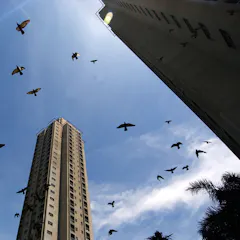
Public housing renewal often aims for a 70:30 private-public mix of dwellings. Modelling shows applying this mix to Waterloo housing estate would cut the suburb’s social housing share from 30% to 17%.

Most local councils, developers and nonprofit providers want mandatory affordable housing requirements applied to all development. The current system of voluntary negotiations just isn’t working well.
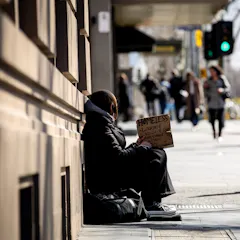
Australia has managed to house the homeless in hotels during the COVID-19 pandemic. We now have an opportunity to be thinking about longer-term solutions.

The scheme will encourage people who can’t afford to buy homes or are homeless to believe the government has forgotten them.
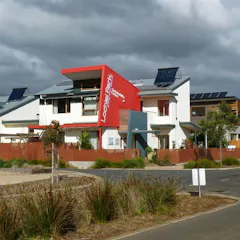
There has never been a better time for public money to go into improving the performance of Australian housing. We could have cut household bills and emissions, as well as saving construction jobs.

Grants to home buyers could cost the federal government billions without creating any extra jobs in construction. Investing in social housing is a better approach.

Of 2,646 hectares of public land being prepared for sale in Victoria, 24 sites are suitable for building high-quality public housing in places of high need. Why isn’t the land being used for this?

The pandemic has brought to a head deep-rooted problems with how housing is provided in Australia. Fortunately, the solutions can play a central role in the national recovery process.
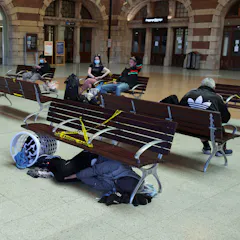
Now is the time for a two-pronged strategy to ensure everyone has a home: a spot-purchasing program to find homes for people now in emergency accommodation, followed by social housing construction.
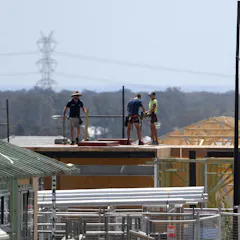
Construction employs one in ten Australians, with a broad range of skills, using mostly locally made materials. Building social housing would meet urgent social needs as well as creating jobs.

Reducing crowding and repairing social housing can decrease the risk of COVID-19 in remote Indigenous communities. It will bring other long-term benefits, too.

It’s time to reset Canada’s housing policies to make cities more affordable and more socially just places to live.
Larger homes with fewer occupants have a bigger energy and heating demand.

A home, a springboard, or a safety net? New research finds a surprisingly large number of Australians have lived in social housing since 2000, using it in several very different ways.

In Atlantic Canada, leaders must avoid the mistakes made in the country’s largest cities where people are being pushed out due to high housing prices.

Even landlords think involving social housing tenants is critical to running properties, but too often it doesn’t happen.

Helping tenants find work supposedly creates a pathway into private rental housing, freeing up social housing for others. Private rental costs and the situations of many tenants make that unrealistic.
Top contributors
-

Emeritus Professor of Housing, UNSW
-
Alan Morris is a Friend of The Conversation.
Professor, Institute for Public Policy and Governance, University of Technology Sydney
-
Research associate, The University of Melbourne
-
Professor of Urban and Regional Planning, University of Sydney
-
Adjunct Professor, Centre for Urban Research, RMIT University
-
Emeritus Professor, Urban Planning and Policy, University of Sydney
-
Professor, City Futures Research Centre, Faculty of the Built Environment, UNSW
-
John Curtin Distinguished Professor, Curtin Business School, Curtin University
-
Housing Policy Researcher, Expert Advisor, Housing Assessment Resource Tools and Adjunct Professor, L’Université d’Ottawa/University of Ottawa
-
Professor, School of Social Science, The University of Queensland
-
Head of Urbanism and Associate Professor of Urban Studies, School of Architecture, Design and Planning, University of Sydney
-
Senior Research Fellow, City Futures Research Centre, UNSW
-
Professor of Property and Housing Economics, Adelaide University
-
Associate professor in urbanism, University of Sydney
-
Program Director, Housing and Economic Security, Grattan Institute