
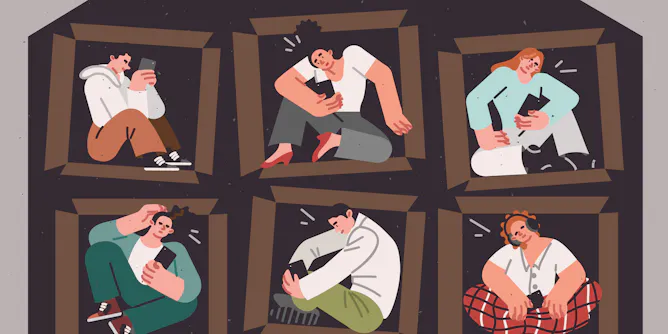
Students in this course learn about the biology and sociology of friendship, but also put their studies to the test by going to eat a meal with a peer, and tracking their experience.
Articles on Social capital
Displaying 1 - 20 of 39 articles

Social capital matters in academic career progress.
Reform must recognise that the sector’s social capital is its strength and its weakness.
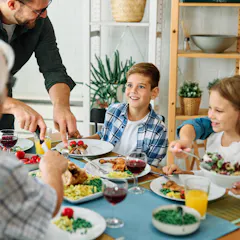
We urgently need to teach young people ‘conversational literacy’.

The recently released birthday tribute book that was gifted to Jeffrey Epstein in 2003 demonstrates how power is fortified through social gestures.
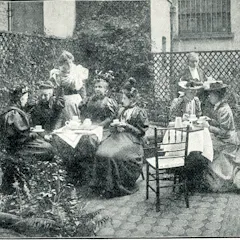
Excluded from a male-dominated art world, women artists in early 20th-century London pioneered their own social networks.
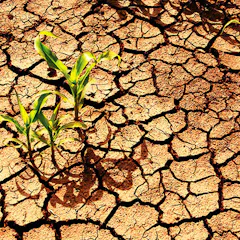
Drought adversely affects the mental health of Ghanaian farmers.

History shows that governments’ attempts to strengthen religious institutions can backfire.

Eating with others can boost levels of happiness, according to a new global report that traces the number of times people dine alone or in a group.

Development projects must be tailored to the context of the communities they are supposed to help.

Non-profits provide critical services and social support for communities. They also provide settings where vital forms of social capital are produced.
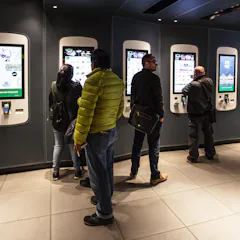
Self-service technologies — like self-checkouts or government service kiosks — are decreasing interactions with other people. This may affect our politics and sense of community.

Food, shelter and medical supplies are important but not the only things that help people get back on their feet.

Networking involves a skillset that can be learned and practised. Doing so – online or in person – is crucial to career advancement.
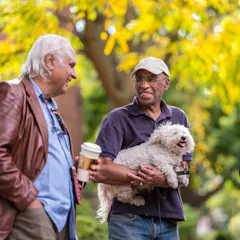
The presence of pets makes people seem more trustworthy, research has found. People are more likely to help a stranger with a dog or another pet than a person without one.

A study of 3,000 companies found a correlation between local ‘social capital’ – which measures such variables as voter turnout and census response rates – and more women on corporate boards.

A new study found that having a trusting manager made employees feel more positively about their work.
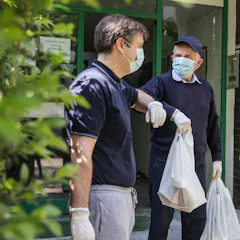
The relationships that people form with others outside of their homes can translate into crucial help in a disaster. But what happens if they can’t build those ties because of social distancing?
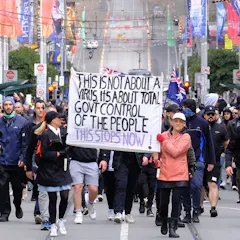
Equality and corruption perceptions appear to explain more than 80% of the differences in trust levels between nations.
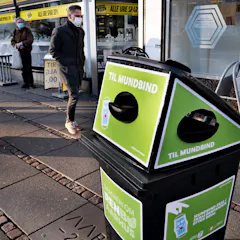
The word, which roughly translates to considering the needs of society above your own, has become a buzzword in Denmark.
Top contributors
-

Associate Professor of Organisation Studies, University of Tasmania
-
Associate Professor, Department of Sociology, Brock University
-
PhD Candidate, University of Memphis
-
Teaching Assistant Professor, University of Pittsburg and Visiting Associate Professor, The University of Osaka, University of Pittsburgh
-
Lecturer in Entrepreneurship, Innovation and Organisational Design, RMIT University
-
Research Active Lecturer, Discipline of Psychology, Charles Darwin University, Charles Darwin University
-
Emeritus Professor, School of Economics, The University of Queensland
-
Teaching & Learning Specialist, Office of DVC Academic, University of the Western Cape
-
Professor of Social Economics, UTS Business School, University of Technology Sydney
-
Ph.D. Student, Department of Sociology, University of Virginia
-
PhD Researcher, Brown University
-
Professor, University of Southern Queensland
-
Ph.D. Student in Mass Communications, Penn State
-
James P. Jimirro Professor of Media Effects, Co-Director, Media Effects Research Laboratory, & Director, Center for Socially Responsible AI, Penn State
-
Professor of Higher Education, Rhodes University, South Africa, Rhodes University