
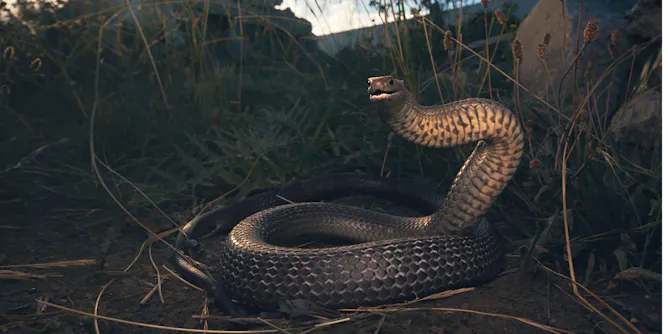
Whether you’re hoping to maximise your chances of seeing one of these shy, fascinating critters or wanting to avoid them at all costs, this article is for you.
Articles on Snakes
Displaying 41 - 60 of 104 articles
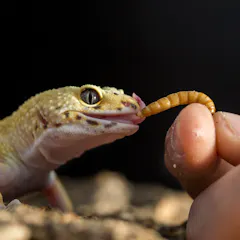
Reptiles get a bad rap, but this is because they’re misunderstood. Promoting healthy reptile pet ownership can contribute to conservation and education efforts.
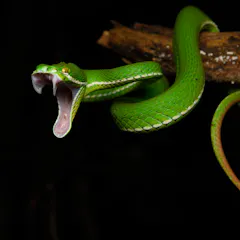
How have snakes evolved venom fangs so many times in their evolutionary history? Research suggests it’s due to a structure called ‘plicidentine’ in their teeth that can evolve into venom grooves.

Two tongue tips are better than one – an evolutionary biologist explains why snakes have forked tongues.
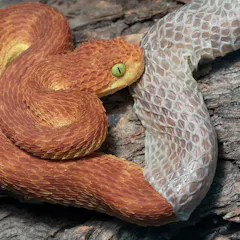
When the snake is ready to shed its skin, it rubs its body along rocks, plants and other rough things to peel the old layer of scales — often in a single, snaky piece.

There are too many little-understood species for scientists to study them all. A new approach helps decide which ones to tackle first.
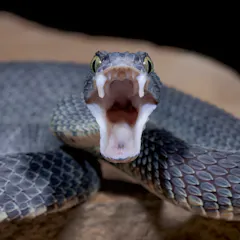
Some snakes have tough, blunt fangs for cracking crabs. Others have sharp needles for getting a grip on mice.
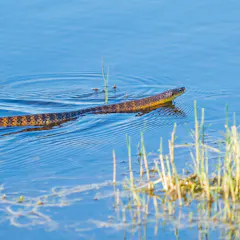
New research fired laser beams on tiger snake scales, and found arsenic was 20-34 times higher in wild wetland snakes than in captive snakes.
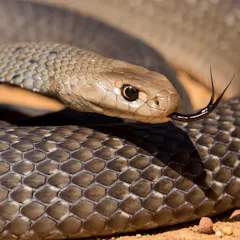
As well as my work as a sociologist, I’m also a professional snake catcher. I don’t expect people to love snakes, but I believe they should know more about them - and it’s not all bad.
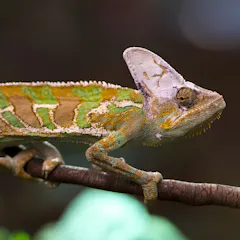
Reptiles are consistently overlooked by regulators of the trade in wildlife, but many face extinction in the wild.

The weather is warming up, and snakes are coming out to bask in the sun. But we don’t need to tell tall tales to appreciate snakes – the truth is far more fascinating.
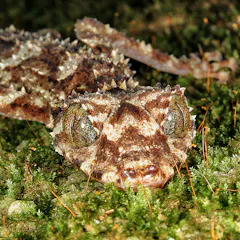
With targeted conservation action, we might just save many of these species before it’s too late.
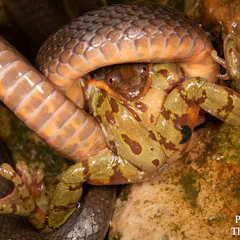
CC BY-NC-ND7.04 MB (download)
Facebook groups exist to share information about most classes of animals and plants, and these communities have unprecedented observational power.
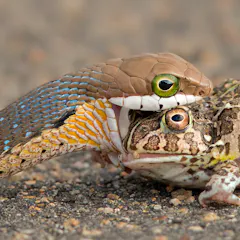
Social media has proved to be a helpful source of observations of snakes feeding. Knowing more about their diet is useful because it’s linked to their venom biochemistry.
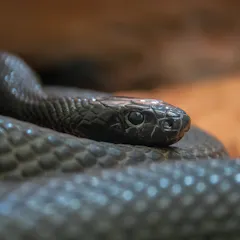
Australia is home to 20 of the 25 most venomous snakes in the world.
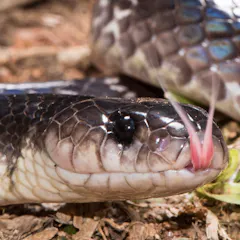
Relax, snakes aren’t out to get you.
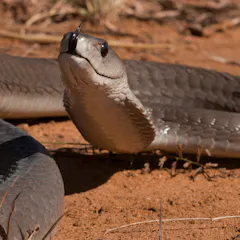
The World Health Organisation has a plan to halve deaths and disability from snakebites
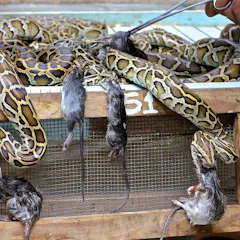
Snake farms run the risk of being collateral damage in Chain’s fight against coronavirus, yet they probably help, rather than harm, the fight against disease.
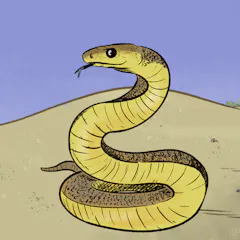
In the blue corner is the extremely venomous Black Mamba – top snake of Africa – and in the red corner is the muscular Inland Taipan – Australia’s alpha snake.
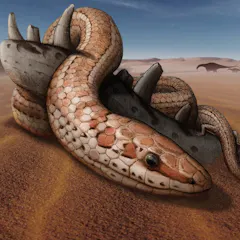
The discovery of a perfectly preserved snake skull fossil answers many questions about the evolution of snakes from lizards.
Top contributors
-

Research Fellow and Co-head, Australian Venom Research Unit, The University of Melbourne
-
Professor of Zoology, Bangor University
-
Professor & Head of Section at the Department of Biotechnology and Biomedicine, Technical University of Denmark
-
Professor of Herpetology, Environmental Physiology and Physiology, Ecology and Evolution, University of the Witwatersrand
-
Postdoctoral Research Fellow in Wildlife Ecotoxicology, CSIRO
-
Associate Researcher, The University of Queensland
-
Research Associate in Evolutionary Biology, Adelaide University
-
Principal Lecturer in Wildlife Conservation, Nottingham Trent University
-
Postdoctoral Research Fellow in behavioural ecology and evolution, Macquarie University
-
Senior Lecturer in Ecology and Evolutionary Genetics, Bangor University
-
Honorary Research Fellow, Macquarie University
-
Postdoctoral Research Fellow in Animal Biotelemetry, Bournemouth University
-
Senior Lecturer, Biodiversity and Conservation Biology, University of the Western Cape
-
Director, Clinical Toxicology Research Group, University of Newcastle
-
Post Doctoral Researcher, Technical University of Denmark