
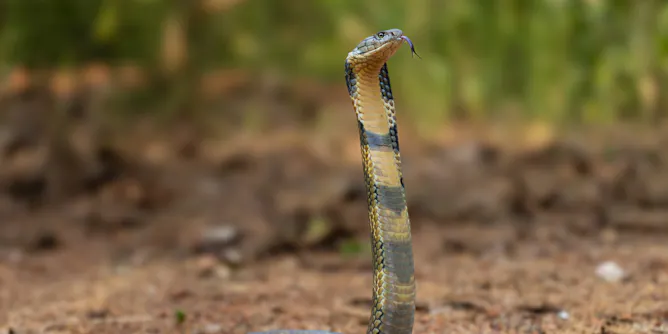
Horses have been used to make antivenom for more than a century. Could our new research offer a better way?
Articles on Venom
Displaying 1 - 20 of 58 articles

A new study of European vipers challenges the idea that snakes use venom to inflict pain on predators.
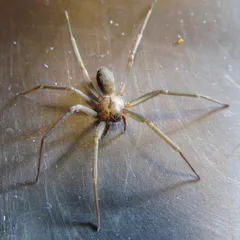
Not all spider venoms are created equal. Some are harmless to people, while others can be quite dangerous.
The discovery shines a light on what has, until now, been an underappreciated feature of evolution which suggests life is not so random after all.
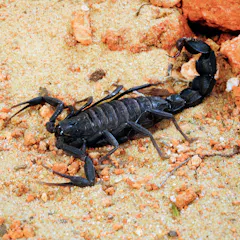
At least 1.2 million scorpion stings are recorded each year – and around 3,000 people, mainly children, die from them.

In sub-Saharan Africa, over 300,000 people are envenomed each year, leading to over 7,000 deaths and almost twice as many amputations.
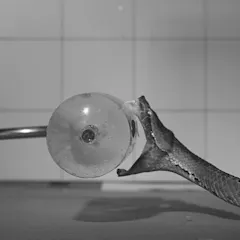
A new study shows how different snake species have evolved very different strategies to deliver their deadly bites.
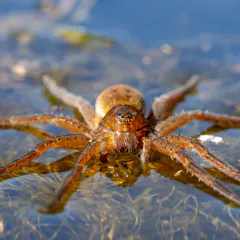
Most spiders don’t swim by choice. But they have clever tricks to survive in water when they need to.
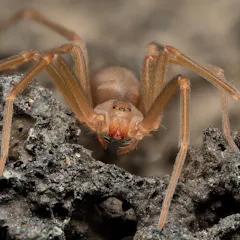
2 people died in Italy following spider bites this year, but the threat posed by these creatures is often greatly exaggerated.
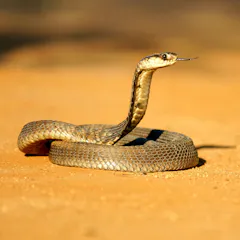
Africa’s most dangerous snakes not only kill their victims, they can also destroy skin, muscle, and even bone. New drugs could limit these wounds.
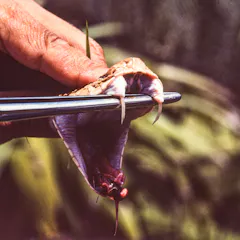
By reporting this new way that future antivenoms can fail, the research has highlighted a problem with current antivenom testing recommendations.
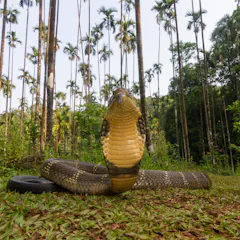
We’re still using century-old technology to make snake antivenom. A method fit for the 21st century is on the horizon.
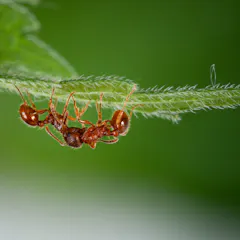
Most stings can be safely handled at home. But in rare cases, you can get a serious allergic reaction, which needs urgent medical attention.
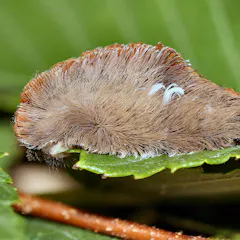
This caterpillar can cause excruciating pain when touched. But unlike most venomous arthropods, it uses its venom purely for self-defence.

The ways eastern fence lizards have changed in response to red imported fire ants demonstrate how species can adapt to survive the presence of invasive predators.
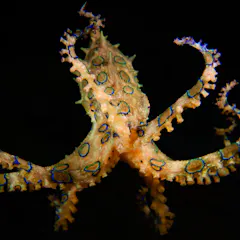
Ranging from 12 to 22 centimetres, these tiny octopus are extremely venomous and found all over Australia. Here’s what to do if you see someone get bitten.
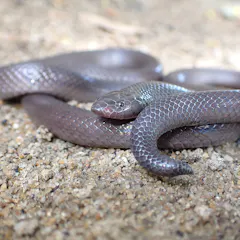
Even by conservative estimates, Mozambique’s snakebite figures are far higher than previously thought.

Animals that regularly dine on toxic food may hold clues for designing new drugs to treat persistent pain in humans.

We identify a few harmless spiders you’ve probably seen around the house and backyard — and a few that are best avoided.

The weather is warming up, and snakes are coming out to bask in the sun. But we don’t need to tell tall tales to appreciate snakes – the truth is far more fascinating.
Top contributors
-

Professor & Head of Section at the Department of Biotechnology and Biomedicine, Technical University of Denmark
-
Research Fellow and Co-head, Australian Venom Research Unit, The University of Melbourne
-
Senior Lecturer, Biodiversity and Conservation Biology, University of the Western Cape
-
Research Manager, Melbourne Clinical And Translational Sciences, The University of Melbourne
-
Research Scientist, The University of Queensland
-
Professor of Zoology, Bangor University
-
Toxinologist; Senior Research Fellow, Australian Venom Research Unit, The University of Melbourne
-
Associate Professor in Ecology, Hawkesbury Institute for the Environment, Western Sydney University
-
Research Affiliate, Discipline of History, University of Sydney
-
Professor of Biology, Wilfrid Laurier University
-
Associate professor in Vertebrate Palaeontology, University of the Witwatersrand
-
Professor and Director for the National Centre for Immunisation Research and Surveillance of Vaccine, University of Sydney
-
Post Doctoral Researcher, Technical University of Denmark
-
Head, Charles Campbell Toxinology Centre at the University of Papua New Guinea & Australian Venom Research Unit, The University of Melbourne
-
Associate professor, Swansea University