
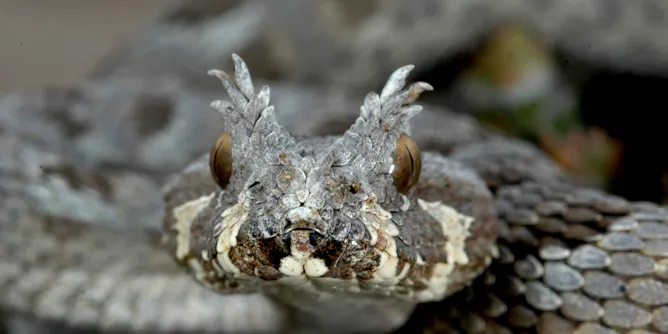
There are 401 indigenous terrestrial reptiles in South Africa.
Articles on Snakes
Displaying 21 - 40 of 104 articles
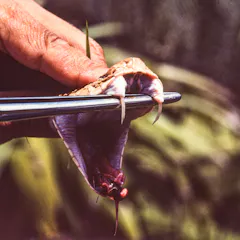
By reporting this new way that future antivenoms can fail, the research has highlighted a problem with current antivenom testing recommendations.

Green anacondas are the world’s heaviest snakes, and among the longest. it’s remarkable this hidden species has slipped under the radar until now.
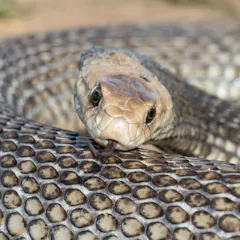
The benefits of snake populations on agricultural land far outweigh the potential costs, and farmers should tolerate rather than kill them.
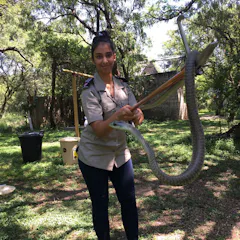
Learning about snakes offers unique insights into the natural world.
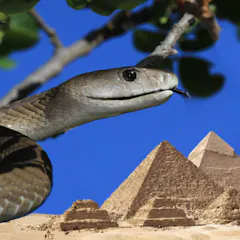
Ancient texts are still teaching us new things about the prevalence of wildlife.
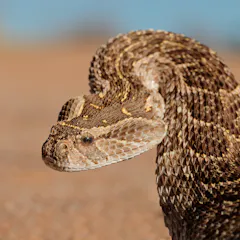
The trace was probably made between 93,000 and 83,000 years ago, almost certainly by a puff adder.
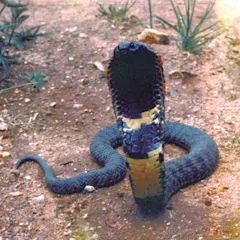
The Nyanga rinkhals can tell us about our own evolution.
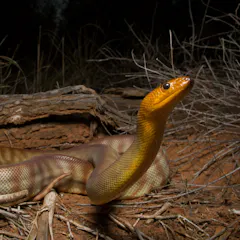
It had long been thought snakes can only feel vibrations through the ground. New research shows they can not only sense airborne sound, but can likely detect human voices.

It was assumed snakes didn’t have a clitoris – now it turns out they have two.
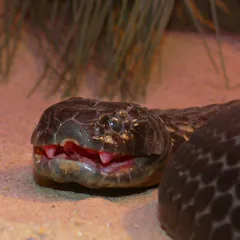
Less than a century ago, a slither of tiger snakes was abandoned on one of Western Australia’s tiny islets. Here’s how they adapted to survive.
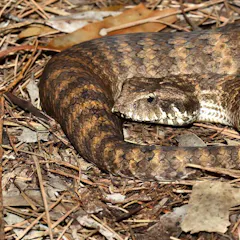
The first description of the snake clitoris may change what we think we know about mating and courtship among the slithering reptiles.
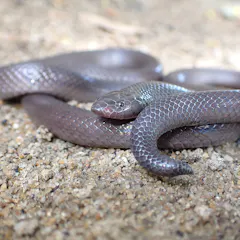
Even by conservative estimates, Mozambique’s snakebite figures are far higher than previously thought.
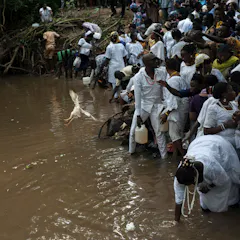
The ability of the Osun River to support biodiversity is being threatened by pollution and can only be rescued if the contamination ends.
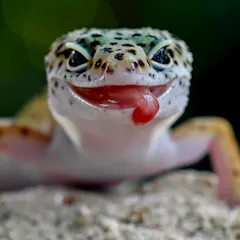
In a warming world, a species’ ability to acclimatise to temperatures is crucial. But young ectotherms can struggle to handle the heat.

New research has found that since the mid-1980s, the economic impact of invasive reptiles and amphibians totals more than US$17 billion.
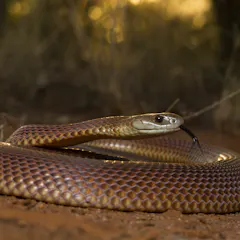
Most people try their best to avoid snakes. This snake photographer couple spends their free time searching for them.
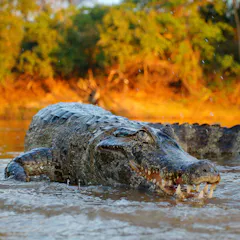
More than half of all crocodile species are a high priority for conservation according to the assessment.
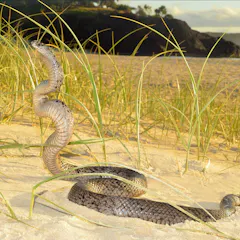
Over 150 types of venomous snake live in Australia. But deaths from snakebite are vanishingly rare. From snake behaviour to human innovation, here are the reasons why.
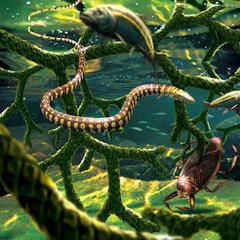
In 2015, a published article described the fossil of a four-legged snake. New research has revealed that it is in fact a lizard, and the fossil is the centre of a scientific ethics debate.
Top contributors
-

Research Fellow and Co-head, Australian Venom Research Unit, The University of Melbourne
-
Professor of Zoology, Bangor University
-
Professor & Head of Section at the Department of Biotechnology and Biomedicine, Technical University of Denmark
-
Professor of Herpetology, Environmental Physiology and Physiology, Ecology and Evolution, University of the Witwatersrand
-
Postdoctoral Research Fellow in Wildlife Ecotoxicology, CSIRO
-
Associate Researcher, The University of Queensland
-
Research Associate in Evolutionary Biology, Adelaide University
-
Principal Lecturer in Wildlife Conservation, Nottingham Trent University
-
Postdoctoral Research Fellow in behavioural ecology and evolution, Macquarie University
-
Senior Lecturer in Ecology and Evolutionary Genetics, Bangor University
-
Honorary Research Fellow, Macquarie University
-
Postdoctoral Research Fellow in Animal Biotelemetry, Bournemouth University
-
Senior Lecturer, Biodiversity and Conservation Biology, University of the Western Cape
-
Director, Clinical Toxicology Research Group, University of Newcastle
-
Post Doctoral Researcher, Technical University of Denmark