
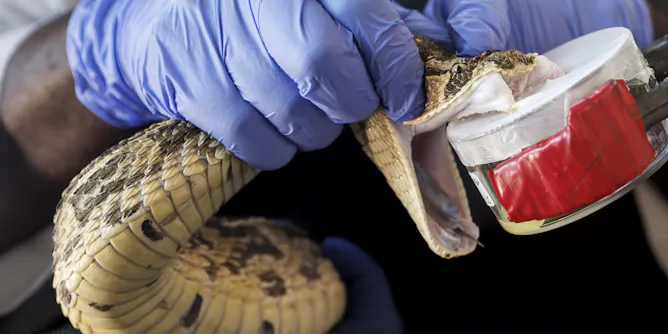
In sub-Saharan Africa, over 300,000 people are envenomed each year, leading to over 7,000 deaths and almost twice as many amputations.
Articles on Snakebite
Displaying 1 - 20 of 21 articles
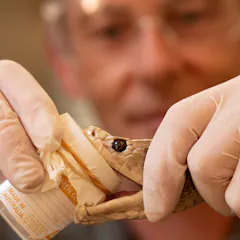
A man spent 18 years injecting himself with venom, almost dying more than once – and now his blood is behind a new snakebite treatment.
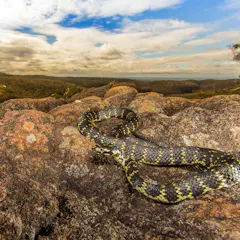
Evidence suggests climate change could make snakes come out of hiding earlier. But it’s also likely to cause population declines or shifts in the long run, as snakes adjust to the new conditions.
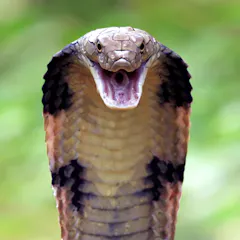
Cobra venom can cause tissue damage and life-changing injuries – but a cheap, common medication may be an antidote.
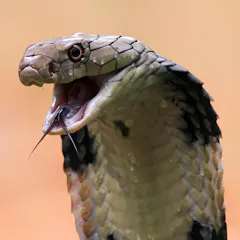
Snake venom experts Stuart Ainsworth and Christoffer Sørensen talk to The Conversation Weekly podcast about the search for an antivenom that could neutralise toxins from multiple different snakes.
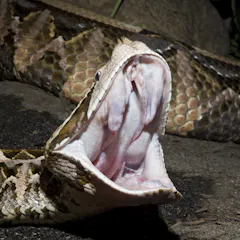
New climate change modelling has found that as the earth heats up, venomous snake populations in Africa are likely to move across borders in search of places to live.
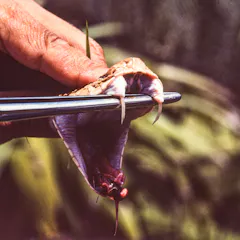
By reporting this new way that future antivenoms can fail, the research has highlighted a problem with current antivenom testing recommendations.
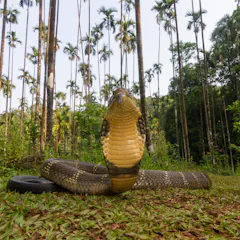
We’re still using century-old technology to make snake antivenom. A method fit for the 21st century is on the horizon.
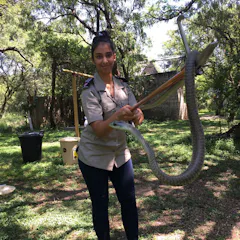
Learning about snakes offers unique insights into the natural world.
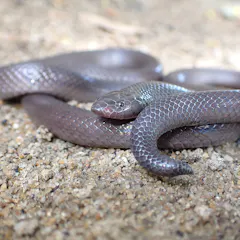
Even by conservative estimates, Mozambique’s snakebite figures are far higher than previously thought.
If what you’re reading seems too good to be true, it probably is.
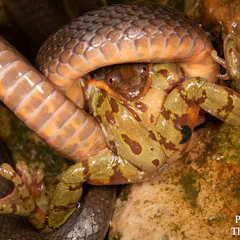
CC BY-NC-ND7.04 MB (download)
Facebook groups exist to share information about most classes of animals and plants, and these communities have unprecedented observational power.
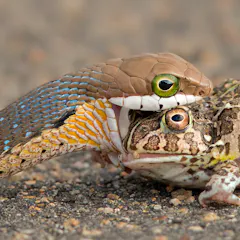
Social media has proved to be a helpful source of observations of snakes feeding. Knowing more about their diet is useful because it’s linked to their venom biochemistry.
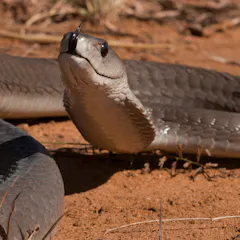
The World Health Organisation has a plan to halve deaths and disability from snakebites

Not much is known about the pathology of trauma of black mamba bites – that is, what the black mamba’s toxin does, physically, inside a victim’s system.
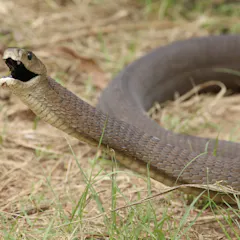
Coordinated international efforts may be key to improving the life expectancy and health of many snakebite victims.

There has been at least one fatal bite from a very small brown snake in Australia. But now we know that venom is different in adult and baby brown snakes.
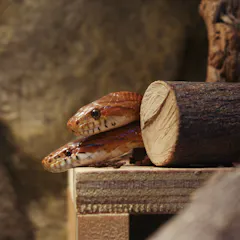
If one venomous snake bites a mouse and injects venom into it, you can then feed that same dead mouse to another snake. The second snake won’t die.
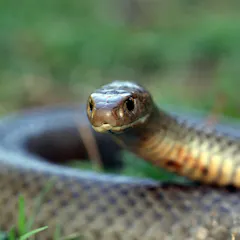
Don’t hold back. Performing CPR on a snakebite victim who has collapsed can save their life, however imperfect your technique.
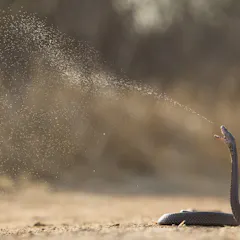
The best cure against a snakebite is to avoid being bitten at all. Here is what you need to know about snakebites, antivenom, and what you need to do if bitten.
Top contributors
-

Professor & Head of Section at the Department of Biotechnology and Biomedicine, Technical University of Denmark
-
Research Fellow and Co-head, Australian Venom Research Unit, The University of Melbourne
-
Postdoctoral researcher, Department of Biotechnology and Biomedicine, Center for Antibody Technologies, Technical University of Denmark
-
Senior Lecturer and UKRI Future Leader Fellow, University of Liverpool
-
Senior Lecturer, Biodiversity and Conservation Biology, University of the Western Cape
-
Post Doctoral Researcher, Technical University of Denmark
-
Researcher at Instituto Clodomiro Picado, Universidad de Costa Rica
-
Emeritus Professor, Instituto Clodomiro Picado, Universidad de Costa Rica
-
PhD candidate: School of Animal, Plant and Environmental Sciences, University of the Witwatersrand
-
Senior Specialist, University of Pretoria
-
Lecturer, Lúrio University
-
Research fellow, Biodiversity and Conservation Biology, University of the Western Cape
-
Professor of Paediatrics and vaccinologist, Royal Childrens Hospital, University of Melbourne and Murdoch Childrens Research Institute (MCRI); Associate Dean International, University of Melbourne, Murdoch Children's Research Institute
-
PhD Candidate, Antibodies, Liverpool School of Tropical Medicine
-
PhD candidate in venom genomics, University of Sydney