

Bluetooth wireless communication makes it possible to track when people have been exposed to people infected with the coronavirus. The right cryptography scheme keeps alerts about exposures private.
Articles on Smartphones
Displaying 121 - 140 of 371 articles

We are in a world where so-called smart devices can expire after just a few years so you have to upgrade to the latest model.

Technical advances are reducing the volume of e-waste generated in the US as lighter, more compact products enter the market. But those goods can be harder to reuse and recycle.

Previous studies showing links between smartphone use and poor mental health are based on flimsy evidence.
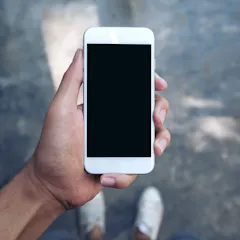
It’s almost impossible to be without a smartphone these days – but the way we hold and sit while using them can cause an array of physical health problems.
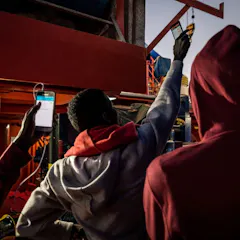
Smartphones supported migration flows by providing migrants with access to online information before and during travel and when they arrived at their destination country.

New research on mobile commerce shopping habits in nine countries contains some valuable insights for m-commerce managers and how they can attract new customers.

Apple’s newest release comes without a wall charger and earpods. While the shift could reduce the company’s carbon footprint, users shifting to wireless charging will use more energy.

Some 45 frog species, included some rare and threatened, were recorded calling after the fires.

The upcoming Galaxy Z Fold 2 is almost three-quarters screen. And while that’s convenient, it’s important to actually be able to hold the phone. As design evolves, how do manufacturers adapt?

The news media crisis is constant but there are a few practical solutions available to help the news business get out of the hole.

Apps like WhatsApp have connected more voices to participate in live talk radio - but this comes with new challenges.
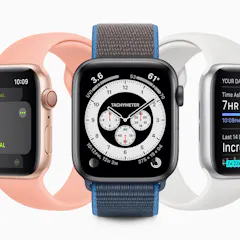
A range of announcement were made at this year’s Worldwide Developers Conference, including the new ‘CarKey’ feature, and Apple’s decision to part ways with chip manufacturer Intel.
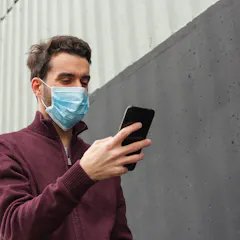
Mobile devices can be turned into tools to rapidly identify a variety of disease-causing agents, including bacteria, toxins and viruses.
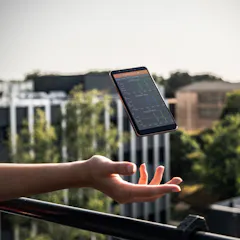
Practical work is essential for science education. But health measures compromise their traditional organization. Here are some game-changing solutions.

There’s 33 times more gold in the average handset than in the equivalent amount of ore. Yet the vast majority is never recovered.
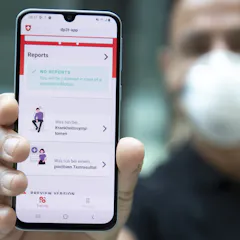
There’s definitely such a thing as society – which is a huge challenge for developing an app that will ward off COVID-19.

At the national and school levels, education technology (also known as EdTech) is closing the learning gap.
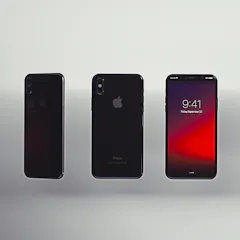
Alongside an impending global financial crisis akin to the Great Depression, Apple has announced its newest smartphone.

Research shows smartphone use disrupts an essential facet of human connection – eye contact.
Top contributors
-

Professor of Psychology, San Diego State University
-
Professor & Director, Hub for Apple Platform Innovation (HAPI), School of Computing Technologies, RMIT University
-
Professor, Information and Communications Technology, CQUniversity Australia
-
Professor of Strategy, Frankfurt School of Finance and Management
-
Adjunct Senior Lecturer, Applied Ethics and CyberSecurity, Griffith University
-
Director of UWA Centre for Software Practice, The University of Western Australia
-
Professor, Computer Networking and Telecommunications, University of Salford
-
Assistant Professor of Psychology, Georgetown University
-
Lecturer in Software Engineering, Monash University
-
Professeur des universités physicien, Université Grenoble Alpes (UGA)
-
Associate Professor in Telecommunications Engineering, Swinburne University of Technology
-
Quality of life researcher and occupational therapist, The University of Queensland
-
Professor of Anthropology, UCL
-
Senior Lecturer in Networking, The Open University
-
Professor of Screen Media, King's College London