

Disturbed sleep can worsen depressive symptoms of health care workers whose jobs come with high levels of emotional labor and work-family conflict.
Articles on Sleep hygiene
Displaying 21 - 37 of 37 articles
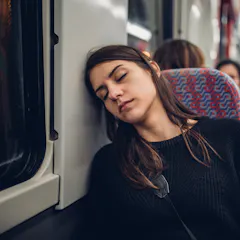
Most of us have a natural sleep cycle of just over 24 hours. Experts think it’s an evolutionary adaptation to help us adjust to different day lengths.
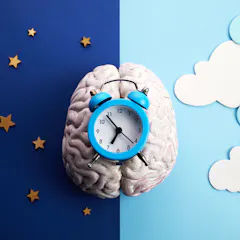
Your body follows a circadian rhythm that influences everything from how well your medications work to the best time for exercise.

Advice to put your baby down ‘drowsy but awake’ is an attempt to form good sleep associations.

Although medication and therapy can be effective treatments for ADHD, they’re not the only way to manage the disorder or its symptoms. Creating a daily routine is critical too.

An effective alarm is one which should minimise ‘sleep inertia’ – that stage of grogginess we feel between being asleep and becoming fully alert.

A doctor offers tips on how to safely get exercise, sleep and drinking habits back into shape as the pandemic wanes.

To keep our health care providers healthy, we need to help them sleep.

Some health products haven’t been tested for the benefits that they claim to produce. Blue-light blocking lenses are promoted as helping sleep cycles, but there is no evidence to support this.

Good mental health is the ability to adapt to changes and stress. Whatever school looks like, parents can help keep kids’ social-emotional development on track in these four areas.

Cognitive behavioural therapy for insomnia provided remission of insomnia in 80 to 90 per cent of adolescents in a research trial, and improved their overall concussion recovery.

Insomnia impacts more than 20 per cent of women during pregnancy. And it is treatable.

With so many different types out there, it’s hard to know what sleep medications are safe to use. Here’s a guide.

Homeless people are far more likely to suffer sleep deprivation with all its associated problems.

You might be trying to catch up on sleep. Sleep scientists say some children need only nine hours of sleep at night, while others need as much as 11 hours. It depends on the person.

It’s normal to feel a bit groggy when you wake up – parts of your brain are still asleep.
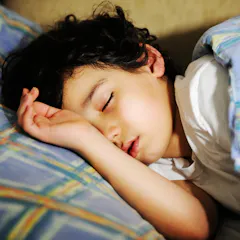
Children with ADHD are much more likely than other kids to struggle getting to sleep, and staying asleep. Up to 73% of Australian parents report their child with ADHD has problems sleeping.
Top contributors
-

Sleep & Circadian Scientist, CQUniversity Australia
-
Professor of Sleep Health, University of the Sunshine Coast
-
Associate Professor, Canada Research Chair in Mental Health and Intersectionality, University of British Columbia
-
Associate Professor at Turner Institute for Brain and Mental Health, School of Psychological Sciences, Monash University
-
Associate Professor, School of Psychology, Massey University, Te Kunenga ki Pūrehuroa – Massey University
-
Professor and Head of Paediatric Sleep Research, CQUniversity Australia
-
Director, Appleton Institute, CQUniversity Australia
-
Sleep Researcher, Appleton Institute, HealthWise Research Group, CQUniversity Australia
-
Research associate, Te Kunenga ki Pūrehuroa – Massey University
-
Research Fellow in Social Sciences, Nottingham Trent University
-
Associate Professor of Medicine, Michigan State University
-
Assistant Professor of Aging Studies, University of South Florida
-
Assistant Professor of Biology, Texas A&M University
-
Researcher, Auditory Perception and Cognition, RMIT University
-
Principal Fellow, Department of Paediatrics, The University of Melbourne