
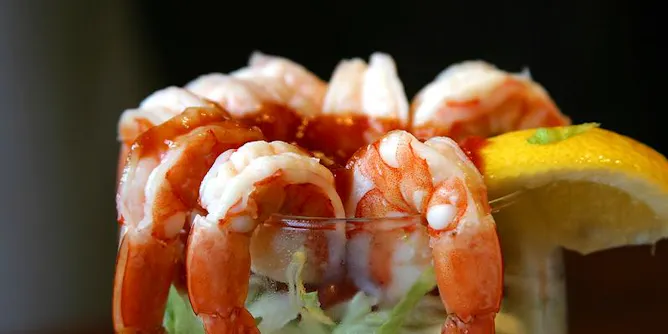
Alongside with milk, eggs, peanuts, tree nuts, wheat, soybeans and fish, shellfish are one of the eight allergens that account for 90% of food-related allergic reactions. What if a vaccine could exist?
Articles on Shellfish
Displaying 21 - 35 of 35 articles
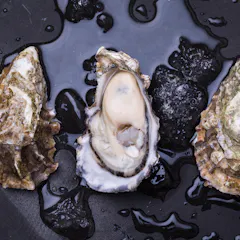
Acidic seawater conditions are interfering with the ability of shellfish to produce strong, resilient shells, and it’s happening all over the world.
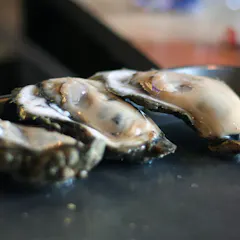
Oysters are big business along the Gulf Coast, but raising them off-bottom – which yields a premium product – is just starting there. Hurricane Michael showed it won’t be easy.

Archaeologists are trash sifters. They use clues preserved in artefacts, plant and animal remains that people threw away or left behind to reconstruct the past.

Oysters aren’t just good for a feed. They also give a vital boost to coastal ecosystems, which is why efforts are underway to restore Australia’s once-abundant oyster reefs to their former glory.

The ocean is getting warmer and more acidic but changing our diet could help us cope.

Oysters grow in seawater and filter their food from it, so how do you shield them from waterborne diseases? Scientists are working to develop strains that are resistant to a fast-spreading herpes virus.
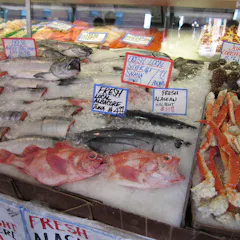
A new study shows that sustainable fish farming in deep ocean waters could produce as much seafood as all of the world’s wild fisheries, in a space the size of Lake Michigan or Africa’s Lake Victoria.
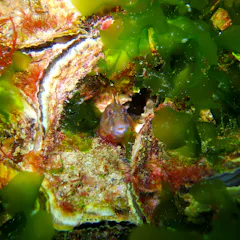
In colonial times Australia’s waters were teeming with mud oysters that provided food, cement, and cleaned the oceans. Now a 20-hectare man-made reef aims to restore some of their former glory.

Maëlle, 7, wants to know why some shells are smooth, while others are corrugated. It turns out that while corrugated shells are strong, smooth shells can move fast.

Global climate change is altering the chemistry of the oceans. A recent study suggests that the Pacific coast’s lucrative Dungeness crab fishery could suffer as ocean water becomes more acidic.
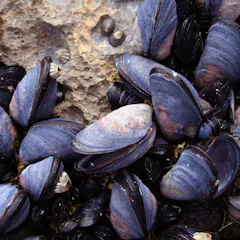
Shellfish will have more brittle shells as oceans get more acidic – making them more vulnerable to predators. New research gives a fascinating glimpse into how they will adapt.
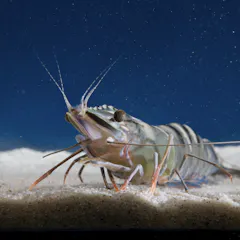
The tropical island was one of a number of countries that joined the goldrush of prawn farming in the 1980s and 1990s. New research lays plain the results.

As I was growing up, any time my mother suggested buying mussels or cockles for dinner, my gran would pipe up with the old adage that “you should only be eating shellfish when there’s an ‘R’ in the month…

About 50,000 years ago, modern humans left Africa and began occupying the rest of the world. The common thought is that a sudden growth in population caused the so-called “human revolution”, which gave…
Top contributors
-

Postdoctoral researcher, marine ecology, Adelaide University
-
Research fellow Environmental Management, Institute of Aquaculture, University of Stirling
-
Professor of Marine Biology and Aquaculture, James Cook University
-
Postdoctoral Scholar, National Center for Ecological Analysis and Synthesis, University of California, Santa Barbara
-
Professor of Ocean Biogeochemistry and Palaeoclimate, The Open University
-
Senior Research Scientist - Coastal Restoration, James Cook University
-
Deputy Manager Biotoxin Monitoring Programme, Scottish Association for Marine Science
-
Associate Professor in The School of Geography, Earth and Atmospheric Sciences and Chief Investigator for the ARC Centre of Excellence for Indigenous and Environmental Histories and Futures, The University of Melbourne
-
Professor of Agricultural Economics, Mississippi State University
-
Professor in Palaebiology, University of Bristol
-
Emeritus Professor of Human Evolution, University of Cambridge
-
PhD in Marine Ecology, CSIRO
-
Postdoctoral Research, Macquarie University
-
Professor of Teaching and Research in Environmental Biology, Edinburgh Napier University
-
Postdoctoral Research Fellow, James Cook University